
Gilgit-Baltistan Connectivity Crisis Hits Tourism and Disaster Response, CM Tells Senate Panel

Gilgit-Baltistan’s Chief Minister has told a Senate committee that weak mobile and internet coverage across the region is doing real damage — not just to visitors trying to post photos, but to the people who show up when a flood or an avalanche hits. That’s a much bigger problem than it sounds.
Summary
Gilgit-Baltistan Chief Minister Amjad Hussain informed a parliamentary committee on Friday that poor cellular connectivity in the region has hurt tourism and made relief and rescue work far harder during emergencies. He asked the Pakistan Telecommunication Authority (PTA) to take direct responsibility for fixing internet access in GB, rather than leaving the job entirely to the Special Communications Organisation (SCO).
Background
Gilgit-Baltistan connectivity has been a recurring complaint for years, especially in districts like Ghizer, where mobile network outages have disrupted everything from banking to schoolwork for months at a stretch. The region’s terrain doesn’t make things easy — narrow valleys, high peaks, and long distances between towns mean that fibre-optic cable, the backbone of fast internet elsewhere in Pakistan, simply isn’t practical everywhere.
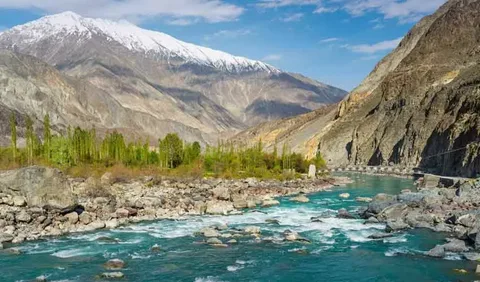
GB is also one of the most visited mountain regions in the world, drawing trekkers, climbers and tourists to areas surrounded by roughly 7,000 glaciers. That combination — heavy tourist traffic and genuine natural-disaster risk — is exactly why officials say communication gaps here carry higher stakes than in most other parts of the country.
Details
The Chief Minister raised the issue at a meeting of the Senate Standing Committee on Cabinet Secretariat, held at the GB Assembly in Gilgit and chaired by Senator Mahmood-ul-Hassan. Hussain said satellite connectivity was essential for monitoring the region’s glaciers and for effective disaster management that could protect GB from a major catastrophe.
He drew a clear line between the two organisations involved in the region’s telecom setup. The SCO, he said, is only a service provider, so it’s the PTA — as the actual regulator — that needs to step up and ensure stable internet across GB. He also pointed out a practical limitation: fibre-optic connections work fine in urban centres, but they’re a poor fit for the mountainous and hard-to-reach areas that make up most of the territory.
Hussain referenced the recent disaster in Nepal as a reminder of what’s at stake when communication systems fail during a crisis. He added that disaster response only works when every relevant institution is actually coordinating with the others in real time.
PTA Chairman, retired Gen Hafeezur Rehman, told the committee that the authority was already acting on directives from Prime Minister Shehbaz Sharif to improve internet services in GB, and that specific obstacles to connectivity would be reviewed and addressed. Senior NDMA officials also briefed the committee on disaster preparedness, early-warning systems, and the compensation paid out after floods, landslides and avalanches over the past five years.
Quotes
Senator Mahmood-ul-Hassan, the committee chairman, said GB ranks among the most beautiful regions in the world and draws thousands of visitors annually, but that slow internet speeds remain a major issue needing urgent attention. He added that no country or region can develop in the modern era without reliable internet access, and confirmed that a follow-up meeting would be held in Gilgit with private network companies and other stakeholders.
Senator Aamir Waliuddin Chishti, addressing a related briefing on fuel supplies, directed that oil and LPG storage capacity in GB be increased and asked Ogra officials to raise the issue with the federal petroleum ministry.
Impact
For a region that depends heavily on tourism revenue, unreliable networks are a direct hit to the local economy — travellers increasingly expect to book, navigate and share their trips online, and GB’s patchy signal puts it at a disadvantage next to competing destinations. On the disaster side, the stakes are more serious: when floods or avalanches strike remote valleys, rescue coordination and early warnings depend on the same networks that residents already struggle to use on an ordinary day.
The Special Technology Zones Authority also weighed in, noting that GB’s tax-free status makes it a strong candidate for a dedicated technology zone, which could eventually improve the region’s digital infrastructure beyond just mobile coverage.
Conclusion
The Senate committee’s next step is a dedicated meeting in Gilgit involving private telecom operators, aimed at mapping out concrete upgrades. Whether that translates into faster fibre rollout, expanded satellite coverage, or firmer PTA oversight of the SCO remains to be seen, but the pressure is now clearly on regulators to show results rather than just acknowledge the problem.
Frequently Asked Questions
Is there internet in Gilgit?
Yes, internet services exist in Gilgit and other main towns of Gilgit-Baltistan, largely through the Special Communications Organisation and available mobile operators. However, the quality is inconsistent — service can be slow, unstable, or drop out entirely for hours or even days, particularly outside the main urban centres. Areas like Ghizer district have reported prolonged mobile network outages in recent months, which residents say affects banking, education, and remote work. Officials have acknowledged that fibre-optic infrastructure only reaches urban pockets, leaving much of the mountainous terrain reliant on weaker signal options.
What is the current situation in Gilgit-Baltistan?
As of September 2026, Gilgit-Baltistan’s government is actively raising the connectivity issue with federal regulators, after the Chief Minister told a Senate panel that poor cellular coverage was hurting both tourism and disaster response. Alongside the internet problem, the region’s Senate committee is also reviewing oil and LPG storage capacity, disaster preparedness through the NDMA, and a possible special technology zone. Overall, GB remains a major draw for climbers and trekkers, but infrastructure gaps — connectivity, fuel storage, and disaster readiness — continue to be flagged as priorities needing federal attention.
What is the current status of Gilgit-Baltistan in Pakistan?
Gilgit-Baltistan is administered as a self-governing territory of Pakistan under the Gilgit-Baltistan Empowerment and Self-Governance Order, with its own elected assembly and Chief Minister. Amjad Hussain has served as Chief Minister since July 2026, following the Gilgit-Baltistan Assembly elections held earlier that year. The region does not hold full constitutional provincial status, which has long been a point of political debate, but it does have its own legislature, cabinet, and budget processes that oversee local matters including telecommunications, tourism, and disaster management.