
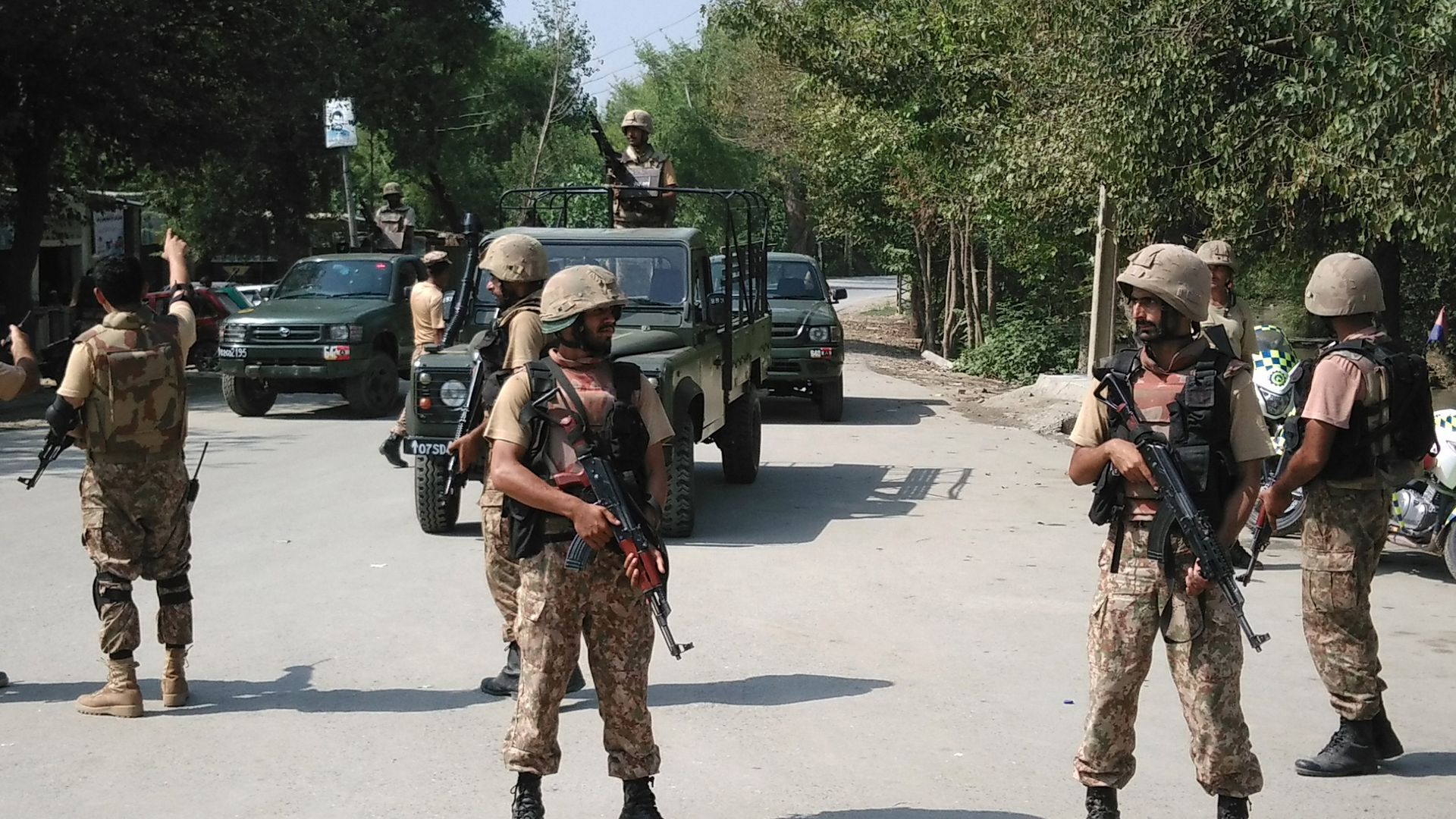

Another round of security forces operations in KP has left more than 20 terrorists dead, according to a statement issued by the military’s media wing on Sunday. The engagements, spread across three days, mark one of the more significant clashes in a year already marked by frequent KP terrorist attacks along the Afghan frontier.
Unlike some previous announcements, this one covers several incidents rather than a single raid. That detail matters, because it shows how spread out the fighting has become across Khyber Pakhtunkhwa’s border districts.
Background: Why Khyber Pakhtunkhwa Keeps Making Headlines
Khyber Pakhtunkhwa terrorism did not appear overnight. The province, and North Waziristan in particular, sits directly along the Pakistan-Afghanistan border, an area militants have used for years to move fighters and weapons in both directions.
Since the return of Taliban rule in Kabul, Islamabad has repeatedly complained that militant groups operate freely from Afghan territory before crossing into Pakistan. ISPR’s latest statement repeats that complaint almost word for word, accusing the Afghan Taliban administration of failing on border management.
Details: A Breakdown of the Three-Day Toll
The ISPR statement, released Sunday, walks through each incident separately, and the sequence is worth laying out clearly.
It starts on the night of August 31 into September 1, when troops in North Waziristan intercepted militants attempting to cross the border and killed 15 of them during the initial contact. Follow-up searches in the same area then turned up 10 more fighters, who were also killed, bringing that single infiltration episode to 25 dead.
Days later, in a different part of North Waziristan, security forces picked up movement from another group near the border. Troops engaged them directly, and seven militants were killed in what the military called a precise and skilful operation.
Two more clashes, unrelated to the border fighting, took place in Kohat and Dera Ismail Khan during joint operations by security forces. Four militants died in those two encounters combined.
Add it all up, and ISPR’s Sunday statement puts the three-day total at over 20 terrorists killed, a figure that several outlets, including Dawn and The Express Tribune, have separately reported as 21.
Quotes: The Military’s Framing
ISPR did not simply report the numbers. The statement placed clear blame on Kabul, saying the Afghan Taliban regime has “consistently failed to ensure effective border management and honour its international counter-terrorism obligations.”
It also reaffirmed the military’s stance going forward, describing troops as “resolute and unwavering” in defending Pakistan’s frontiers, a phrase that has become a fixture of ISPR’s recent statements on cross-border incidents.
The prime minister’s office added a political dimension, with the premier stating that operations under the Azm-e-Istehkam framework would continue “with full resolve” until foreign-sponsored terrorism is eliminated from the country.
Impact: Local and Regional Fallout
The immediate impact falls on the communities living closest to the fighting. Families in North Waziristan, Kohat, and Dera Ismail Khan have grown used to disruptions from ongoing security forces operations in KP, from temporary movement restrictions to the broader economic strain of living in a conflict-prone border belt.
Beyond the province, the incident adds fresh strain to Pakistan-Afghanistan relations. Islamabad’s repeated public accusations against the Taliban government, paired with continued infiltration attempts, suggest little near-term improvement in ties between the two neighbours.
Domestically, the scale of this particular round of Khyber Pakhtunkhwa terrorism also puts pressure on Islamabad to show that its counter-terrorism strategy is working, especially after a year in which similar large-scale engagements have been announced on a near-monthly basis.
Conclusion: What to Watch Next
ISPR’s statement gives no indication that operations are winding down. If anything, the pattern of the last year suggests further clashes along the North Waziristan border are likely in the coming weeks, particularly as militants continue attempting to exploit the porous frontier.
For now, both the timing and location of the next major incident remain uncertain, but the underlying dynamic driving these KP terrorist attacks, a contested and poorly controlled border, shows no sign of changing soon.
Frequently Asked Questions
Which is the biggest terrorist attack in Pakistan?
The 2014 Army Public School attack in Peshawar is widely regarded as the deadliest single terrorist attack in Pakistan’s history, killing over 140 people. More recent incidents tied to Khyber Pakhtunkhwa terrorism, including this week’s clashes, have been smaller in scale but far more frequent, reflecting a shift toward sustained border skirmishes rather than one-off mass-casualty attacks.
Has there been any terrorist attacks in Pakistan lately?
Yes, and quite regularly. Security forces operations in KP, along with similar operations in Balochistan, have been reported on an almost weekly basis through 2025 and 2026. This latest ISPR statement covering over 20 militants killed between September 3 and 5 is one entry in a much longer, ongoing list.
What’s happening in Peshawar now, given these operations nearby?
The clashes described in ISPR’s statement occurred in North Waziristan, Kohat, and Dera Ismail Khan rather than in Peshawar itself, but the provincial capital sits close enough to these districts that security remains tight there as a precaution. Authorities continue to treat the wider region as an active zone for counter-terrorism operations tied to Khyber Pakhtunkhwa terrorism.