
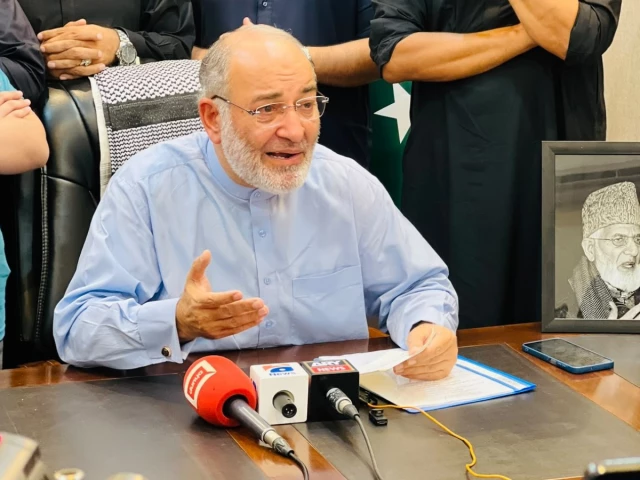

The long-running AJK protest case has taken a decisive turn as an Islamabad court cleared the way for former senator Mushtaq Ahmad and 95 fellow accused to walk free on bail. The ruling, delivered on Monday by the Islamabad Anti-Terrorism Court, resolves the custody question that had hung over the group since their arrest weeks earlier.
Summary
Ninety-six people, including ex-senator Mushtaq Ahmad, have been granted post-arrest bail by the Islamabad Anti-Terrorism Court in the AJK protest case. The case stems from a demonstration in Islamabad’s F-10 sector held over unrest in Azad Jammu and Kashmir, and the bail order was issued against surety bonds set by the court. The decision marks a major development in a case that had drawn wide attention because of the political stature of the lead accused.
Background
The origins of the AJK protest case go back to a large gathering in Islamabad’s F-10 sector, organised amid rising concern over the situation in Azad Jammu and Kashmir. Police allege that Mushtaq Ahmad headed a crowd of several hundred people that moved toward a major road, defying instructions from the local administration to disperse peacefully since the gathering lacked the required no-objection certificate.
A first information report was subsequently filed at Shalimar Police Station on July 31, invoking anti-terrorism provisions against the former senator and dozens of others. The complaint accused the group of using loudspeakers to deliver provocative speeches, pressuring nearby shopkeepers to close their businesses, and chanting slogans critical of state institutions. Mushtaq Ahmad was arrested soon after and brought before a duty judge, who granted police a short physical remand to pursue evidence, including an alleged vehicle and weapons connected to the demonstration.
Details of the Court Proceedings
The matter reached its latest stage this week when bail petitions filed on behalf of Mushtaq Ahmad and 95 other accused came up for hearing before Judge Abual Hasnat Muhammad Zulqarnain at the Islamabad Anti-Terrorism Court. Legal representatives for the accused pressed their case, and after weighing arguments from both the defence and the state prosecution, the judge approved bail for the entire group, setting surety bonds as a condition of release.
The prosecution had initially sought a much longer period of physical remand at the time of arrest, citing an ongoing need to recover items allegedly tied to the protest. That request was scaled down early in the proceedings, and Monday’s bail order now brings the pre-trial custody phase to a close for all 96 individuals named in the case, even as the core criminal proceedings continue separately.
Statements From the Case
Legal counsel appearing for Mushtaq Ahmad argued throughout the hearings that the gathering in F-10 was a demonstration rooted in solidarity with people in Azad Jammu and Kashmir rather than an attempt to provoke unrest, and pressed the court to treat the matter as a public order issue rather than terrorism. State prosecutors, for their part, maintained that the scale of the crowd and the alleged blocking of a main road justified the charges initially brought under anti-terrorism law, even as they did not oppose bail once the recovery-related concerns had been addressed.
Mushtaq Ahmad, who has built a public profile around advocacy tied to Kashmir and broader rights issues, has in the past linked his activism to what he describes as the responsibility of political leaders to speak out on regional unrest. His supporters have echoed similar sentiments in the aftermath of the bail decision, framing it as an acknowledgment that the protest itself did not amount to a security threat.
Regional and Political Impact
Beyond the courtroom, the AJK protest case has become something of a reference point in discussions about how demonstrations connected to Kashmir are treated under Pakistan’s anti-terrorism framework. For the 95 co-accused, many of whom held no prominent political role, the bail ruling ends an extended period of legal uncertainty and allows them to resume their daily lives while the case proceeds.
The episode has also renewed conversation among legal commentators and civil rights groups about the appropriateness of invoking terrorism charges in cases centred on public assembly and free expression. Given the sensitivity of the Kashmir issue within Pakistan’s political landscape, the case is likely to remain a talking point even after the bail question has been settled.
What Comes Next
With the custodial phase resolved, the Islamabad Anti-Terrorism Court is expected to move forward with hearings on the substantive allegations against Mushtaq Ahmad and his co-accused, including the claims of incendiary speeches, forced shop closures, and road blockage. How the trial unfolds could shape future handling of similar protest-related cases tied to Azad Jammu and Kashmir, making this a case worth continued tracking in the weeks ahead.
FAQs
What happened with Mushtaq Ahmed?
Mushtaq Ahmed, a former Pakistani senator, was arrested after leading a protest in Islamabad’s F-10 sector against unrest in Azad Jammu and Kashmir. He was accused, along with 95 others, of offences under anti-terrorism law tied to the demonstration, including allegations of blocking a main road and delivering provocative speeches over loudspeakers. Following his arrest and a brief period of physical remand, the Islamabad Anti-Terrorism Court heard bail applications from the entire group and granted post-arrest bail to all 96 accused, including Mushtaq Ahmed, against surety bonds set by the presiding judge.
Where is Senator Mushtaq Ahmed from?
Mushtaq Ahmed is a Pakistani political figure who previously served as a senator and now leads a rights-focused political organisation. He has been an active voice on issues connected to Azad Jammu and Kashmir and has taken part in public demonstrations related to regional unrest, which is what ultimately led to his arrest and the subsequent case now before the Islamabad Anti-Terrorism Court.
How old is senator Mushtaq Ahmad Khan?
Available news coverage of the bail case does not include a verified, current age for Mushtaq Ahmad Khan, so this article does not state one to avoid publishing inaccurate information. Readers interested in his exact age or date of birth should refer to his verified official biography or public political profile for accurate details.