
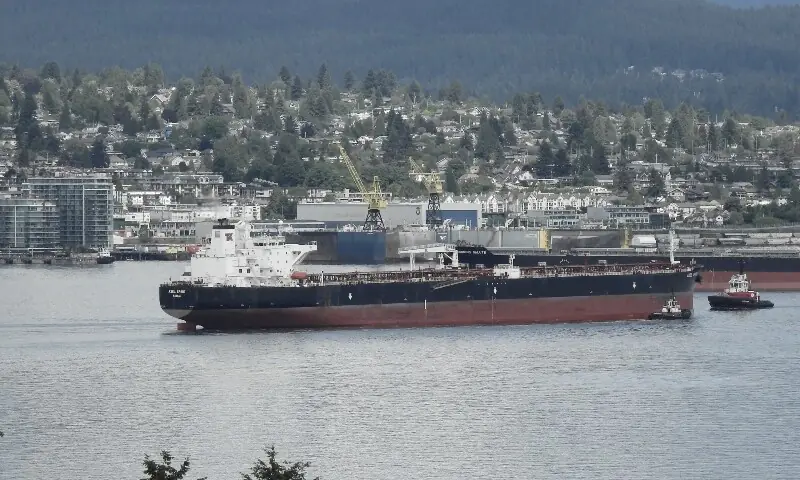

Iran’s Revolutionary Guard said Wednesday it fired ballistic missiles at a base in Jordan used by American forces and struck ten ships near the Strait of Hormuz. The move came a day after the United States said it had destroyed five Iranian oil tankers, pushing the two countries deeper into a war that has now run for six months.
Summary
Iran’s Islamic Revolutionary Guard Corps, known as the IRGC, said its forces hit the Al Azraq air base in Jordan on Wednesday, a facility long used by American troops. In the same statement, the IRGC said it attacked ten vessels crossing what it called a restricted zone in the Strait of Hormuz, including two American ships and eight oil tankers. Jordan’s military said its air defenses shot down most of the incoming missiles and confirmed no one was hurt.
Background
The Iran-US conflict has dragged on for half a year, with periods of calm broken repeatedly by fresh strikes. A month of relative quiet along the Strait of Hormuz ended this week after Washington accused Iran of firing ballistic missiles at a US Navy warship twice in two days.
In response, US Central Command said it destroyed five Iranian oil tankers on Tuesday. Centcom released video of the strikes and said no American personnel were harmed during the operation. Iranian state media reported separately that a missile had struck a tanker near Kharg Island, with no casualties reported there either.
The Strait of Hormuz sits at the center of the standoff. It’s one of the world’s busiest oil shipping routes, and Iran has kept much of it effectively closed off through repeated attacks in recent months.
Details
The IRGC said its ballistic missile strike on the American base in Jordan was carried out in direct retaliation for the tanker strikes. Iranian state media described the operation as a “punitive” action targeting maintenance facilities, aircraft shelters, and deployment areas at Al Azraq.
Jordan’s army gave a different account of the damage. Officials there said air defenses intercepted 18 of the 20 missiles Iran launched, with the remaining two landing in unpopulated areas. No casualties were reported on the Jordanian side, and independent verification of Iran’s damage claims was not immediately available from Jordanian or American sources.
Hours after the base was hit, the IRGC announced it had also struck ten ships attempting to pass through what it called a “prohibited and unsafe” section of the Strait of Hormuz. The ships included two American vessels and eight oil tankers. Iran’s navy separately warned crews aboard tankers near Kuwaiti and Bahraini ports to abandon their vessels, saying they could be targeted next.
Adding to the tension, the IRGC claimed earlier in the week that its naval forces had seized a US underwater drone near the strait, describing it as an advanced piece of American military hardware. Washington pushed back on that characterization, saying the drone was an older, malfunctioning unit that carried no classified equipment and had been adrift for more than a day before Iran picked it up.
Quotes
Speaking to reporters during a visit to Colombia on Tuesday, US Secretary of State Marco Rubio said Iran would keep losing tankers for every attempt it made against American naval vessels. His comments came before news broke of the Jordan base strike and the attacks on ten ships in the strait.
A US official, speaking on condition of anonymity, said Washington was still assessing the extent of the damage at Al Azraq and had not independently confirmed Iran’s claims of heavy destruction.
Impact
Oil markets reacted almost immediately, with prices climbing as traders weighed the risk of a prolonged closure of the Strait of Hormuz. Roughly a fifth of the world’s oil supply typically moves through the waterway, so any sustained disruption tends to ripple through global energy markets fast.
The strike on Jordanian soil also widens the conflict beyond Iran and the US directly. Jordan has hosted American forces for years, and an attack on its territory risks pulling other regional governments further into the standoff, particularly Gulf states like Kuwait and Bahrain, whose ports Iran has now threatened directly.
Shipping companies operating in the Gulf are likely to face higher insurance costs and possible rerouting decisions in the days ahead, given Iran’s warning to tanker crews near Kuwaiti and Bahraini waters.
Conclusion
Both sides show little sign of stepping back. Washington has signaled it will keep striking Iranian tankers in response to attacks on its warships, while Tehran has vowed further retaliation, including threats against tankers near Kuwait and Bahrain. With oil prices rising and a major air base in Jordan now directly hit, the next moves from both governments are likely to shape whether this settles back into an uneasy standoff or escalates further.
Frequently Asked Questions
Has Iran attacked US bases in Jordan?
Yes. On Wednesday, Iran’s Revolutionary Guard said it launched ballistic missiles at Al Azraq, an air base in Jordan that American forces have used for years. Jordan’s military confirmed the attack and said its air defense systems intercepted most of the incoming missiles, with only two landing in unpopulated areas and no casualties reported. Iran described the strike as retaliation for earlier US attacks on its oil tankers.
Why did Iran attack ships near the Strait of Hormuz?
Iran’s Revolutionary Guard said the ships, including two American vessels and eight oil tankers, were crossing a part of the strait it considers a restricted and unsafe zone. The IRGC framed the attack as a response to the US destroying five Iranian oil tankers a day earlier. Iran’s navy also warned tanker crews near Kuwait and Bahrain that their vessels could be targeted next.
Is the Strait of Hormuz still open for oil shipping?
Reports indicate that Iranian attacks have largely restricted movement through the strait in recent months, and this week’s escalation adds further uncertainty for shipping companies. While the waterway has not been formally closed, the risk of attack has pushed up oil prices and is likely to affect insurance costs and shipping decisions for tankers passing through the area.