

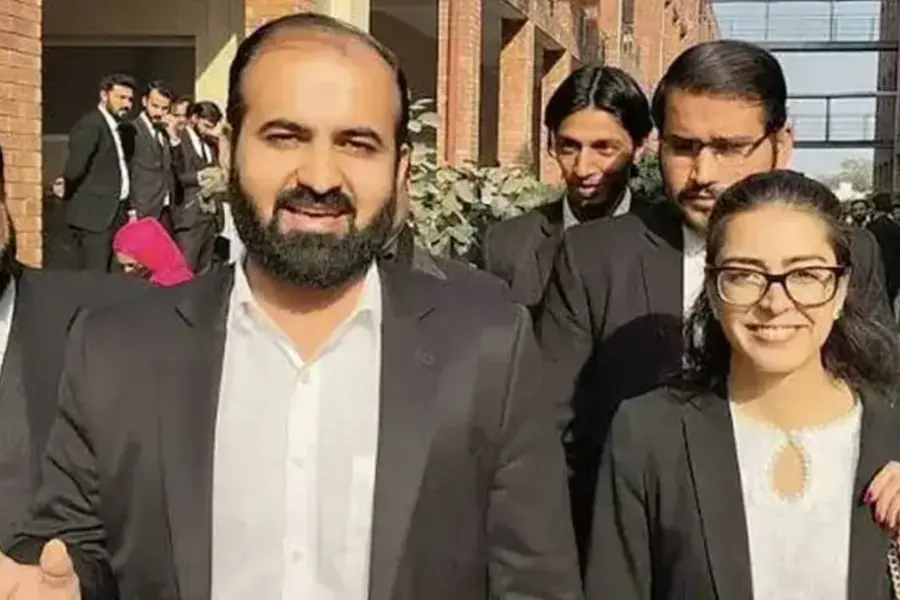

The renewed detention of lawyers Imaan Zainab Mazari-Hazir and Hadi Ali Chattha has triggered a fresh wave of condemnation from Pakistan’s legal and media community. The couple was arrested again on Thursday night, mere hours after the Supreme Court had suspended the sentences imposed on them in a case tied to their social media activity, and reaction from journalists and rights advocates followed almost immediately.
Background
Mazari-Hazir and Chattha have been fighting a PECA-related prosecution since August 2025, when a case was registered accusing Mazari-Hazir of posting content critical of state institutions on her X account over a period stretching back to 2021. Chattha, also a practising lawyer, was named in the same case for sharing and amplifying his wife’s posts. In January 2026, a sessions court convicted both of them and imposed a combined seventeen years in prison along with heavy fines, a verdict that immediately drew objections from legal bodies who argued the underlying posts amounted to protected political expression rather than any criminal offence.
Mazari-Hazir has long been a visible figure in Pakistan’s legal community, having previously worked with the Pakistan Bar Council on a committee that offered free legal support to journalists facing harassment because of their reporting. That history is part of why her own prosecution has resonated so strongly within media circles.
What Journalists and Lawyers Are Saying
Reaction to Thursday’s rearrest was swift. One senior lawyer argued that the state’s decision to detain the couple again, so soon after a Supreme Court order in their favour, reflected growing unease within official circles about the precedent their release would set, and suggested that a series of overlapping legal cases was being used to keep them in custody indefinitely regardless of individual court rulings.
A prominent civil rights lawyer went further, describing the pattern of arrests as part of a broader crackdown on anyone expressing solidarity with Baloch rights causes, and placed the case alongside other examples of what he called political targeting in Pakistan, including the continued detention of opposition figures and the use of cybercrime law against reporters.
A well-known journalist who has tracked the case closely criticised the judiciary directly, arguing that courts were failing to hold investigators to basic procedural standards, including the requirement to produce a proper first information report before proceeding with an arrest. Coverage of the case has also noted that Mazari-Hazir used her brief court appearance to allege mistreatment in custody, including being denied food and water, and being blocked from completing her cross-examination of prosecution witnesses during earlier proceedings.
The International Response
Concern over the case has not been limited to Pakistan. International human rights organisations have described the pattern of arrests, convictions and rearrests as a sustained campaign of judicial harassment, with monitors reporting that law enforcement used unnecessary force during at least one earlier arrest without providing a clear justification. A coalition of international legal bodies, including bar associations based in the United Kingdom, has separately argued that the entire prosecution is rooted in tweets that criticised the military’s record on human rights, rather than any conduct that should be treated as criminal. United Nations-linked bodies and other international legal groups have also weighed in following the couple’s initial sentencing, warning that the case sets a troubling precedent for legal advocacy in the country.
Impact on Press Freedom in Pakistan
For many journalists, the case is being read as a warning about the risks of publicly criticising powerful state institutions, even when the criticism comes from a lawyer rather than a reporter. Because Mazari-Hazir has a track record of defending journalists in harassment cases, her prosecution is widely seen within media circles as an attempt to narrow the space available for anyone who takes on that kind of advocacy work, lawyers and reporters alike.
Conclusion
As the couple remains in judicial custody, attention now turns to the Islamabad High Court, where a related hearing has already been scheduled for later this month. Legal groups and press freedom advocates say they will continue to monitor the case closely, and further statements of condemnation are expected if the couple remains detained in the coming weeks.
FAQs
What are the rights of journalists in Pakistan?
Pakistani journalists are nominally protected by constitutional guarantees of free expression, along with dedicated legislation such as the Journalists and Media Professionals Protection Act, which is intended to shield reporters from threats and violence connected to their work. Press freedom organisations, however, regularly report that these legal protections are inconsistently enforced, and that journalists and the lawyers who represent them can still face arrest or prosecution under broad cybercrime statutes when their work touches on sensitive institutions such as the military or intelligence services. The case of Imaan Mazari-Hazir, who has previously defended journalists facing harassment, is frequently cited by press freedom groups as an example of this gap between legal protection and practical enforcement.
Who is the most famous journalist in Pakistan?
This is genuinely a matter of opinion, since Pakistan has a long history of prominent journalists working across television, print and digital platforms, each with different audiences and areas of focus. Some names are best known for decades of political commentary on television, while others have built reputations through investigative reporting on the military establishment, often at significant personal risk. Because recognition tends to vary by generation and by platform, there is no single figure universally agreed upon as “the most famous,” and the answer often depends on who you ask and when.
Do journalists have a code of ethics?
Yes, bodies such as the Pakistan Federal Union of Journalists and various regional press clubs maintain formal codes of ethics that set expectations around accuracy, fairness, source protection and avoiding conflicts of interest in reporting. These codes typically ask journalists to verify claims before publishing, separate factual reporting from opinion, and protect the identities of confidential sources where disclosure could put them at risk. That said, adherence to these codes is not always consistently enforced across outlets, and debates about journalistic standards remain an ongoing part of media discourse in the country.