
AISHA KHAN EMERGES AS A UNIFYING VOICE IN MUSLIM-AMERICAN COMMUNITY LEADERSHIP
Years of Community Engagement, Women’s Empowerment and Grassroots Outreach Strengthen Her Growing Public Role
By Fazal Khaliq | Washington, D.C.
WASHINGTON, D.C. — Aisha Khan’s growing profile in Maryland’s civic and community landscape reflects years of grassroots engagement, public outreach and an effort to bring diverse communities onto a shared platform of service, participation and opportunity.
Her involvement in community events, civic initiatives and interfaith gatherings has increasingly placed her among the visible Pakistani-American and Muslim-American community figures in the Washington–Maryland region.
Khan’s approach has centered on direct engagement with families, women, entrepreneurs, faith communities and emerging civic voices. Her public activities have included participation in community gatherings, support for educational and social initiatives, and efforts to encourage broader participation by women and younger generations in civic and community affairs.
According to the official profile published by Muslims of America, Khan is a Pakistani-born American entrepreneur and community leader whose work spans education, business, women’s leadership, civic participation and grassroots engagement. The organization says her leadership responsibilities include building relationships, expanding opportunities for women and youth, encouraging entrepreneurship and creating pathways for greater civic involvement. (Muslims of America)
FROM GRASSROOTS ENGAGEMENT TO ORGANIZATIONAL LEADERSHIP
Khan’s expanding role within Muslims of America represents another stage in that journey.
Dr. Sajid Tarar, Founder and Chairman of Muslims of America, has positioned the organization around civic participation, public service, economic opportunity, interfaith cooperation and stronger representation of American Muslims. The organization’s leadership material identifies Khan as a senior member of its executive leadership. (Muslims of America)
Her elevation within the organization has coincided with an increasingly active public presence at community programs and gatherings designed to connect people across religious, cultural and professional backgrounds.
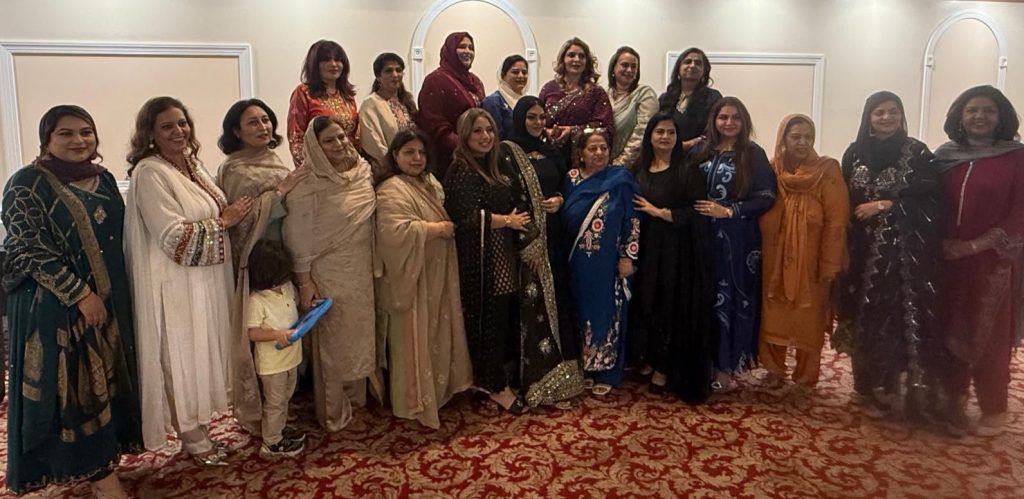
A recent Maryland reception jointly organized by Muslims of America and Sikhs of America offered one example of that approach. The gathering brought together Muslim, Sikh, Hindu and Christian community figures, with Khan participating alongside Dr. Sajid Tarar and Dr. Jasdip Singh Jesse. Reporting on the event highlighted themes of unity, diversity and cooperation across communities. (South Asian Herald)
WOMEN’S PARTICIPATION AT THE HEART OF HER MESSAGE
A central element of Khan’s public message has been the importance of giving women a meaningful place in community and civic leadership.
She has emphasized that representation should extend beyond symbolic participation and create genuine opportunities for women to contribute to institutions, community initiatives and public life.
Expressing gratitude for the confidence placed in her leadership, Khan has reaffirmed her commitment to standing alongside women and supporting their meaningful participation at every level.
Her message is built around a straightforward principle: stronger communities emerge when people are connected, heard and given an opportunity to participate.
For many women and families who have traditionally remained outside formal civic networks, this approach seeks to create a bridge between everyday community life and wider public engagement.
BUILDING BRIDGES ACROSS COMMUNITIES
Khan’s activities have also extended beyond the Muslim-American community.
Her participation in interfaith and multicultural programs reflects an effort to develop relationships with leaders from different religious and ethnic backgrounds. Such engagement has become an increasingly visible feature of Muslims of America’s public activities, particularly through cooperation with Sikh-American and other community organizations.
Rather than viewing community leadership simply through the lens of individual recognition, Khan has presented it as a responsibility to connect people, expand participation and create opportunities for others.
That emphasis on coalition-building has become particularly relevant in an American society where immigrant communities are becoming increasingly active in business, education, civic institutions and public affairs.
A NEW CHAPTER OF RESPONSIBILITY
For Khan, the latest phase of her leadership journey brings greater responsibility as well as greater visibility.
Her rise within Muslims of America reflects the combination of grassroots engagement, organizational involvement and sustained interaction with community members. It also demonstrates how local community work can develop into a broader platform for civic participation and institutional leadership.
As Muslims of America seeks to expand its national profile, Khan’s role places her at the intersection of several important priorities: women’s empowerment, youth engagement, education, entrepreneurship, interfaith cooperation and civic participation.
Her message moving forward remains focused on unity and collective responsibility — bringing people together not merely for events, but around a shared commitment to service and opportunity.
For Aisha Khan, the journey from community engagement to senior organizational leadership represents more than a personal milestone. It reflects an effort to transform participation into representation, relationships into partnerships, and community service into a wider platform for leadership.
As she enters this new chapter, the measure of that leadership will ultimately rest on the communities reached, opportunities created and people encouraged to take a more meaningful role in shaping their own future.