Who Can Afford to Stay Healthy? Economists Warn Rural Health Fund Falls Short of a Lasting Fix
By Nasreen Khan, South Asian Chronicle for American Community Media | September 18, 2026
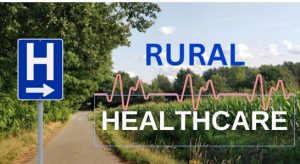
A rural road in the United States. More than 66 million Americans, one in five people nationwide, live in rural areas.
A System Under Pressure
Rural healthcare in the United States is approaching a breaking point, according to a national briefing convened on September 18, 2026, by American Community Media in partnership with the Robert Wood Johnson Foundation. The virtual session, titled Rural Health Care at a Breaking Point: Who Can Afford to Stay Healthy?, brought together policy and economic experts to examine why more than 66 million Americans living in rural communities, one in five people nationwide, are finding it harder to afford and access care.
Briefing materials cited May 2026 data from the Center for Healthcare Quality and Payment Reform showing that 720 rural hospitals across the country are at risk of closing, 294 of them within the next two to three years. About 8.4 percent of rural Americans are currently uninsured, and roughly 5 million Americans dropped coverage after monthly premiums rose by an average of 25 percent in January, with another 15 percent increase expected in January 2027.
An Economist’s Perspective
Dr. Neale Mahoney, the Trione Director of the Stanford Institute for Economic Policy Research and a professor of economics at Stanford University, examined the financial forces behind the crisis. Mahoney, who served as a special policy adviser for economic policy in the White House National Economic Council in 2022 and 2023, is an applied microeconomist who studies healthcare and consumer financial markets. He previously advised the Consumer Financial Protection Bureau’s Academic Research Council and worked on healthcare reform during the Obama Administration.
Can the Fund Deliver
Much of the discussion centered on the Rural Health Transformation Fund, created to soften the blow of Medicaid changes on rural communities but described by briefing organizers as falling short of its aims. Danielle Smith of Public News Service asked how the fund could be used to produce lasting improvements in access rather than short term projects, particularly for hospital care, behavioral health, maternal care, telehealth and workforce shortages. Reporters also questioned the timing of the underlying Medicaid cuts. Lori Lee of the North Dallas Gazette asked whether the cuts were scheduled to take effect after the midterm elections for political reasons, while Myong Sool Chang of Boston Korea asked how likely it is that the funding cuts could be reversed once the elections are over.
Weighing Bigger Reforms
The economic stakes extended beyond the immediate crisis. Rebecca Bartus of the Hungarian language newspaper Amerikai Nepszava asked, from an economist’s perspective, how realistic a Medicare for All policy agenda would be, and whether the country has the resources and capacity to adopt such sweeping healthcare reform. Lee also asked whether lower populations in rural areas make it inherently more difficult to cover the fixed costs of running a hospital, and whether older, typically more expensive to treat rural populations add further strain on already thin margins.
A Shared Warning
John Zippert, co publisher of the Greene County Democrat in Alabama, told the briefing that his community’s hospital and nursing home have struggled to stay open in a state that never expanded Medicaid, and that the facility was not funded in the first round of the Rural Health Transformation Fund despite applying. His account underscored a theme that ran through the briefing. Without a funding model built for durability rather than short term relief, rural hospitals in some of the hardest hit states may not survive long enough for reform to reach them. Dr. Katherine Hempstead of the Robert Wood Johnson Foundation and Tennessee physician Dr. Amy Gordon Bono also joined the panel, adding policy and clinical perspectives to Mahoney’s economic analysis.
About the Speakers
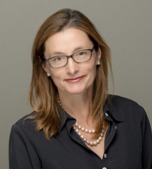
Dr. Neale Mahoney
Dr. Neale Mahoney is the Trione Director of the Stanford Institute for Economic Policy Research, a professor of economics at Stanford University, the George P. Shultz Fellow at the Institute, a research associate at the National Bureau of Economic Research, and an affiliated professor at J PAL. He served as a special policy adviser for economic policy in the White House National Economic Council in 2022 and 2023. He previously taught at the University of Chicago Booth School of Business and was a Robert Wood Johnson Fellow in health policy research at Harvard University. He received the ASHEcon Medal in 2021 and a Sloan Research Fellowship in 2016. Mahoney holds a doctorate and a master’s degree in economics from Stanford University and a bachelor’s degree in applied mathematics and economics from Brown University.
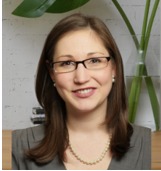
Dr. Katherine Hempstead
Dr. Katherine Hempstead is a senior policy adviser at the Robert Wood Johnson Foundation, where she focuses on health insurance, costs and access to care. She joined the Foundation in 2011 after directing the Center for Health Statistics at the New Jersey Department of Health, where she led major data initiatives including the state’s participation in the National Violent Death Reporting System. She holds a doctorate in demography and history from the University of Pennsylvania, was a postdoctoral fellow at Princeton University, and has taught history, public policy and biostatistics.
Dr. Amy Gordon Bono
Dr. Amy Gordon Bono is a primary care physician in Mount Juliet, Tennessee, and a native of Pulaski in southern middle Tennessee. She trained at Vanderbilt University, Tulane University School of Medicine and Northwestern University, and holds a master’s degree in public health focused on health systems management and policy. She chairs the public health committee of the Tennessee Medical Association and has testified before the Tennessee General Assembly. The views she expressed are her own and do not represent her employer or any affiliated organization.