
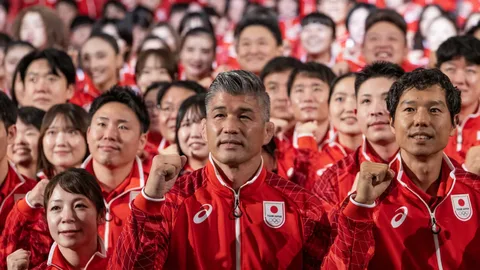

Kabaddi has its roots in the villages of South Asia, and India remains the sport’s undisputed superpower. Yet thousands of miles away, in Japan, a small but growing community of players and schoolchildren has taken to the game, and the reason has almost nothing to do with sport at all. It started with a comic book.
Background
The manga in question introduced kabaddi to a Japanese audience largely unfamiliar with a sport built around raiders chanting “kabaddi, kabaddi” while holding their breath in enemy territory. What began as a curiosity in classrooms slowly turned into gym sessions, then club teams, and eventually a national program good enough to reach the podium at a major international event.
Japan’s kabaddi breakthrough came in 2010, when the men’s team won bronze at the Asian Games in Guangzhou. It remains the country’s high-water mark in the sport, but the current squad, buoyed by last year’s East Asian Men’s Championship title, is trying to build on it in front of a home crowd in Nagoya.
Details
At a gymnasium on the outskirts of Nagoya, Japan’s players have been facing sides with far longer kabaddi traditions, including South Korea, Bangladesh, and Chinese Taipei. School children have turned out in the stands to cheer, a sign of the grassroots interest the comic first stirred years ago.
The results have been a mixed bag typical of a program still finding its footing against Asia’s best. A heavy 49-24 loss to India on the opening day was followed by a much-needed win over Bangladesh, and later a big victory over South Korea kept alive hopes of a medal-round finish.
Behind the scoreline is a smaller, slower story: a sport trying to move from comic-book novelty to something with real infrastructure. That shift depends on facilities, coaching depth, and enough player pipeline that the current wave of comic-inspired kids becomes the next national squad.
Quotes
The scale of that challenge is not lost on the people running the program. Kabaddi is still described as a minor sport in Japan by those closest to it, and the ambition now is to turn a home Games appearance into more mainstream recognition, and eventually, sponsorship money the sport has never had.
There is genuine belief that the ceiling is higher than bronze. With proper training conditions, several people close to the team think Japan could realistically compete with, and even beat, kabaddi heavyweights like India and Iran rather than simply hoping to avoid the bottom of the group table.
Impact
Stories like this rarely stay confined to one sport. A Japanese kabaddi scene built on manga fandom is an unusual case study in how a country can find an entry point into a sport it has no historical connection to, and it offers a blueprint for other nations trying to grow kabaddi outside South Asia.
For the wider Asian Games kabaddi field, a competitive Japan adds depth to a competition that has often been a two- or three-team race. A host nation with a genuine, homegrown fan base — however unconventional its origin — is good for the sport’s visibility across the region.
Conclusion
Japan’s kabaddi story is still being written, on and off the mat. The national team’s Asian Games campaign in Nagoya will decide how far this current group can go, but the bigger test is whether the comic-book spark that started it all can be turned into a lasting kabaddi culture in Japan.
FAQs
Does Japan play kabaddi?
Yes, kabaddi has a small but active following in Japan, driven partly by a comic that introduced the sport to schoolchildren. The national team competes internationally, including at the Asian Games, and won bronze at the 2010 edition in Guangzhou, its best result to date.
Which country is best at kabaddi?
India is the dominant force in international kabaddi, having won gold in eight of the nine Asian Games kabaddi tournaments held so far. Iran is the only nation to have beaten India for the Asian Games men’s title, making the two the sport’s strongest competitors globally.
Does Pakistan have a kabaddi team?
Yes. Pakistan competes in men’s and women’s kabaddi at major international events, including the Asian Games and the Kabaddi World Cup. The team is generally viewed as one of the stronger Asian sides outside of the India-Iran rivalry at the top of the sport.