
Islamabad Safe City Ordinance Explained: Fines, Rules and What Changes Now

A New Legal Shield for Islamabad’s Surveillance Network
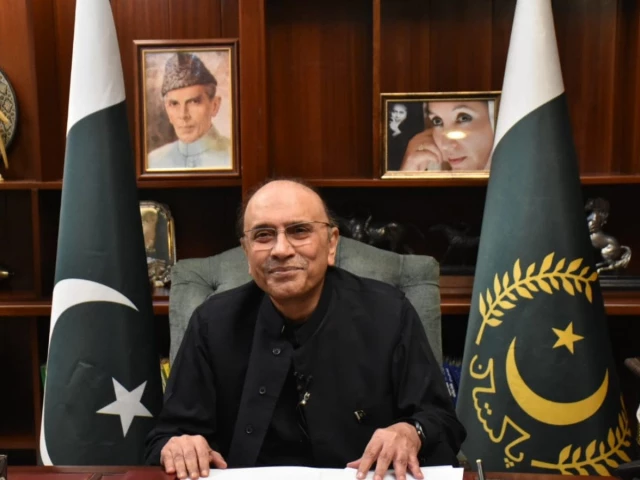
Islamabad’s surveillance network has just received a formal legal shield. President Asif Ali Zardari has signed off on the Islamabad Capital Territory Safe City Camera and Surveillance Infrastructure Protection and Damage Compensation Ordinance, acting on advice from Prime Minister Shehbaz Sharif.
Rather than simply announcing new security measures, the ordinance takes a legal route, building a compensation and penalty framework around equipment that had previously lacked dedicated protective legislation. This explainer breaks down what the law actually contains and why it matters for the capital.
Why the Islamabad Safe City Project Needed Legal Backing
The Islamabad Safe City project has grown into one of the most technologically advanced urban surveillance systems in the country, combining facial-recognition-enabled cameras, a command and control centre, and integration with services such as the Pucar-15 emergency helpline and the Online Women Police Station.
As the network has expanded, so has its exposure to vandalism, particularly during periods of public unrest. Officials overseeing the Safe City Phase-II expansion have confirmed that a large share of the network upgrade, including new optical fibre laid across the city, is close to completion, alongside progress on a new data centre and cybersecurity systems.
Without a dedicated legal mechanism, damage to this expensive infrastructure previously had to be pursued through general criminal or civil provisions, which officials say were not well suited to the scale or specificity of Safe City equipment.
Breaking Down the Ordinance’s Key Provisions
Financial Penalties for Damage
The ordinance sets a clear penalty structure. Anyone responsible for damaging a Safe City camera or piece of surveillance infrastructure can be fined up to Rs2 million per item damaged. This is a notable figure, intended to reflect the real cost of replacing sophisticated surveillance hardware.
Importantly, the law does not limit liability only to the person who physically causes the damage. It also applies to anyone who incites or encourages such damage, widening the net of accountability considerably.
Accountability During Public Gatherings
One of the more significant aspects of the ordinance concerns public events. If Safe City infrastructure is damaged during a rally, procession, sit-in, strike or protest, the organisers of that gathering can be held jointly responsible, even if they did not personally damage the equipment.
This provision is likely to draw scrutiny from political and civil society circles, given Islamabad’s history of large public demonstrations, including recurring protests near sensitive government zones.
How Penalties Are Calculated and Challenged
The ordinance assigns the responsibility of calculating fines and damage costs to an authorised officer. Before finalising any penalty, that officer must give the concerned person a chance to explain their side, which is meant to act as a basic procedural safeguard against arbitrary fines.
If someone disagrees with the amount, they are entitled to appeal. The law allows an appeal before the District and Sessions Judge in Islamabad, and this must be filed within 30 days of the decision.
Should a fine go unpaid, it will be recovered as arrears of land revenue, a standard legal mechanism used elsewhere in Pakistani administrative law for enforcing government dues.
Where the Money Goes
Under the ordinance, any funds collected through fines or compensation are earmarked specifically for repairing and replacing damaged Safe City cameras and related infrastructure. This creates a self-sustaining loop where penalties directly fund the system’s upkeep rather than being absorbed into general revenue.
The Political and Security Backdrop
The timing of the ordinance is not incidental. It follows heightened security planning in Islamabad, including directives from Interior Minister Mohsin Naqvi to accelerate the Safe City expansion and modernise its central control room. It also comes shortly after the Pakistan Tehreek-e-Insaf party postponed a planned protest in the capital to October 4, a demonstration tied to demands over the release of its founder.
Analysts following the capital’s security landscape suggest that protecting surveillance assets has become more urgent as large gatherings and political activity in Islamabad continue at a steady pace.
What This Means Going Forward
For ordinary residents, the ordinance is unlikely to change daily life directly, but it does reinforce the idea that Safe City infrastructure is treated as protected public property, not simply street furniture. For event organisers, however, it introduces a new layer of legal responsibility that will need to be factored into planning large gatherings in the capital.
As the Safe City Phase-II project nears completion, the ordinance is likely to be tested in real scenarios sooner rather than later, particularly if political activity in Islamabad picks up ahead of major planned demonstrations.
Frequently Asked Questions
Which area in Islamabad is considered the safest?
Areas around the Diplomatic Enclave and adjoining sectors are commonly regarded as the safest parts of the city, largely due to restricted movement, layered security checkpoints and dense Safe City camera coverage. These zones typically see faster response times from security personnel because of their proximity to key government and diplomatic installations, making unauthorised activity far more difficult to carry out unnoticed.
Who is the current DG Safe City in Islamabad?
Muhammad Haroon Joya currently holds the position of DG Safe City in Islamabad, a role he manages alongside his responsibilities as DIG Traffic. His duties have included overseeing the ongoing Safe City Phase-II expansion, coordinating with project contractors on technical progress, and briefing police officers on how the surveillance system functions on a day-to-day basis.
What is the Red Zone in Islamabad?
The Red Zone refers to a tightly secured administrative district in Islamabad that contains the country’s most sensitive government buildings, such as the Presidency, the Parliament House, the Supreme Court and a cluster of foreign embassies. Because of the concentration of high-profile institutions, the zone operates under strict access controls, frequent security checks and comprehensive Safe City camera monitoring to deter and detect any potential security threats.