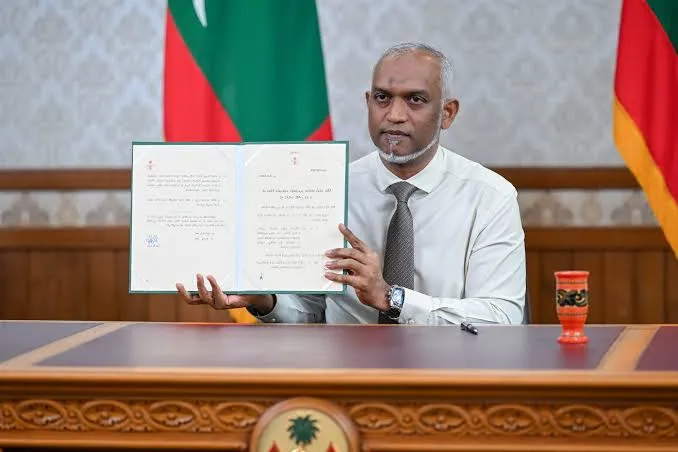
Muizzu seeks urgent changes to the Maldives Tourism Tax Law after European tour operators suspend some bookings.
Maldives President Mohamed Muizzu has decided to urgently amend a law that extends the Tourism Goods and Services Tax (TGST) to foreign tour operators, travel agents and online booking platforms.
The move follows concerns from the tourism industry over the impact of the expanded tax rules. The government had expected the change to generate about MVR 1.6 billion annually in additional revenue.
However, the new tax requirement has created concerns among international tourism businesses. Some European tour operators reportedly suspended bookings to the Maldives following the announcement.
The decision to amend the law comes as the Maldives seeks to protect its important tourism sector while also increasing government revenue.
Tourism remains a key part of the Maldivian economy. Foreign visitors support hotels, resorts, restaurants, transport services and other businesses across the country.
The government had planned to extend TGST obligations to businesses involved in selling or arranging tourism services for visitors. However, international operators raised concerns about how the new system could affect their costs and operations.
Some European tour operators have reportedly responded by suspending bookings to the Maldives. The development has raised concerns about the possible effect on visitor numbers and tourism revenue.
European markets play an important role in the Maldives tourism industry. Therefore, any disruption involving major tour operators could affect resorts and other businesses that depend on international visitors.
The reported booking suspensions have added pressure on the government to review the tax arrangement quickly.
The proposed tax expansion was expected to generate around MVR 1.6 billion a year. However, the government now faces the challenge of balancing additional revenue with the need to maintain the Maldives’ appeal as a global tourism destination.
Muizzu’s decision to seek urgent amendments signals a response to concerns from the tourism sector and international operators.
The government is expected to focus on changes that can protect tourism activity while maintaining sustainable public revenue.