
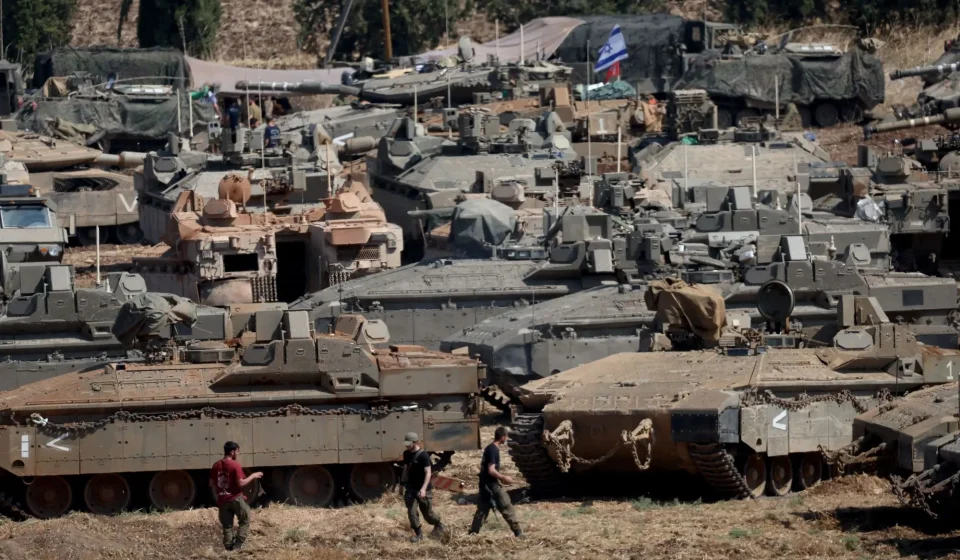

WEST ZAWTAR, Lebanon: Dodging the broken glass carpeting her home in southern Lebanon, Mariam al-Yaghi exited onto her upper balcony and pointed. A few hundred metres away was a sight the 67-year-old had grown accustomed to: military vehicles moving through the adjacent Lebanese village, still occupied by Israeli troops. West Zawtar was meant to be a model for a US-backed plan to end Israel’s occupation of parts of southern Lebanon. Two months after Israeli forces withdrew from it, residents say daily life is still shaped by drones, explosions and uncertainty.
Background: How the Lebanon-Israel War 2026 Began
The current war started on March 2, 2026, when Hezbollah fired on Israel for the first time since the November 2024 ceasefire. The attack followed the start of a wider war involving Israel, the United States and Iran, Hezbollah’s main backer. Israel responded with a large air and ground campaign in Lebanon.
The UN says that at least 4,346 people were killed in Lebanon between March 2 and August 17, according to Lebanese government data. At its peak, about 1.2 million people were displaced, which is roughly 18% of the population. A ceasefire was agreed on April 16 and renewed on June 3, and on June 26, the United States, Lebanon and Israel reached a framework deal that proposed “pilot zones,” where the Lebanese army would take over security from the Israeli military. Hezbollah has criticised parts of the arrangement.
Details: What Life Looks Like in West Zawtar
Israeli troops withdrew from West Zawtar in July, which made it the first test of the pilot zone plan. Under the idea, Israel would withdraw gradually from southern Lebanon in return for the disarmament of the Iranian-backed group Hezbollah. Israeli forces still hold a self-declared security zone that includes dozens of Lebanese villages, many of which have been demolished.
At night, Israeli soldiers patrol so close to Yaghi’s home that she can hear their voices. In the morning, booms echo through the valley as the Israeli military destroys homes in nearby occupied towns with controlled detonations and bulldozers. Her windows are gone, and she has covered the openings with cardboard, while a piece of shrapnel pierced her water tank. She says she is not scared, and that she will stay “until they get the hell out of here.”
The twin village of East Zawtar remains occupied, and residents say it is being systematically demolished. Drones fly over the area, and some people are afraid to gather in the town square. Only about 70 families have returned to West Zawtar, and many live in the undamaged corners of their homes. Farmers with olive groves near Israeli positions say they have to request access to their trees through a US-led coordination mechanism between the Lebanese and Israeli militaries.
Quotes: What Officials Have Said
West Zawtar’s mayor, Abed Ezzedine, said the pilot zone has not worked so far, mainly because electricity and running water are still largely unavailable. “In principle, I can tell you that no, it’s not successful,” he said, adding that the village was promised it would become a model town.
The Israeli military told Reuters that work to remove the threat of Hezbollah’s weapons has not been completed. It said drones are used to identify threats and that restrictions on the movement of villagers are meant to protect its troops. A US State Department spokesperson said the pilot zone process is “the only viable path” to security for both Lebanon and Israel, and that Hezbollah’s disarmament is an integral part of it.
Note for the writer: if you can find a fresh statement from the Lebanese government or from Hezbollah, add it here. Do not publish invented quotes.
Impact: A Test for the Region
The pilot zone is a key test for the whole peace process. So far, no further zones have been agreed, and residents of West Zawtar say that their experience is not a model for others. If the first zone fails to improve daily life, it will be harder to persuade other villages and the Lebanese public to accept similar arrangements.
The human cost is still very high. According to a US public radio report from the area, Israel’s defence minister has said his forces destroyed 15,000 homes in southern Lebanon to create what Israel calls a buffer zone. CNN reported in early September that more than 350,000 people remained displaced. Israel says the demolitions and the security zone are needed to stop Hezbollah from rebuilding its forces, while Lebanese officials call them a violation of their sovereignty.
Many people compare the present situation with earlier wars. Israel invaded southern Lebanon in 1978 and again in 1982, and it held parts of the south until 2000. The 2006 Lebanon war ended with UN Resolution 1701, and both Israel and Hezbollah claimed victory, so the question of who won it is still debated. Readers searching for an Israel Lebanon map or an Israel Lebanon Gaza map should note that Lebanon is on Israel’s northern border, while Gaza is on its south-western coast, and the two fronts are linked through the wider regional conflict.
Conclusion: What to Expect Next
The coming weeks will show whether the United States, Lebanon and Israel can agree on a second pilot zone and whether the Lebanese army can take over more areas. Public services in West Zawtar, such as electricity and water, will also be an important test.
For residents like Yaghi, the harvest season and repairs are the immediate priority. Further updates will follow as the talks continue and as more families decide whether to return.
Frequently Asked Questions (FAQs)
What is the main reason for the conflict in Israel?
There is no single reason, and the answer depends on whom you ask. At its core, the Israeli-Palestinian conflict is a dispute over land, statehood, security, Jerusalem, refugees and Israeli settlements, and it has lasted for more than 70 years. The war that began on October 7, 2023, was triggered by a Hamas-led attack on Israel, which Israeli officials say killed about 1,200 people, and Israel’s military campaign in Gaza that followed. The conflict also involves regional powers, including Iran and groups such as Hezbollah, which is why the fighting has spread to Lebanon. Israel says it acts for its security, while Palestinians and many other countries accuse Israel of occupation and disproportionate force. Because the views are very different, readers should check several reliable sources.
What is Israel doing in Lebanon right now?
According to reports, Israeli troops still occupy a self-declared security zone in southern Lebanon that covers dozens of villages. The military has been demolishing homes in occupied villages with bulldozers and controlled explosions, and drones are flying over the area. Israel says it is trying to remove the threat of Hezbollah’s weapons and to protect its forces, while Lebanese residents describe destruction and restrictions on movement. At the same time, Israel withdrew from West Zawtar in July under a US-backed pilot zone plan, in which the Lebanese army takes over security. Israeli strikes have also continued in southern Lebanon despite the ceasefire. The Lebanese government wants a full Israeli withdrawal, while Israel says it will withdraw gradually as Hezbollah is disarmed.
What is the deal between Israel and Lebanon?
There is no final peace treaty. The current arrangement is a series of ceasefires and a US-brokered framework. Israel and Lebanon agreed to a ceasefire on April 16, renewed it on June 3, and on June 26, the United States, Lebanon and Israel agreed to a trilateral framework that includes “pilot zones.” In these zones, the Lebanese army takes over security from the Israeli military, and Israel withdraws step by step. The plan also links Israeli withdrawal to the disarmament of Hezbollah, which has rejected parts of the arrangement. So far, only West Zawtar has been used as a pilot zone, and no other zones have been agreed. Talks are continuing, and the details can change quickly, so readers should follow official statements and trusted news reports.