
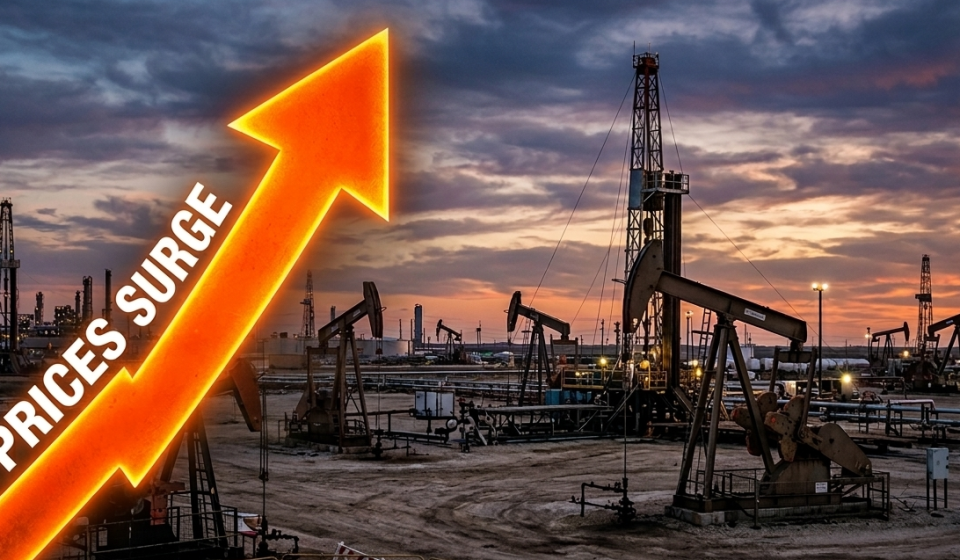

LONDON: Oil prices oscillated on Monday as the market considered possible further supplies after US President Donald Trump hailed fresh Russian diesel exports, against supply-constricting signals after major attacks on Saudi Arabia. Brent crude futures rose 69 cents, or 0.7%, to $105.41 a barrel by 0923 GMT, while US West Texas Intermediate (WTI) crude was at $92.42, up 57 cents, or 0.6%. Both benchmarks had earlier lost ground before recovering. Traders say the price moves show how nervous the market is about the war with Iran.
Background: A Market Driven by War and Politics
Oil prices have been very unstable this year because of the war involving Iran and the uncertainty about when energy flows through the Gulf will return to normal. Attacks on tankers near the Strait of Hormuz, and more recently on Saudi Arabia, have kept a large risk premium in the price. According to the AP, oil prices have continued to “yo-yo” for this reason.
Politics is also playing a role. Trump said on Friday that he struck a deal with Russian President Vladimir Putin to release more diesel, in an effort to calm a spike in fuel prices ahead of the US midterm elections on November 3. The US Treasury said it was issuing a temporary general license to allow Russian diesel supplies to reach global markets.
Details: What Moved the Market
Trump said that Russia would immediately supply more than 300,000 metric tons of diesel, or about 2.25 million barrels, to the US and global markets, with 500,000 tons more in November and another 1 million tons afterward. ICE gasoil futures fell as much as 4.3% to $1,419.5 per metric ton after the announcement. The plan has drawn criticism from some US lawmakers, because it goes against efforts to reduce the money that Russia earns from energy sales.
On Sunday, Trump also unexpectedly announced that Ukraine and Russia had agreed to an “energy ceasefire.” Ukrainian President Volodymyr Zelenskiy said he was still waiting to see the details, Russia did not comment, and Kyiv reported attacks by Moscow on energy sites after the statement. Axios reported that the truce, as described so far, covers strikes on oil refineries only.
Offsetting those supply hopes, the market also had to deal with the situation in the Middle East. Houthi attacks on Saudi Arabia, including on Riyadh’s airport, have raised questions about Saudi crude production and exports, although the reports reviewed do not show the extent of any damage to oil facilities. Trading Economics also noted that the attacks led Trump to consider joining Saudi Arabia in retaliating against the Iran-backed Houthis in Yemen.
In the Gulf of Mexico, energy majors Shell, Chevron and BP were working to bring staff back and restore output on their platforms after Hurricane Isaias made landfall early on Saturday.
Quotes: What Analysts and Officials Said
Goldman Sachs raised its December Brent forecast to $90 a barrel from $85, estimating a risk premium of just over $20 a barrel. The bank said it maintains its view that “further supply adjustments from the Middle East will ultimately lead to lower oil prices.” It also expects WTI, which is unusually low compared with Brent because of high shipping costs between the US and Europe, to average $81 in December 2026 and $73 in 2027.
Analyst Tamas Varga said the immediate impact of the Russian diesel plan is questionable, because Russia’s refining capacity has been reduced, and that a partial lifting of the country’s diesel export ban could release about 500,000 tons onto international markets. Fatih Birol, head of the International Energy Agency, said that member countries should check whether further diesel releases from their stocks are necessary.
Note for the writer: if you can find a fresh comment from OPEC, a Saudi official or a US energy official, add it here. Do not publish invented quotes.
Impact: Fuel Prices, Inflation and Politics
For consumers, the diesel market matters as much as crude, because diesel powers trucks, farms and factories, and a shortage can raise the cost of transport and food. If Russian supplies arrive in large volumes, they could ease pressure on diesel prices, but analysts doubt that they will be enough to change the overall picture quickly.
For importing countries, including Pakistan, high oil prices increase the import bill and can push up fuel and electricity costs. Readers who follow crude oil prices, the Brent crude oil price, the WTI oil price, oil futures or an oil price chart should remember that quotes change by the minute, so live data from an exchange or financial website is the best source.
The political angle is also clear. Lower fuel prices would help the White House ahead of the midterms, but critics say that buying Russian fuel sends a mixed message while the war in Ukraine continues. At the same time, the conflict in the Gulf means that even a small new attack can quickly move prices.
Conclusion: What to Watch Next
The next key signals will come from the details of the Russia-Ukraine energy ceasefire, the actual volumes of Russian diesel that reach the market, and further attacks on Saudi Arabia and shipping lanes. Any news on Iran and the Strait of Hormuz could also have a strong effect.
Analysts expect prices to remain volatile in the coming days. Further updates on oil news and market moves will follow.
Frequently Asked Questions (FAQs)
What did Trump say today about oil prices?
On Monday, Trump’s latest public statements were still those made over the weekend. Reuters said that he “hailed” fresh Russian diesel exports, which refers to his announcement on Friday that Russia would immediately supply more than 300,000 metric tons of diesel, with 500,000 tons more in November and 1 million tons afterward. On Sunday, he said that Russia and Ukraine had agreed to an “energy ceasefire,” although he did not give details, and Zelenskiy said he was waiting to see them. The reports reviewed do not include a separate Monday statement from him on prices. For his latest comments, readers should check his official social media posts and White House statements.
Does Trump benefit from oil prices?
The answer is mixed. High fuel prices are politically harmful for a president, because voters notice the price of gasoline and diesel, and Trump’s diesel deal with Russia was reportedly aimed at calming a spike in fuel prices ahead of the November 3 midterms. At the same time, the United States is one of the world’s biggest oil producers, so higher prices can benefit US oil companies, shale producers and some states. Economists also point out that high energy costs can raise inflation and slow growth, which is a risk for any government. Whether any individual leader “benefits” depends on how the changes affect voters, businesses and the wider economy.
Will oil prices go up with the Iran War?
It depends on how the war develops, and no one can predict it with certainty. The war has already pushed prices up, and Brent is trading above $104 a barrel, with Goldman Sachs estimating a risk premium of just over $20 a barrel. Attacks on tankers, the Strait of Hormuz and Saudi Arabia can raise prices quickly, while any sign of calmer conditions or extra supply, such as Russian diesel, can pull them down. Goldman expects Brent to average $90 in December if Middle East supply adjustments help, but the forecast could change if the fighting spreads. Readers who need live prices should check an exchange or a trusted financial website.