
PAKISTAN HOUSE OR A PRIVATE GUESTHOUSE? WHO IS SCREENING THE PAKISTANI AMBASSADOR’S VISITORS?
Award Ceremonies, Controversial Associations, Restrictions on Journalists, and Questions About Transparency at Pakistan’s Embassy in Washington
By Asim Siddiqui Washington, D.C., USA
I will begin with an uncomfortable truth.
The official residence of Pakistan’s Ambassador to the United States is known as Pakistan House. It is not merely the private residence of an ambassador. It symbolizes the State of Pakistan, its people, its national dignity, and its diplomatic representation.
For this reason, the individuals who visit Pakistan House, their backgrounds, professional activities, and associations cannot simply be ignored.
Over the years, Pakistan House has welcomed influential individuals from various professions and backgrounds. Some have made significant contributions to Pakistan, while questions have occasionally arisen about whether others sought access to diplomatic circles for genuine national service or personal publicity.
My fundamental question is simple:
Who is responsible for screening and evaluating the individuals invited to Pakistan House?
One Photograph, Many Questions
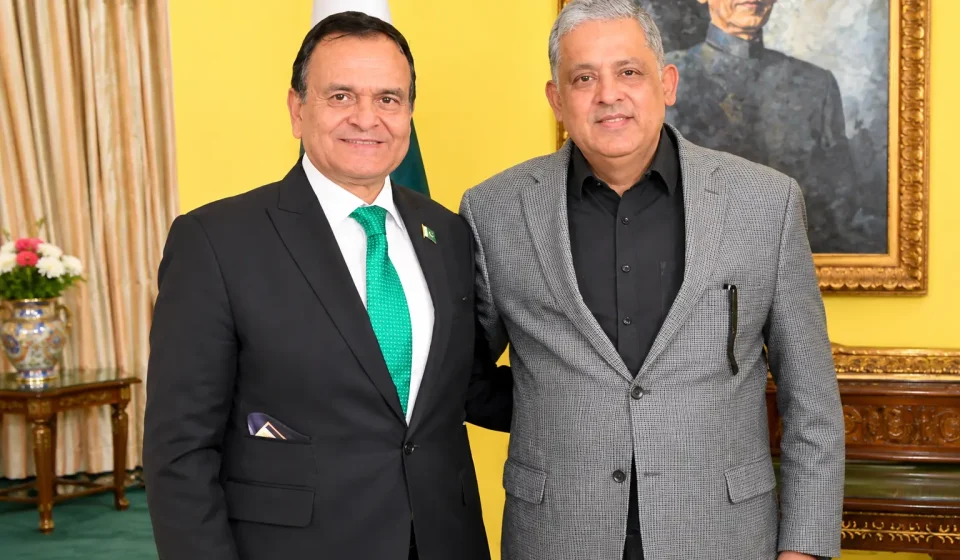
Recently, a photograph surfaced showing Pakistan’s Ambassador to the United States, Rizwan Saeed Sheikh, alongside an individual associated with international business networking, magazine publishing, and award ceremonies.
The photograph itself does not establish any wrongdoing. However, it raises an important question about the standards used to select individuals invited to Pakistan’s official diplomatic residence.
The individual concerned promotes international business connections, conferences, and recognition events. Critics of certain commercial award platforms have questioned whether sponsorship arrangements, the sale of event tables, or other financial considerations influence the selection of award recipients.
These concerns warrant examination, although allegations of awards being sold should not be presented as established facts without credible supporting evidence.
When I reviewed the organization’s website and online activities, I observed considerable emphasis on award ceremonies, recognition programs, and business networking.
This prompted several questions.
What measurable contributions has this organization made to Pakistan? Where can its international claims be independently verified? What documented achievements justify the access or recognition its representatives may receive within influential diplomatic circles?
These are not expressions of personal hostility. They are legitimate questions that belong at the heart of responsible investigative journalism.
Controversial Individuals and Award Recipients
My concerns become more serious when award-giving organizations are associated with individuals whose public statements about Pakistan or its institutions have generated controversy.
Questions have been raised about an award reportedly presented to an individual accused of using offensive language and hostile slogans against Pakistan’s military leadership, particularly Field Marshal Asim Munir.
The alleged statements, the circumstances of the award presentation, and the relationships between the individuals involved require independent verification.
Nevertheless, a broader question deserves consideration:
Should organizers of controversial award ceremonies be invited to official diplomatic gatherings without appropriate background checks?
A photograph with an ambassador does not necessarily constitute official government endorsement. However, when such photographs are circulated for promotional purposes, they can create the public impression that an individual or organization enjoys official recognition or government support.
This is precisely why transparency in diplomatic relationships is so important.
My Concern Is Not the Awards Business — It Is Pakistan’s Representation
Let me make one point absolutely clear.
Who publishes a magazine, organizes business conferences, presents awards, or receives recognition is a matter for those individuals and organizations, provided their activities comply with the law.
Whether someone operates a business in Dubai, opens an office in Virginia, conducts activities in Maryland, or relocates between the United States and another country is not my personal concern.
My concern is solely about Pakistan’s diplomatic representation and the dignity of Pakistan House.
Ambassador Rizwan Saeed Sheikh holds an important national responsibility.
Pakistan House should not become a platform for commercial networking, personal relationships, or promotional activities that could create questions about diplomatic impartiality.
In my view, the ambassador should review the procedures followed by his administrative staff, secretariat, and those responsible for managing invitations and official engagements.
If an appropriate screening system already exists, its procedures should be explained.
If weaknesses are identified, they should be addressed.
An Appeal to Pakistan’s Ministry of Foreign Affairs
I respectfully urge Pakistan’s Ministry of Foreign Affairs to review the procedures governing official invitations and visitor access to Pakistan House.
Such a review should examine whether appropriate background checks are conducted, whether potential conflicts of interest are considered, and whether commercial organizations are authorized to use photographs of diplomatic meetings for promotional purposes.
This is not a demand to exclude individuals because of their political opinions or disagreements with government policies.
It is a call for the protection of Pakistan’s diplomatic credibility, institutional accountability, and professional standards.
Three Questions That Deserve Clear Answers
Who decides which individuals are invited to Pakistan House?
Are the professional backgrounds, activities, and relevant associations of invited individuals reviewed before official invitations are extended?
Are commercial organizations and award organizers authorized to use photographs with Pakistani diplomats to promote their businesses, events, or recognition programs?
These are reasonable questions involving public institutions and diplomatic accountability. They deserve transparent, documented answers.
Final Word: Pakistan’s Dignity Must Come First
Pakistan House represents the honor, dignity, and diplomatic identity of Pakistan.
It should be protected from activities that could create perceptions of personal publicity, preferential access, or undisclosed influence.
Ambassador Rizwan Saeed Sheikh and his team have an opportunity to strengthen public confidence through transparent procedures, fair media access, and consistent professional standards.
At the same time, Pakistani journalists in the United States must examine their own professional conduct and organizational practices before demanding accountability from others.
Journalism requires independence, evidence, fairness, and the courage to ask difficult questions.
The credibility of a nation’s diplomatic institutions must never depend on personal connections, publicity opportunities, or ceremonial recognition. It must rest on transparency, integrity, and service to the national interest.
Pakistan House belongs to Pakistan’s national identity, and protecting its dignity should remain a shared responsibility.