
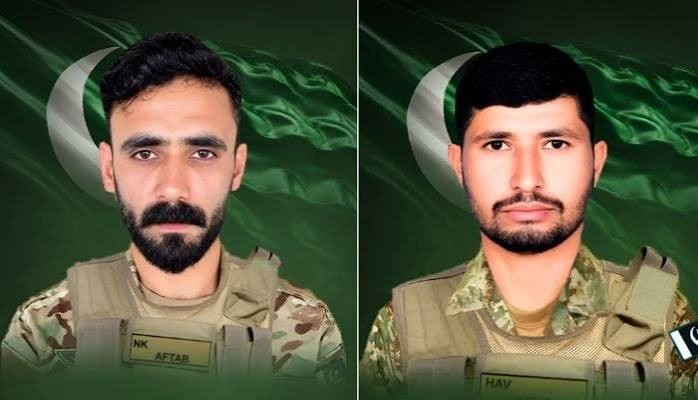

Two soldiers were martyred and 14 terrorists were killed in North Waziristan district of Khyber Pakhtunkhwa, the military’s media wing said on Saturday. The fighting took place during a series of intelligence based operations carried out by security forces in the area. dawn
The two soldiers were identified as 43 year old Havildar Asmat Ali and 32 year old Naik Aftab Ali, who embraced martyrdom during the operations. The latest North Waziristan operations came only a day after the military reported heavy militant losses elsewhere in the country. dawn
Background of the Latest Operations
The newest development follows a very busy week for Pakistan’s security forces. On Friday, the military said 43 terrorists were killed during operations conducted over 48 hours in Khyber Pakhtunkhwa, including 35 in Mir Ali, North Waziristan district, and eight in Orakzai district. The Mir Ali area has been a repeated focus of recent security activity. dawn
The military also said another 31 terrorists were killed in Balochistan during an operation launched on November 3. Taken together, the figures show that security forces are running several campaigns across two provinces at the same time. dawn
Militancy in the northwest has been a long running concern. Attacks escalated after the banned Tehreek e Taliban Pakistan ended a fragile ceasefire with the government in 2022 and vowed to target security forces. Since then, Khyber Pakhtunkhwa has faced regular clashes, with North Waziristan among the most affected districts. dawn
Details of the Operations
According to the Inter-Services Public Relations (ISPR), the operations were part of a continuing series of intelligence based operations. Security forces engaged several militant locations in the general area of Mir Ali, Datta Khel and surrounding areas of North Waziristan district. The military described the targets as members of Fitna al Khwarij, the term it uses for the banned TTP and its affiliates. 24newshd
Reports from other outlets add some detail. Samaa reported that security forces eliminated 12 militants, including two Afghan nationals, during an operation in Ali Khel. The same report put the overall number of militants killed at 16, which differs from the figure of 14 given by Dawn. Such differences are common in the first hours of a developing story, and readers should rely on the final ISPR figures. samaa
The two soldiers lost their lives during intense exchanges of fire. Samaa reported that Havildar Ismat Ali belonged to Swabi, while Naik Aftab Ali belonged to Mardan. The spelling of the first name varies between outlets, so editors should confirm it against the official ISPR press release before publishing. samaa
Independent verification of casualty numbers in remote tribal areas is difficult. Most details therefore come from the military’s official statement, and journalists generally attribute them to ISPR for that reason.
Official Reaction and Quotes
President Asif Ali Zardari paid tribute to the security forces for their successful operation and expressed condolences over the martyrdom of the two soldiers. His message honoured the sacrifice of the soldiers and praised the troops involved in the action. dawn
Such statements follow a familiar pattern in Pakistan. Military and civilian leaders usually pay tribute to the fallen, repeat their resolve to end militancy, and promise to continue operations until the areas are cleared. In its past statements, ISPR has also said that sanitisation of the area continues after an engagement to find any remaining militants.
Impact on Regional Security
The latest North Waziristan operations carry weight for the wider region. North Waziristan borders Afghanistan, and the movement of militants across that border has been a recurring concern for Islamabad. The reported presence of Afghan nationals among those killed in Ali Khel is likely to draw fresh attention to border management.
For local residents, the effect is mixed. Successful operations can reduce the immediate threat from armed groups, but they can also bring disruption, curfews and anxiety to ordinary families. Many people in the district hope for lasting peace rather than a cycle of attacks and counter attacks.
Analysts often point out that military action alone rarely ends militancy. Long term stability usually needs economic development, better policing, strong local governance and cooperation with neighbours. You can follow more reporting on these themes in our Pakistan news coverage at South Asian Chronicle.
On the national level, the sharp rise in reported operations across Khyber Pakhtunkhwa and Balochistan shows that counter terrorism remains a top priority. Readers who want wider context on regional politics can also browse our latest security and defence reports and our South Asia analysis section.
Conclusion
The deaths of Havildar Asmat Ali and Naik Aftab Ali are a reminder of the price paid by security personnel in the fight against militancy. At the same time, the military says its operations have dealt a heavy blow to armed groups in North Waziristan over the past few days.
Further operations are expected in the coming days, and more official updates are likely from ISPR. South Asian Chronicle will keep following the story and report new developments as they are confirmed by trusted sources.
Frequently Asked Questions
What happened in the latest North Waziristan operations?
Security forces carried out a series of intelligence based operations in areas including Mir Ali, Datta Khel and Ali Khel. According to the military’s media wing, 14 terrorists were killed and two soldiers were martyred. Some outlets reported slightly higher figures, so the numbers may be updated as more information becomes available.
Who were the two soldiers martyred in the operations?
The soldiers were identified as 43 year old Havildar Asmat Ali and 32 year old Naik Aftab Ali. They embraced martyrdom during intense exchanges of fire with militants. Different outlets spell the first name slightly differently, so the official ISPR release remains the best source for confirmation.
What is ISPR and why is it the main source of information?
ISPR stands for Inter-Services Public Relations, the media wing of the Pakistan Armed Forces. It issues official statements about military operations, casualties and security incidents. Because many of these areas are remote and hard for reporters to reach, most news outlets rely on ISPR for first reports.
What is Fitna al Khwarij?
Fitna al Khwarij is the term the Pakistani military uses for the banned Tehreek e Taliban Pakistan and linked militant groups. The label appears regularly in official statements about operations in Khyber Pakhtunkhwa. Readers will see it often in reports on counter terrorism.
Why does North Waziristan matter for Pakistan’s security?
North Waziristan is a border district next to Afghanistan, and it has a long history of militant activity and military operations. Its geography makes it important for both security and cross border movement. Events there often affect the wider security picture of Khyber Pakhtunkhwa and the country.
What could happen next after these operations?
Security forces are expected to continue intelligence based operations in the area, and ISPR may release further updates. Officials usually say that clearance and sanitisation work continues after such engagements. Experts add that lasting peace also depends on development, governance and cooperation across the border.