
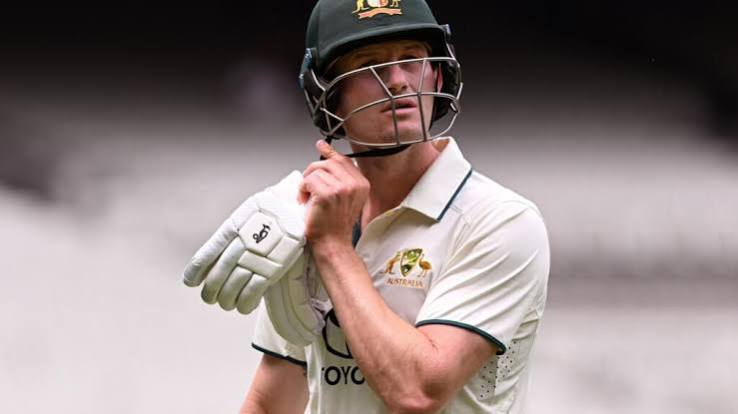

Australian cricketer Cameron Bancroft has claimed that the entire squad knew about the Sandpapergate plot in South Africa in 2018. His statement directly contradicts Australia captain Pat Cummins and reopens one of the most damaging chapters in modern cricket. Bancroft published his account on Wednesday in a column for The West Australian.
Background: How the Sandpapergate Scandal Began
The ball tampering scandal erupted during the third Test against South Africa at Cape Town in 2018. Bancroft was caught on camera using sandpaper to rough up the ball. The footage spread worldwide within hours and triggered a crisis for Australian cricket.
Cricket Australia launched an investigation soon afterwards. Its conclusion was that only three people were responsible: then captain Steve Smith, his deputy David Warner and Bancroft. All three were sent home from the tour and banned from international cricket. For years, that version of events stood as the official record of Sandpapergate.
The matter returned to the headlines last week. Usman Khawaja released his autobiography, Sabr, and alleged that the whole team was aware of what was happening. Warner reportedly backed that claim strongly. The Usman Khawaja autobiography therefore became the spark that reignited the Australian cricket controversy.
Details: What the Cameron Bancroft Statement Says
In his column, Bancroft said the plan was not limited to Smith, Warner and himself. He wrote that the whole team knew about the use of sandpaper on the ball during the tour. This Cameron Bancroft statement is the most significant public challenge yet to the findings of the original Cricket Australia investigation.
Bancroft also admitted that he did not give a complete or truthful account when investigators questioned him in 2018. He said he withheld important details, including when the use of sandpaper began, how long it continued and how many others were aware. According to him, he did this to protect the inquiry and avoid implicating the people around him.
He explained why he chose to speak now. The release of Khawaja’s book brought many memories back, he said, and it felt freeing to see the real sequence of events finally discussed in public. He described carrying that burden for years. He then named the final trigger for his decision to write the column.
That trigger was the Pat Cummins denial. Cummins held a lengthy press conference on Friday and rejected Khawaja’s version of events in strong terms, saying the batter was completely wrong. Bancroft said the press conference left him feeling angry, betrayed and alone. He added that the public account given by Cummins does not match what he and others lived through on that tour.
Quotes: Voices at the Centre of the Dispute
Bancroft’s column makes his position clear. In his own words, the Cape Town incident was not a plan known only to three players. He stated that the knowledge extended to the whole team. His description of the Pat Cummins denial as leaving him “angry, betrayed and alone” shows how personal the dispute has become.
Cummins has taken the opposite view. In his Friday press conference he insisted that Khawaja’s claims were wrong. The Australia captain has maintained that the original Cricket Australia investigation correctly identified who was responsible for the Cape Town Test incident.
Other voices have joined the debate. Dawn has reported that former Australia bowler Chadd Sayers also claimed that everyone knew. It has also reported that Cricket Australia plans to open a forum where players can share their versions of Sandpapergate, while ruling out a fresh probe.
Impact: Why This Australian Cricket Controversy Matters
The impact on Australian cricket could be serious. Players who once shared a dressing room now publicly disagree about basic facts. A divided account from the same team damages trust inside the squad and raises questions about the strength of the original Cricket Australia investigation.
The reputational stakes are also high for the governing body. Cricket Australia has chosen a forum rather than a new probe, which may satisfy some players but leave others unconvinced. Critics are likely to ask whether a voluntary forum can establish the truth as well as a formal inquiry could.
The scandal also matters beyond Australia. Cricket fans across South Asia follow ball tampering debates closely, because accusations about ball condition have long shaped conversations about reverse swing and fair play. The latest developments in the Sandpapergate story will be watched in Pakistan, India, Sri Lanka and Bangladesh as a test of how cricket’s institutions handle accountability.
Conclusion: What Happens Next
The Sandpapergate dispute is unlikely to fade soon. Bancroft, Khawaja and Warner have offered one account, while Cummins has offered another, and Cricket Australia has not yet shown how it will reconcile them. The planned players’ forum will be the next key development to watch.
For now, readers should treat the claims as competing statements rather than settled findings. The original ball tampering scandal remains documented, but the question of who knew what in Cape Town is once again open. Further statements from players and officials are likely in the coming days.
Frequently Asked Questions About Sandpapergate
What did Cameron Bancroft say about Sandpapergate?
Bancroft said in a column for The West Australian that the use of sandpaper in South Africa was known to the whole team, not only to himself, Steve Smith and David Warner. He also admitted that he had not given a complete and truthful account to Cricket Australia’s investigators in 2018, saying he withheld details to protect the inquiry and the people around him.
Why did Bancroft speak out now?
Bancroft said the release of Usman Khawaja’s autobiography Sabr brought back many memories. He described the Pat Cummins press conference as the final straw. According to his column, it left him feeling angry, betrayed and alone, and he felt the public account did not match what he experienced on the tour.
What is Pat Cummins’ position on the Sandpapergate claims?
Cummins rejected Khawaja’s allegations in a lengthy press conference on Friday, saying the claim that the whole team knew was wrong. His position supports the conclusion of the original Cricket Australia investigation, which held that only Smith, Warner and Bancroft were responsible for the Cape Town ball tampering.
What did the original Cricket Australia investigation conclude?
The investigation found that three players were responsible for using sandpaper on the ball in the third Test at Cape Town in 2018: Steve Smith, David Warner and Cameron Bancroft. All three were sent home in disgrace and banned. The new claims challenge whether that finding told the complete story.
Will there be a new inquiry into Sandpapergate?
According to Dawn, Cricket Australia has ruled out a new probe. It plans instead to open a forum where players can share their versions of events. Whether that forum will satisfy players and fans, or lead to calls for a formal review, remains to be seen as the Australian cricket controversy develops.