
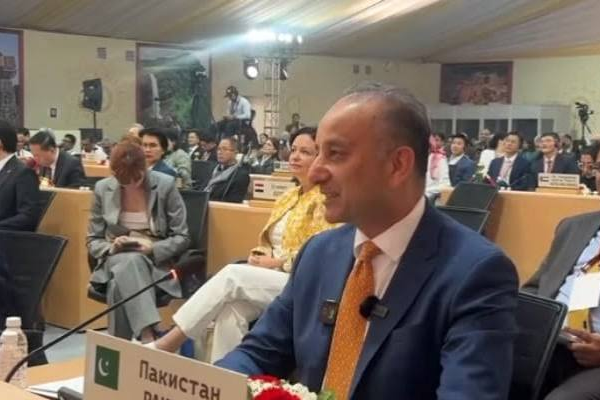

Pakistan’s Climate Change Minister used the SCO Civilisational Dialogue Forum in New Delhi to link environmental risk with the survival of human societies. Dawn reported that the minister described climate change as an enemy of civilisations. The Musadik Malik SCO appearance has drawn attention because of the forum’s setting and the wider state of Pakistan India relations.
Summary
Dr Musadik Masood Malik, Pakistan’s Federal Minister for Climate Change and Environmental Coordination, is leading his country’s delegation at the SCO Civilisational Dialogue Forum. The event runs in New Delhi from November 20 to 22 and is hosted at the historic Purana Qila.
His message combines two themes. The first is dialogue among civilisations and cultural contact between neighbours. The second is climate change Pakistan faces, which he presents as a shared danger that no single country can handle alone.
Background
The Shanghai Cooperation Organisation is a regional bloc that brings together countries across Asia. The SCO Civilisational Dialogue Forum is the first gathering of its kind, and India is the host. Pakistan announced on November 14 that Dr Malik would attend after an invitation from India’s Minister of Culture and Tourism.
The Foreign Office said Islamabad remains committed to promoting dialogue among civilisations and to people to people contact. Dr Malik took charge of the climate change portfolio in March 2025 and also serves as a Senator. He is an economist and public policy expert who regularly explains the government’s position in public.
Details of the Visit
Dr Malik arrived in New Delhi on Friday. Pakistan’s Chargé d’Affaires, Saad Warraich, received him at the airport. Indian media described the trip as the first visit by a Pakistani minister to India since Operation Sindoor, which explains the close attention the New Delhi SCO forum has received.
Pakistan’s delegation is taking part in the thematic sessions of the forum. The minister was also expected to visit the Taj Mahal during his stay, according to Indian media reports. Such a stop fits the cultural focus of the gathering.
On the sidelines, Dr Malik spoke informally to reporters. He stressed that multilateral platforms for discussing culture and civilisation are valuable, because they give countries a space to talk outside the usual political disputes. He argued that cultural ties can keep channels of communication open.
What the Minister Said on Climate and Civilisation
According to Dawn, the Musadik Malik SCO remarks framed climate change as a danger to civilisations themselves. The argument is that floods, heatwaves, water stress and damaged farmland threaten the foundations on which societies, cultures and economies are built.
Pakistan has experienced severe climate related disasters in recent years, which gives the minister’s argument a domestic basis. For Islamabad, climate diplomacy is not an abstract topic. It affects food security, public health and the livelihoods of millions of people.
Reporters also asked whether the forum could improve bilateral ties. Dr Malik said culture is essential for dialogue between India and Pakistan. He did not present the forum as a quick fix, but he described it as a useful step in keeping contact alive.
India’s Position on Related Issues
Separate from the forum agenda, India’s Ministry of External Affairs said on Friday that its position on the Indus Waters Treaty is very clear and has seen no change. The statement came while Dr Malik was in the Indian capital. It shows that major bilateral disputes remain unresolved even as cultural engagement continues.
Water is closely tied to the climate debate, so the timing of the statement drew notice. Analysts often point out that shared rivers make regional cooperation on climate more important, not less.
Impact and Analysis
The first impact is regional. The Musadik Malik SCO visit gives both governments a low pressure setting to meet, even if no formal talks are scheduled. Observers will watch whether the forum leads to further contact on culture, tourism or environmental cooperation.
The second impact is on the climate agenda. By placing climate change Pakistan faces inside a civilisational argument, the minister widens the topic beyond economics and aid. This approach may appeal to SCO members who prefer cooperation framed around shared heritage and long term survival.
The third impact is diplomatic signalling. Attending an event hosted by India shows that Pakistan is willing to engage in multilateral spaces. At the same time, the Indus Waters Treaty statement from New Delhi shows that substantive differences remain. Both signals will be read carefully in the coming weeks.
You can follow wider coverage of regional diplomacy on South Asian Chronicle, where updates on Pakistan India relations and SCO activity are published regularly. Readers interested in environmental policy can also explore the climate and environment coverage on the site. For more reporting from the region, visit the world news section.
Conclusion
The Musadik Malik SCO appearance shows how climate policy and cultural diplomacy are increasingly discussed together. The SCO Civilisational Dialogue Forum ends on November 22, and attention will turn to whether its outcomes lead to follow up meetings or practical cooperation. Pakistan has made its case that dialogue among civilisations and action on climate change belong on the same agenda. Whether that case produces results will depend on political will in both capitals.
Frequently Asked Questions
Who is Musadik Malik and why is he attending the SCO forum?
Dr Musadik Masood Malik is Pakistan’s Federal Minister for Climate Change and Environmental Coordination and a Senator. He is leading Pakistan’s delegation to the SCO Civilisational Dialogue Forum in New Delhi after an invitation from India’s Minister of Culture and Tourism. His role is to present Pakistan’s position on dialogue among civilisations and to take part in the thematic sessions.
What is the SCO Civilisational Dialogue Forum?
It is the first forum of its kind under the Shanghai Cooperation Organisation, focused on cultural exchange and understanding between member countries. It is being held in New Delhi from November 20 to 22 at the Purana Qila. The aim is to encourage conversation on shared heritage and cooperation, separate from security or trade negotiations.
What did Musadik Malik say about climate change?
Dawn reported that he described climate change as an enemy of civilisations. The point of this argument is that environmental damage threatens societies, cultures and economies at their roots. Pakistan has faced serious climate related disasters, and the minister uses the forum to argue that regional cooperation on climate change is necessary.
Does the visit signal better Pakistan India relations?
It is too early to say. Indian media described the trip as the first such visit since Operation Sindoor, which makes it notable. However, India’s Ministry of External Affairs said on Friday that its position on the Indus Waters Treaty has not changed. Dr Malik himself said culture is essential for dialogue, but he did not claim the forum would settle bilateral disputes.
Why does climate change matter for regional cooperation in South Asia?
Countries in South Asia share rivers, monsoon systems and weather patterns, so floods, droughts and heatwaves cross borders. A problem that starts in one country often affects its neighbours. This is why climate diplomacy is seen as an area where cooperation could be possible even when political relations are strained.