A Response Awaited by Muhammad Mohsin Iqbal I am only a young girl. My name may never appear in a newspaper, my photograph may never be shown on television, and perhaps no one beyond my family will ever know what happened to me. Yet something happened that has changed the meaning of every tomorrow. A crime was committed against my body, but everyone now seems to be asking questions about my character, my clothes, my movements, my friendships, my silence and my future. I therefore ask one question—not only of…
Read MoreCategory: Articles
Bab el-Mandeb, Hormuz and the Global Economy Explained
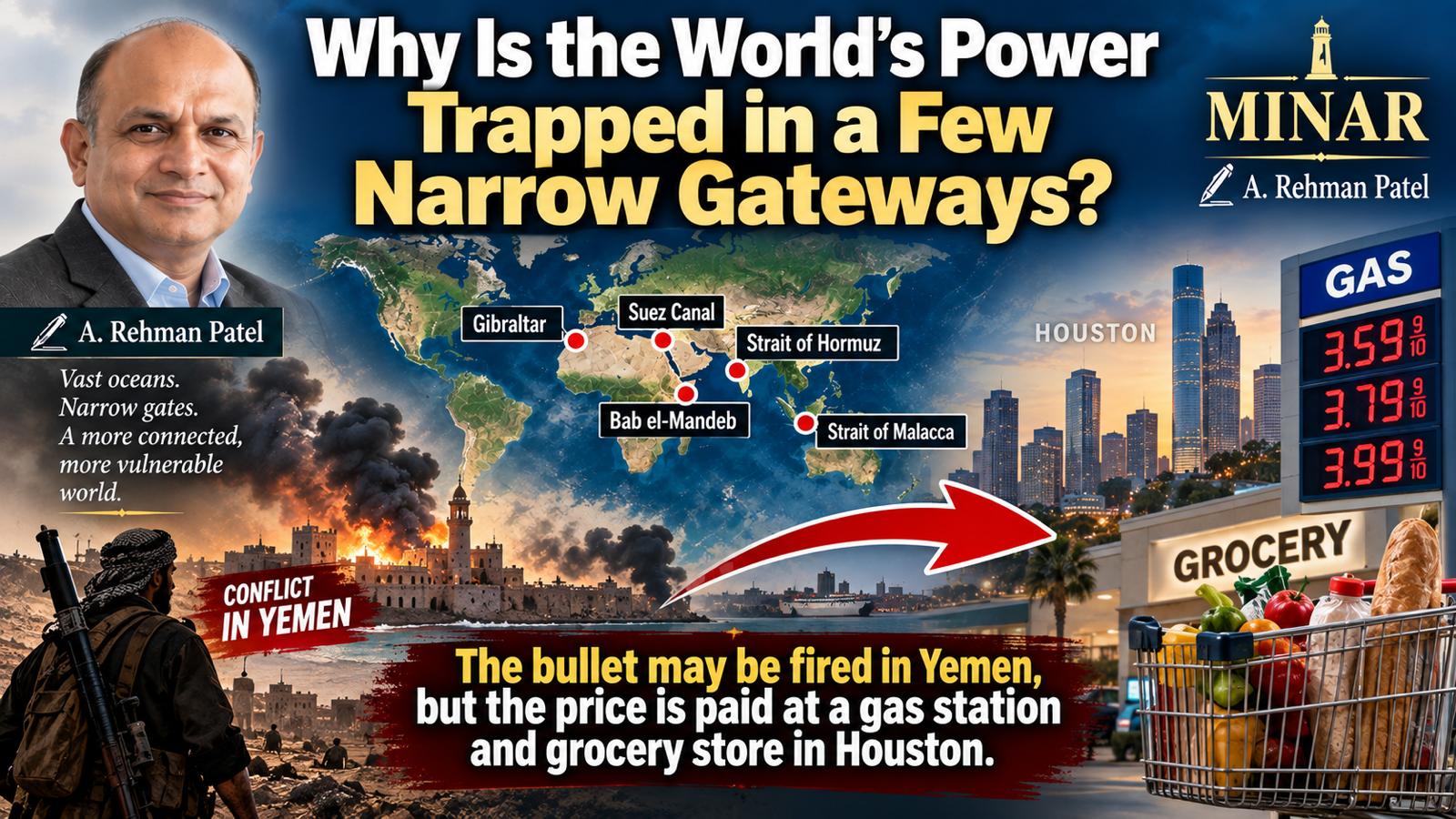
Why Is the World’s Power Trapped in a Few Narrow Gateways? MINAR A. Rehman Patel On a map, the oceans appear immense. The Indian Ocean, the Pacific, the Atlantic, the Arabian Sea and the Red Sea are such vast bodies of water that human beings seem insignificant beside them. Yet history teaches us a curious lesson: The world’s oceans may be vast, but global power has often been concentrated in a handful of narrow gateways. Today, one of those gateways is once again at the center of world attention:…
Read MoreIndia’s South Asia Dilemma and China-Pakistan Strategy
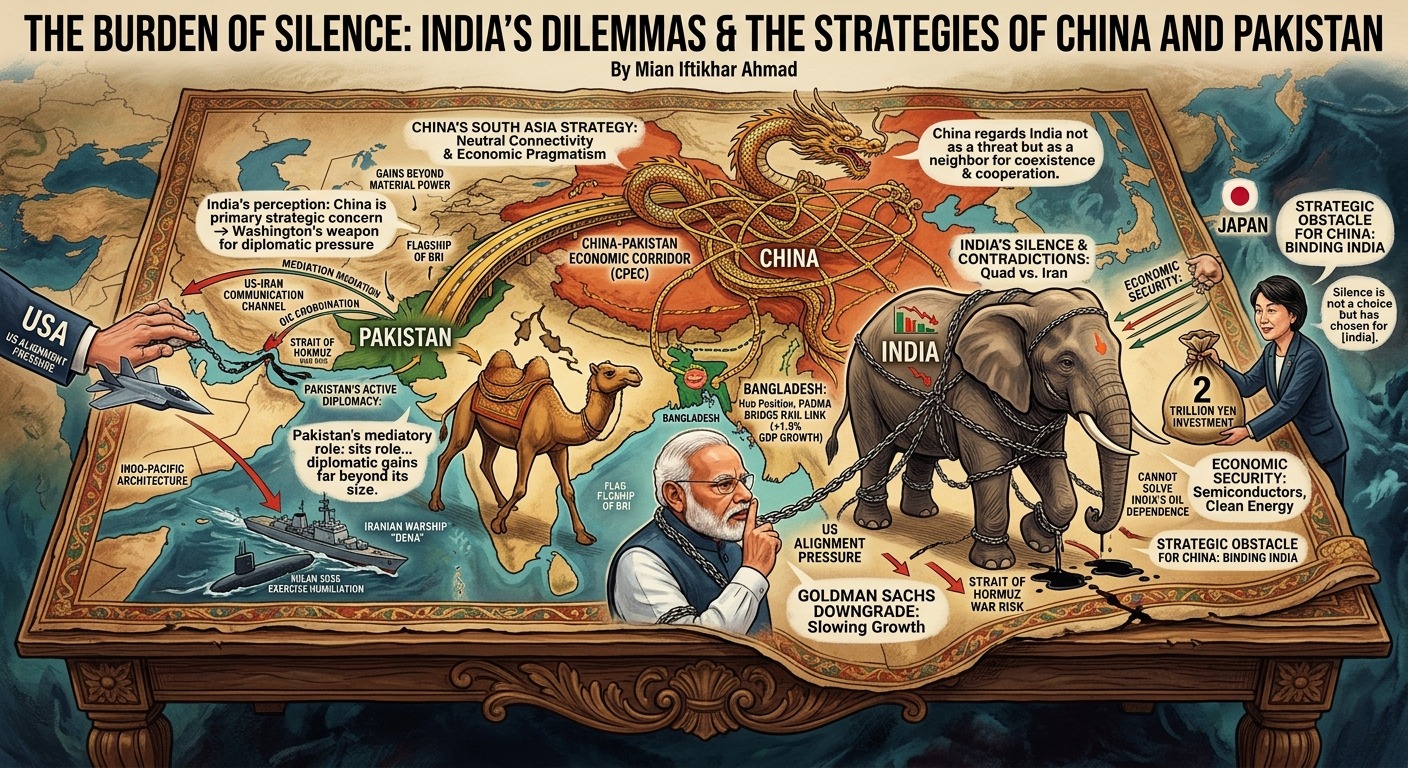
India’s Dilemmas in South Asian Power Politics and the Strategies of China and Pakistan By Mian Iftikhar Ahmad When the US-Israeli military action against Iran ignited the fires of war in the waters of the Indian Ocean, a striking phenomenon emerged on the surface of South Asian geopolitics: Pakistan seized the opportunity to become the center of regional attention through mediation and diplomatic initiative, while India maintained an unusual silence. This silence was not accidental tongue-tiedness but the inevitable consequence of the structural complexities in which the Modi government…
Read MoreNew Provinces in Pakistan: Need for Administrative Reform
New Provinces: A Need for Pakistan By Ijaz.ul.hassan Burie chief When Pakistan came into existence, its population was much smaller than it is today. Resources were certainly limited, but the size of the population, cities, districts, and administrative needs was also relatively small. Over time, Pakistan’s population increased several times, major cities expanded into vast urban centers, and new districts and tehsils were created. However, the basic structure of provincial administration has remained largely the same. Today, Pakistan’s population has exceeded 240 million. According to the 2023 Census, Punjab has…
Read MoreTime, Barzakh and Consciousness: From World to Eternity
Time, Barzakh, and Consciousness: From the World to Eternity By Mian Iftikhar Ahmad The world, Barzakh, the Day of Resurrection, Paradise and Hell are not merely places but different stages of consciousness, and the key to understanding all of them lies in the concept of time. From the moment a human being is born into this world, he enters a system governed by linear time, clocks move forward, days and nights alternate, age increases, the body weakens, memory travels into the past and desire stretches toward the future, and this…
Read MoreQuaid-e-Azam’s Legacy: The Lamp That Still Shines for Pakistan
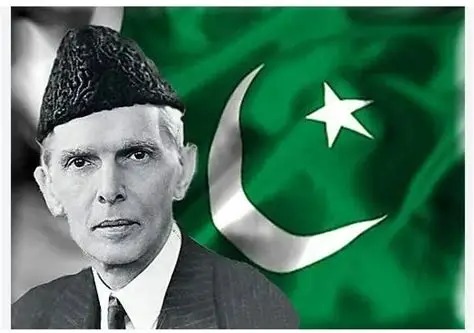
The lamp that continued to shine after being extinguished by Muhammad Mohsin Iqbal Some deaths merely close the chapter of a life. Others transform an entire existence into an everlasting trust. The passing of Quaid-e-Azam Muhammad Ali Jinnah on 11 September 1948 belonged to that rarer, more solemn kind. On that day Pakistan did not simply lose its first Governor-General; it lost the man of iron whose vision, resolve and political wisdom had turned an impossible dream into living reality. Yet the Quaid’s departure was not the end of his…
Read MorePakistan Journalists Welfare Crisis: Who Will Support Them?
Journalists who write about the suffering of others, to whom should they tell their own suffering??? Amir Muhammad Khan In Pakistan, journalism is called the fourth pillar of democracy. Journalists are considered the eyes, ears and voice of society. He questions the rulers, brings the voice of the oppressed to the house of power, exposes corruption, covers wars and accidents, and sometimes, risking his life, delivers news to the world that no other person would dare to tell. But there is another, very sad side to this beautiful picture. How…
Read MoreNew Provinces in Pakistan: History, Hopes and Hazards of Division
Beyond the Four Provinces: History, Hopes and Hazards of Further Division by Muhamad Mohsin Iqbal Pakistan’s debate on the formation of new provinces continues to surface with renewed vigour, driven by the practical difficulties of governing a nation whose population now exceeds two hundred and forty million within an administrative framework that has remained largely unchanged since 1970. At present the country comprises four provinces—Punjab, Sindh, Khyber Pakhtunkhwa and Balochistan—alongside the Islamabad Capital Territory and the territories of Gilgit-Baltistan and Azad Jammu and Kashmir. Calls for additional units, whether limited…
Read MoreSiraj Narsi Honored in Washington DC by Pakistani Diaspora Group
Good to see Siraj Narsi President of PAGH Pakistan Association of Greater Houston being honored last night in Washington DC by NRP Non Resident Pakistanis Washington DC group. PAGH is the largest Diaspora organization in North America representing diversity. What an incredible celebration of Pakistan Defense day and 250 years of American Independence. Thank you NRP Non Resident Pakistanis Washington DC group for bringing the galaxy and cross section of notables together last night at the Turf Valley Resort last night. Dr Maqsood Ahmed NRP Non Resident Pakistanis Washington DC…
Read MoreBringing the State Closer to the Citizen | Pakistan Governance
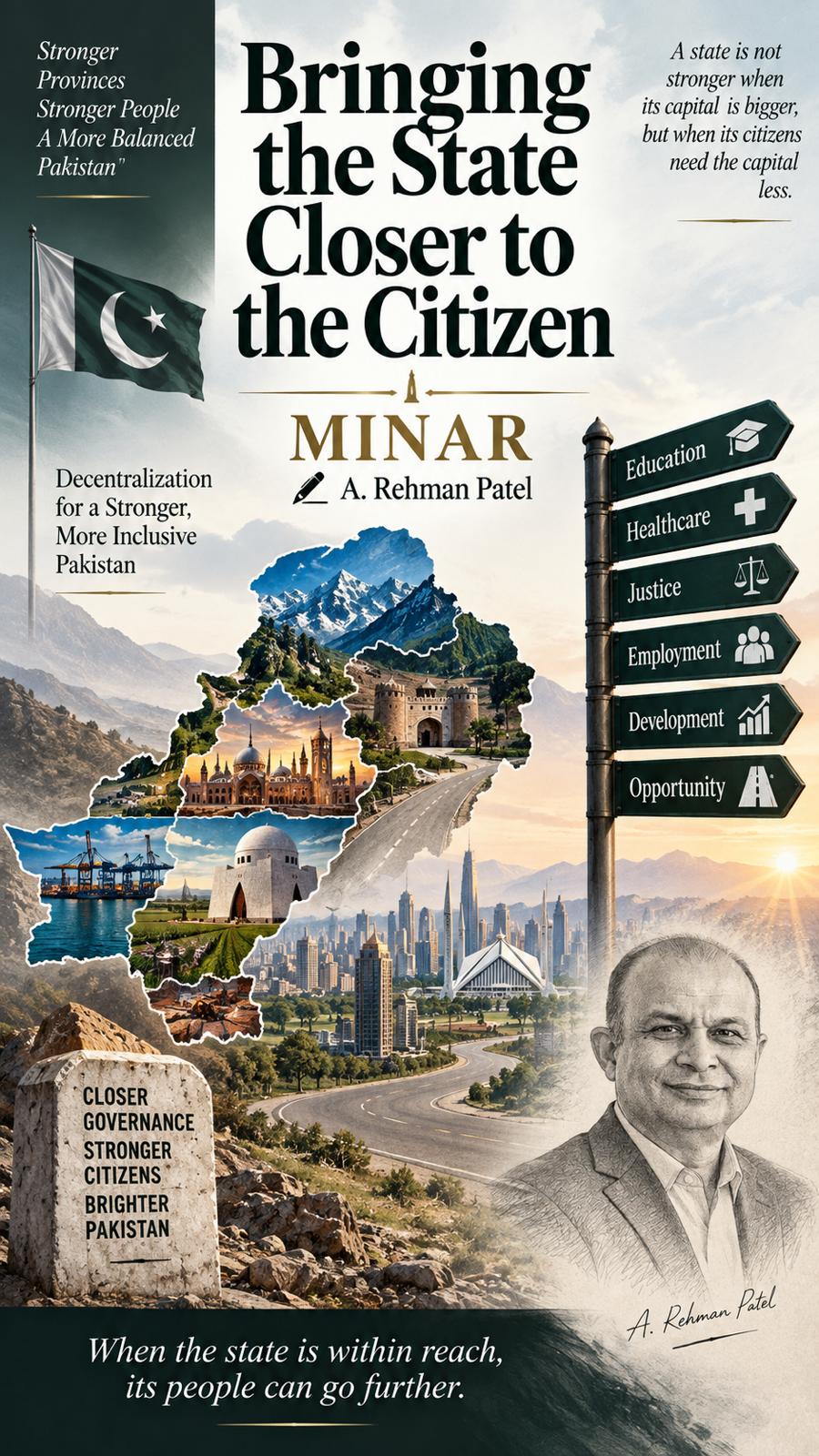
Bringing the State Closer to the Citizen MINAR A. Rehman Patel Sometimes a state’s greatest problem is not that it lacks authority. The problem is that authority is too far away from the citizen. A person falls seriously ill and must travel hundreds of miles for specialized treatment. Someone seeking access to a higher court must travel to the provincial capital. For education, employment, business or an important government decision, the road often leads to the same major city. Gradually, the capital ceases to be merely a capital. It becomes…
Read More