
The fragile truce between Washington and Tehran is falling apart. Iran attack Israel today headlines are once again dominating global news, as the United States and Iran exchanged fresh waves of strikes over the weekend into Monday. The US military says it hit dozens of Iranian military sites overnight, while Iranian forces responded with strikes toward American bases across the Gulf. Oil markets are reacting sharply, and regional capitals are on edge.
This is the latest chapter in a conflict that many hoped had ended with a memorandum of understanding signed in mid-June. That hope is now fading fast, and the question on everyone’s mind is simple: has the Iran war why did it start truly been resolved, or has it just paused.
Background: How the Iran War Began
To understand today’s escalation, it helps to look back. The current round of hostilities traces back to coordinated American and Israeli strikes on Iranian nuclear and military infrastructure earlier this year. Iran responded with missile and drone attacks across the Gulf, targeting US bases, Gulf shipping lanes, and allied territory.
A ceasefire memorandum was eventually signed between Washington and Tehran in mid-June, offering a brief window of calm. That agreement was never framed as a final peace deal. It was described instead as a starting point for further negotiations, particularly over safe passage through the Strait of Hormuz, one of the most important oil transit routes on the planet.
Since then, the truce has been tested repeatedly. Attacks on commercial shipping, disputes over inspection rights at bombed nuclear sites, and mutual accusations of bad faith have chipped away at the agreement. Each side blames the other for violating it, and neither has fully walked away from the negotiating table, even as missiles continue to fly.
Details: What Happened This Weekend
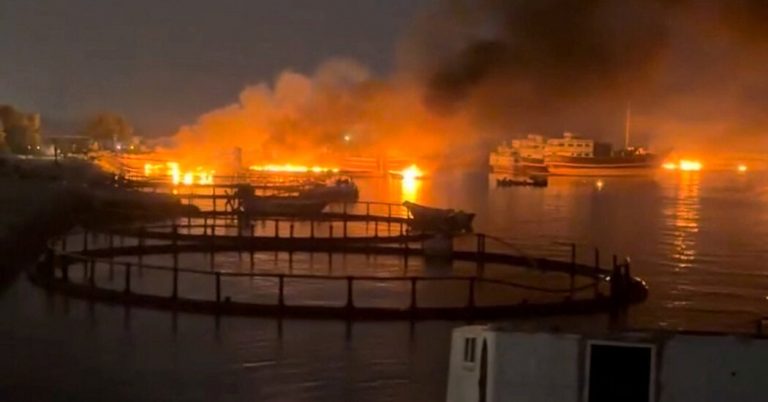
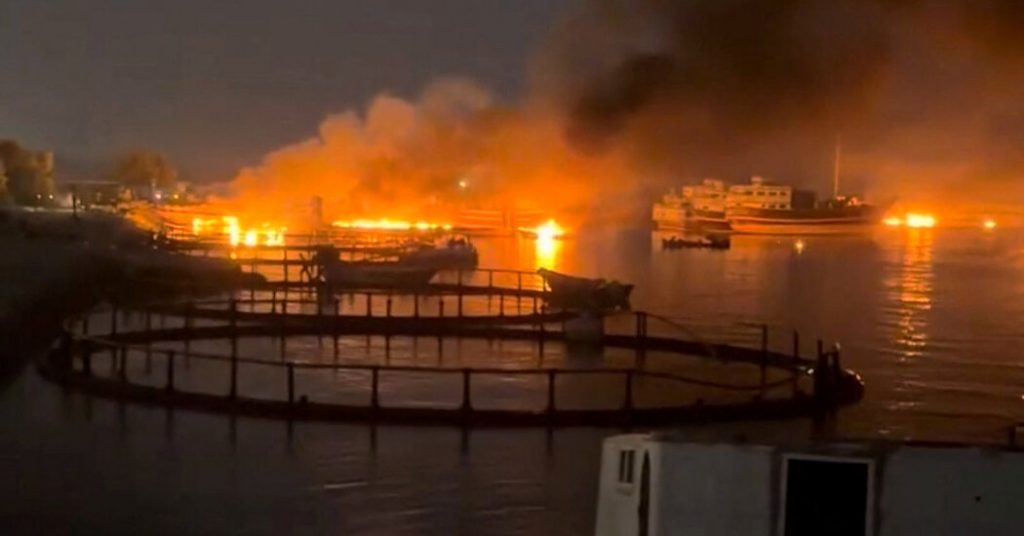
The latest flashpoint began after Iran struck a Cyprus-flagged container ship in the Strait of Hormuz, setting it ablaze and leaving crew members unaccounted for. Washington called this a direct violation of the ceasefire and responded with a new round of strikes on Iranian missile, drone, and coastal radar sites.
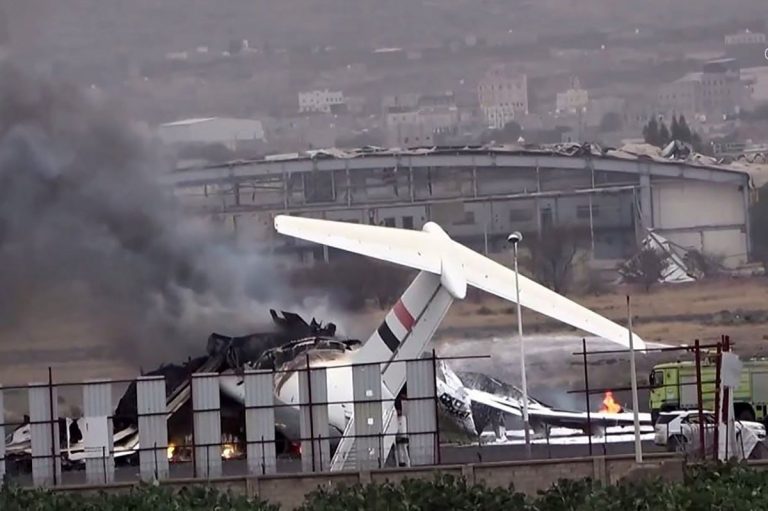
US and Iranian forces then exchanged overnight attacks for a second straight day, with American forces striking about 90 Iranian targets to further limit Tehran’s ability to threaten shipping through the Strait of Hormuz. By Monday, the US military said it had hit dozens more Iranian military targets in a second night of strikes, with Iranian state media reporting a fresh wave of counterattacks toward US bases in the region.
The retaliation has not stayed confined to Iran and the United States. Sirens sounded in Bahrain, Kuwait’s military reported dealing with hostile aerial targets, and Jordan’s military said it intercepted four missiles it attributed to Iran. Just days earlier, Iran launched a wider volley of attacks targeting Qatar, the UAE, Bahrain, and Kuwait, with claimed strikes reaching Jordan and Oman as well, following a fresh round of US airstrikes inside Iran.
Doha itself came under direct threat. Euronews journalists in Qatar reported two waves of Iranian attacks and large explosions above the capital, with air defense systems also responding to incoming fire over the UAE, Bahrain, and Kuwait. Qatar’s own defense ministry confirmed its forces were actively intercepting ballistic missiles aimed at the country.
Iran’s regional targeting has also touched Gulf infrastructure directly tied to the US military presence. Iran’s Revolutionary Guard claimed it struck the Al-Udeid US airbase in Qatar, alleging damage to a command center and an aircraft maintenance facility, and also claimed attacks on Jordan’s Prince Hassan airbase and Oman’s Duqm port, which is used by the US Navy. Qatari officials, however, said their air defenses intercepted the missiles aimed at the base.
Quotes: What Officials Are Saying
The rhetoric from Washington has hardened considerably. US Vice President JD Vance warned bluntly that violence would be met with violence if Iran carried out further attacks, while Iran’s Revolutionary Guard Corps countered that any future response to aggression against it would be broader than what has already occurred.
President Donald Trump has repeatedly signaled that patience in Washington is thin. Speaking from a NATO summit, Trump said the ceasefire was effectively over and warned the US would probably hit Iran hard again. He has also floated far more severe options if attacks continue, including reinstating a naval blockade and targeting Iran’s electricity and water infrastructure, steps that international law experts have warned could amount to war crimes.
Tehran, for its part, insists Washington is the one sabotaging diplomacy. Iran’s Ministry of Foreign Affairs condemned the latest US attacks as a serious threat to international peace and security, arguing they have rendered futile months of effort toward reducing tension in the region. Iran has also accused the United States of pressuring Oman behind the scenes to derail talks meant to establish safe shipping arrangements through the Strait of Hormuz.
Impact: Regional and Global Fallout
The economic ripple effects are immediate and visible. Brent crude futures jumped roughly 2.8 percent to trade above 78 dollars a barrel, while US crude gained around 2.5 percent to above 73 dollars, as traders priced in the risk of further disruption to Gulf oil flows. Given that the Strait of Hormuz handles close to a fifth of global oil traffic, any sustained closure threat carries consequences well beyond the Middle East.
Civilian populations across the Gulf are increasingly exposed to this standoff. Earlier attacks on the UAE alone have already resulted in a documented civilian death toll, with foreign nationals among those killed and injured by missile debris and intercepted drone fragments. Shipping companies are rerouting vessels, insurance costs for tankers transiting the strait are rising, and several countries have issued fresh advisories to citizens in the region.
Diplomatically, the collapse of the ceasefire also threatens to derail unrelated tracks of engagement, including discussions around inspections of Iran’s bombed nuclear facilities. The International Atomic Energy Agency has insisted inspections must go forward, while Iranian officials say that will only happen once a final agreement is reached and sanctions are lifted, a gap that looks harder to bridge with each new exchange of fire.
Conclusion: What Comes Next
Despite the intensity of the latest strikes, both Washington and Tehran have stopped short of declaring the ceasefire framework entirely dead. Trump has said he does not want a full return to open war and has left the door open to continued negotiations, even while authorizing further military action. Iranian officials have made similar noises, insisting they remain open to talks provided US pressure on mediators like Oman eases.
For now, the situation remains fluid and dangerous. Analysts expect the coming days to determine whether this becomes a temporary flare-up within a still-functioning truce, or the moment the ceasefire formally collapses into renewed full-scale conflict. Markets, regional governments, and millions of civilians across the Gulf will be watching closely for the next move from either side.
Frequently Asked Questions
Is China a serious threat to the US?
China is widely regarded by US defense and intelligence officials as the most significant long-term strategic competitor to the United States, spanning military, economic, and technological domains. Areas of concern frequently cited include China’s rapid naval expansion, its growing missile arsenal, tensions over Taiwan, cyber activity, and competition in advanced technology sectors such as semiconductors and artificial intelligence. That said, the two countries also maintain deep economic interdependence and ongoing diplomatic channels, meaning the relationship is generally described as one of strategic rivalry and competition rather than active armed conflict.
Did Iran attack the UAE?
Yes, the UAE has come under repeated missile and drone attacks attributed to Iran at multiple points during the ongoing conflict, including strikes that caused civilian casualties and damaged infrastructure such as an aluminum plant and oil facilities in Abu Dhabi and Fujairah. Iran has at times denied responsibility for specific incidents, but UAE defense officials have consistently identified the attacks as originating from Iranian forces, and the UAE has used US-supplied THAAD and Patriot systems to intercept hundreds of incoming missiles and drones throughout the conflict.
Have Iran stopped firing missiles?
No, Iran has not stopped firing missiles, and the latest escalation shows attacks continuing on multiple fronts. Iranian forces have launched fresh strikes toward US bases and allied territory across the Gulf even as both sides continue to describe some form of negotiation track as still technically alive. The renewed volleys toward Qatar, the UAE, Bahrain, Kuwait, Jordan, and Oman in recent days indicate that missile activity remains an active and ongoing feature of this conflict rather than something that has fully ceased.