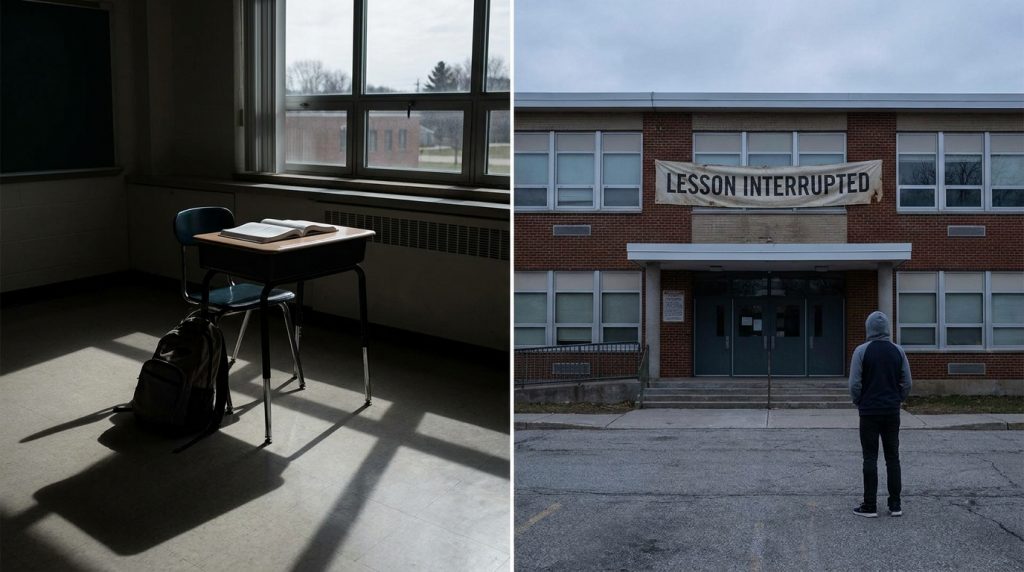
When schools locked their doors in early 2020, millions of children sat down in front of screens and waited. What started as a two-week pause stretched into months, then years, for some. That lesson interrupted did not just pause learning — it reshaped it, broke it in places, and left gaps that educators are still working to fill.
Background: A Disruption Without Precedent
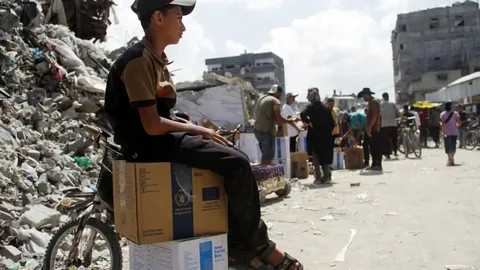
No modern generation had ever faced anything quite like this. The impact of school closures during COVID-19 touched nearly 1.6 billion children across 190 countries at its peak, according to UNESCO data. Schools were the last places many policymakers expected to close — and among the first things that closed anyway.
For countries already dealing with weak internet access, poverty, or teacher shortages, the blow was harder. Rural communities and low-income families had the least ability to absorb a lesson interrupted by a global pandemic.
What the Research Actually Shows
The data that has come out since schools reopened is not comfortable reading.
Studies from the United States, the United Kingdom, and several European countries found significant learning loss — especially in reading and mathematics — among students who spent the most time out of classrooms. Children in lower-income households fell behind at roughly twice the rate of their wealthier peers.
The effects of school closures on students were not just academic. Mental health took a hit. Anxiety, depression, and social withdrawal became more common among school-age children during prolonged closures. Some students — especially teenagers — disengaged from education almost entirely. Attendance problems and dropout rates spiked in the years following reopening.
There was also something harder to measure: the loss of structure. School is not only about lessons. It is about routine, social interaction, and the quiet confidence that comes from showing up somewhere regularly. That disappeared overnight.
The Digital Divide Made It Worse
Remote learning was presented as the solution. In many cases, it was not.
Families without reliable broadband or devices were effectively locked out. A child doing homework on a shared phone in a one-room apartment was not getting the same education as one using a laptop in a quiet suburban bedroom. This gap — already present before the pandemic — widened visibly during school closures.
Teachers did their best. Many worked longer hours than they ever had, preparing digital materials, running video calls, checking in on students individually. But the tools were unfamiliar, the circumstances exhausting, and the results uneven.
Effects of School Closures on Students: A Closer Look
The effects of school closures on students broke down differently by age group.
Younger children missed foundational learning. Reading and numeracy skills that are typically built in early primary years were not solidly established. Teachers who received these children back into classrooms reported that many were functioning at levels a year or more behind expectations.
Teenagers faced a different set of problems. Exam cancellations, university uncertainty, and social isolation hit this group hard. Some lost motivation entirely. Others thrived in a remote setting — but they were the exception, not the rule.
Children with disabilities or learning differences faced compounded difficulties. Many depended on in-person support services that simply could not be replicated on a screen.
Impact of School Closures During COVID-19: The Teacher Side
It would be incomplete to discuss the impact of school closures during COVID-19 without looking at what it did to teachers.
Teacher burnout became widespread. Many educators who had spent decades in classrooms found the pivot to online delivery demoralizing and technically overwhelming. In the years following reopening, teaching shortages worsened in several countries — a trend linked, at least in part, to professionals who had reassessed their careers during the pandemic.
Veteran teachers also reported something that is difficult to quantify: a loss of connection with the profession. Teaching is a relational job. It depends on reading a room, noticing when a student is struggling, building trust slowly over a school year. All of that is much harder through a screen.
Recovery Efforts: What Has Actually Worked
Since schools reopened, governments and school systems have tried various recovery strategies. The evidence on what works is still developing, but a few approaches have shown promise.
Targeted tutoring — particularly small-group or one-on-one sessions focused on core skills — has produced measurable gains in several studies. Extended school days and summer programs have also helped in specific contexts, particularly for younger students.
What has not worked as well is simply adding more content to existing lessons without addressing foundational gaps. Students who missed crucial early learning cannot easily absorb new material built on top of it.
The Bigger Picture
The lesson interrupted by COVID-19 exposed weaknesses that were already present in education systems around the world. The pandemic did not create educational inequality — it made it impossible to ignore.
Some school systems will recover more quickly than others. Countries with strong social safety nets, well-resourced schools, and experienced teaching workforces were better positioned from the start, and they are doing better now.
For others, the gap between what students learned during those closed years and what they needed to learn may take a decade or more to close — if it closes at all.
Conclusion
The full picture of what school closures cost this generation is still coming into focus. Test scores tell part of the story. Teacher retention figures tell another. But some of what was lost — a year of friendships forming, a term of hands-on science experiments, the ordinary rhythm of childhood — does not appear in any dataset.
Education systems are working to catch up, and many students have shown remarkable resilience. Still, the effects of school closures on students will be felt for years. Policymakers, schools, and families are still piecing together what was broken and figuring out how to fix it.
Frequently Asked Questions
Q1: What impact do closures have on teachers?
School closures put enormous strain on teachers. Many had to rapidly learn new technology, redesign their entire approach to teaching, and manage student welfare from a distance. Burnout increased significantly. After schools reopened, many countries reported teacher shortages partly linked to professionals leaving the field during or after the pandemic. The relational and emotional parts of teaching — which many educators consider core to the job — were among the hardest things to maintain during remote learning periods.
Q2: What are keywords in education?
In educational research and journalism, “keywords” refer to the core concepts or terms that define a topic — such as “learning loss,” “achievement gap,” “remote learning,” or “school closures.” These terms help researchers, policymakers, and readers quickly understand what a study or report is about. In SEO writing about education, keywords like “effects of school closures on students” or “lesson interrupted” serve a similar function: they signal to search engines what the article covers and help readers find relevant information.
Q3: What is the biggest impact on student achievement?
Research consistently shows that socioeconomic background is one of the strongest predictors of student achievement — before, during, and after school closures. Children from lower-income families had less access to devices, internet, quiet study spaces, and parental support during remote learning. They fell further behind and have been slower to recover. Teacher quality and consistency also play a major role. Students who experienced frequent changes in teachers, or who had limited access to qualified educators during closures, showed the steepest declines in measured learning outcomes.