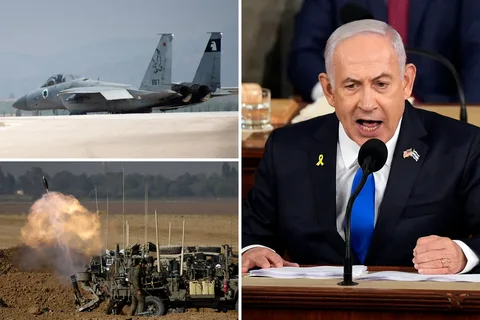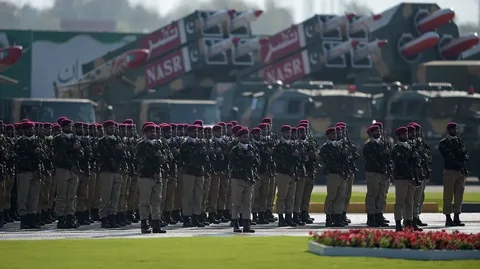

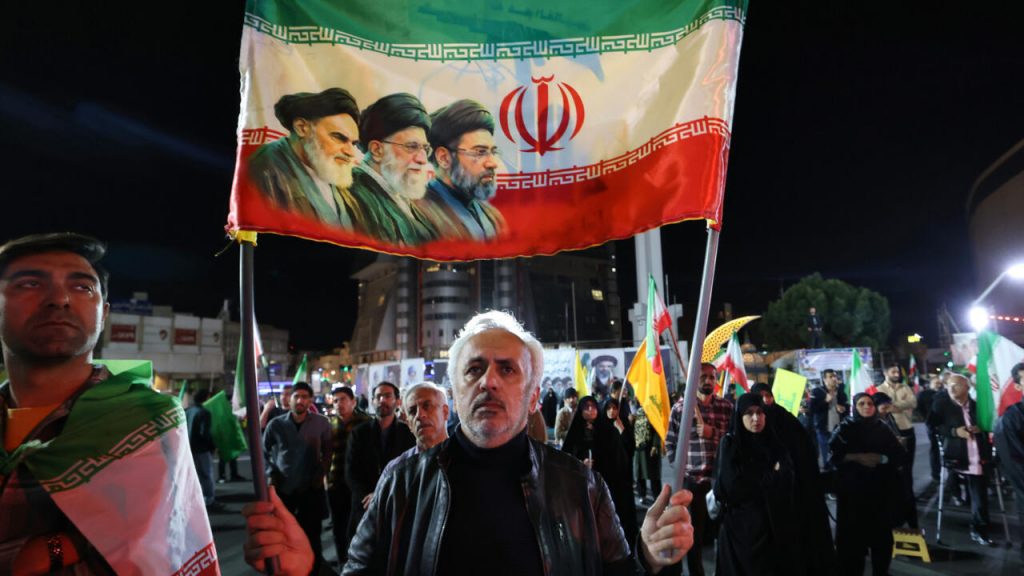
The Middle East conflict has entered a dangerous new phase in 2026, with the current wars in Middle East dominating global headlines. Since 28 February 2026, the United States and Israel have been engaged in a war with Iran and its regional allies, beginning when the US and Israel launched airstrikes on Iran targeting military and government sites.Peace talks remain stalled, the Strait of Hormuz stays largely closed, and the world economy feels the pain of every passing day.
Background: How Did the Middle East War Start in 2026?
To understand why the Middle East war started in 2026, one must look at years of escalating tensions. The Middle East conflict history between the US, Israel, and Iran stretches back decades, rooted in nuclear disputes, proxy wars, and regional rivalries.
After the Middle Eastern crisis began in 2023, Iran and Israel exchanged missile strikes in 2024, and again during the Twelve-Day War in June 2025, which resulted in a US airstrike on Iranian nuclear sites. In January 2026, Iranian security forces massacred thousands of civilians in their crackdown on the largest Iranian protests since 1979.
The attacks came when the Iranian regime was arguably at its weakest point for some years. There were extensive protests in Iran in early 2026, motivated by a weakened economy as well as struggling infrastructure, illustrating the regime’s weakened legitimacy within the country.That weakness, combined with unresolved nuclear negotiations, set the stage for military action.
Details: The Middle East Conflict Explained
On 28 February 2026, Israel and the United States began a series of strikes against Iran, saying they aimed to induce regime change and target its nuclear and ballistic missile programme. Iran’s Supreme Leader, Ali Khamenei, was killed in the strikes.
Iran responded with missile and drone strikes against Israel, US bases, and US-allied Arab countries in West Asia, and the closure of the Strait of Hormuz, disrupting global trade.The closure of this critical waterway immediately sent shockwaves through global energy markets.
Until the US–Israeli war against Iran, the Strait of Hormuz was open and about 25% of the world’s seaborne oil trade and 20% of the world’s liquefied natural gas passed through it. The Iranian warnings and subsequent attacks on vessels prompted shipping firms to suspend operations in the strait.
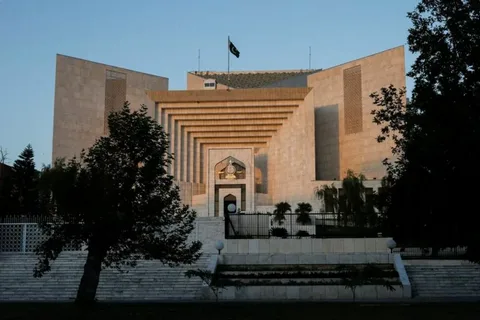
A fragile ceasefire was brokered in early April by Pakistan, but it quickly unraveled. After the failure of the Islamabad Talks, Trump said he no longer cared about negotiations and announced a naval blockade of Iran from 13 April.This created what analysts called a “dual blockade” Iran blocking Hormuz from one side, and the US blocking Iranian ports from the other.
Trump then repeatedly threatened to destroy Iran’s infrastructure and “civilization” if they did not make a deal with the US and re-open the Strait of Hormuz.The situation remains one of the most volatile in the current wars in Middle East today.
The Strait of Hormuz: The World’s Most Dangerous Chokepoint
The Middle East conflict in 2026 has placed the Strait of Hormuz at the center of global attention. Around 20% of global petroleum and 20% of liquefied natural gas traverses the strait each year. Pre-conflict, around 3,000 vessels used the strait each month. Their numbers now stand at around 5% of this level. This has pushed up global oil and gas prices.
Iran reportedly lost track of mines it planted in the Strait of Hormuz, and is therefore unable to fully open the strait.This alarming detail underscores just how unpredictable and dangerous the Middle East war 2026 has become for international shipping.
On April 22, an Iranian gunboat attacked the Greek-owned cargo ship Epaminondas off the coast of Oman, despite earlier giving it permission to cross the strait. The attack consisted of gunfire and rocket-propelled grenades and caused significant damage to the bridge.Dozens of commercial vessels have been targeted, diverted, or seized since the conflict began.
Peace Talks: Where Do Things Stand Today?
As part of the Middle East conflict summary for April-May 2026, peace efforts have repeatedly collapsed and restarted. Pakistan has played a central mediating role throughout.
Iran has proposed reopening the Strait of Hormuz to all traffic on the condition that discussions over Iran’s nuclear activities be postponed until after the war ends. The proposal has drawn scrutiny in Washington, and officials there have expressed scepticism.
Iran offered to open the Strait of Hormuz if the US lifts its naval blockade, but it wants to postpone nuclear negotiations for a later stage.The US has pushed back, viewing any deal that delays the nuclear question as removing its key leverage.
The US War Powers Resolution puts a 60-day clock on the use of military force without congressional authorization. The Iran war hits that 60-day mark on May 1, 2026, according to the text of the law.This legal deadline is adding pressure on both the White House and Congress to either authorize or end the conflict formally.
Quotes: What Leaders and Experts Are Saying
Middle East conflict Al Jazeera coverage and other major outlets have carried key statements from officials and analysts shaping this story.
Analyst Negar Mortazavi said Iran’s proposal looks “reasonable” as the situation in the Strait of Hormuz has created “a global crisis and countries around the world want it resolved.” She added: “Tehran will not move if the US doesn’t lift its blockade, and Washington will not do so if Iran does not open the strait.”
German Chancellor Friedrich Merz blasted the US administration, saying: “The Iranians are clearly stronger than expected and the Americans clearly have no truly convincing strategy in the negotiations either.” He added: “The problem with conflicts like this is always: you don’t just have to get in, you have to get out again.”
Trump, for his part, wrote on social media that Iran has informed the US it is in “a State of Collapse” and wants the Hormuz Strait opened “as soon as possible.”His tone suggests confidence, but analysts warn the situation on the ground remains deeply uncertain.
Is the Middle East Conflict Escalating?
The honest answer, based on current reporting, is yes despite a nominal ceasefire. Iran leverages the Strait of Hormuz to raise global costs while betting it can outlast US political will. The CSIS assessment notes the US has depleted its missile inventories but still has enough to continue fighting under any plausible scenario.
On 24 April, the US military said that for the first time since 2003, three US aircraft carriers are stationed in the Middle East with the arrival of the USS George H. W. Bush.This massive show of force signals that Washington is prepared for escalation, not de-escalation.
US Defense Secretary Pete Hegseth slammed opposition to the Iran war during a congressional hearing, describing lawmakers who criticize the effort as “the biggest adversary.” The White House is seeking roughly $1.5 trillion for its defense budget.
Impact: Global and Regional Consequences
The Middle East conflict is not just a regional crisis it is a global emergency. The average price for a gallon of gas in the US is now $4.30 as the blockade of Iranian ports continues.European nations, Asian economies, and developing countries are all feeling the squeeze of disrupted energy supplies.
Iran’s counter-strikes on Arab Gulf states in 2026, who have sought to deepen relations with Iran in recent years, may also leave it further isolated. The UAE has been the most publicly critical of Iran, with its ambassador to the US saying that “a simple cease-fire isn’t enough.”
China and Russia can exploit the Iran war by letting the US bear the costs they gain influence and advance strategic aims while avoiding direct conflict. This geopolitical calculation is shaping how the current wars in Middle East play out on the world stage.
Conclusion: What Comes Next?
The Middle East war 2026 is at a decisive crossroads. Trump extended the ceasefire with Iran pending negotiations, while instructing the naval blockade to remain in place and telling the military to remain prepared to resume fighting.
With the War Powers deadline looming, talks deadlocked, and the Strait of Hormuz still essentially closed, the Middle East conflict shows no signs of quick resolution. The world is watching Pakistan’s mediation efforts, Iran’s revised peace proposal, and Washington’s next move.
Whether this Middle East conflict ends in negotiation or further escalation will define global politics, energy prices, and regional stability for years to come. The Middle East conflict history has seen many flashpoints but 2026 may be the most consequential yet.
FAQs
Is the Middle East conflict escalating?
Yes. Despite a nominal ceasefire, both sides continue to violate it. The US has three aircraft carriers in the region for the first time since 2003, and Iran continues to restrict Strait of Hormuz traffic.Talks remain stalled and military pressure is building on both sides.
Why is Iran attacking the UAE?
Iran launched counter-strikes against Israel, US military bases in the region, and military and civilian locations in Arab states many of which house US military assets as retaliation for the February 28 US-Israel airstrikes. The UAE, as a close US ally with military infrastructure, became a target in that regional counter-offensive.
How does war escalate?
War escalates when diplomatic options fail and military actions trigger responses that neither side can back down from. In this Middle East conflict, Iran’s closure of the Strait of Hormuz prompted a US naval blockade of Iranian ports, creating a “dual blockade” that has made compromise increasingly difficult for both sides.Each retaliatory step raises the cost of backing down, making peaceful resolution harder even when both parties express willingness to talk.