
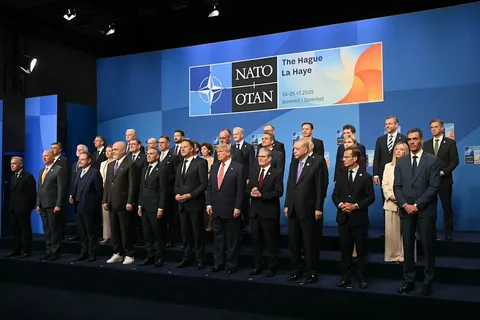
NATO spending by country 2026 shows how different member states contribute to the alliance’s defense budget and military strength. The United States remains the largest contributor, while European members have increased spending due to rising global security threats. Defense budgets across NATO continue to grow as geopolitical tensions reshape military priorities.
This article explains NATO spending by country 2026, historical trends, and how contributions are distributed among members. It also covers NATO defense spending 2025, military spending by country 2026, and percentage of NATO funding by country.
Background
The North Atlantic Treaty Organization (NATO) was formed in 1949 as a collective defense alliance. Over the decades, member countries agreed to spend at least 2% of GDP on defense, known as the NATO spending guideline.
The discussion around NATO defense spending 2025 and NATO spending by country chart has become more important due to rising tensions in Europe, especially after conflicts in Eastern Europe. Countries are now under pressure to meet or exceed defense spending targets.
The Defence expenditure of NATO countries (2014–2024) shows a steady increase in military budgets, especially after 2014 when global security concerns intensified.
Details: NATO Spending by Country 2026
The NATO spending by country 2026 reveals significant differences between members. The United States remains the largest defense spender, contributing the majority of total NATO military funding.
European countries such as Germany, France, and the United Kingdom have increased their budgets in recent years to meet NATO requirements. Smaller members like Estonia, Latvia, and Lithuania spend a higher percentage of GDP, reflecting their proximity to security risks.
Key observations:
- The U.S. contributes the highest share of total NATO funding
- Eastern European countries often exceed the 2% rule
- Western Europe is increasing defense budgets gradually
- Some members still struggle to meet NATO targets
The NATO spending by country chart shows a clear imbalance in financial responsibility, with the U.S. carrying a large share of operational and military costs.
Military Spending by Country 2026 Overview
Globally, military spending by country 2026 continues to rise due to conflicts, technological upgrades, and cybersecurity needs. NATO members are investing heavily in modernization, missile defense systems, and advanced weapons.
Countries are also shifting budgets toward:
- Cyber defense systems
- Air defense networks
- Naval modernization
- Drone warfare technology
The NATO defense spending 2025 trend indicates that Europe is becoming more self-reliant, though the U.S. remains the backbone of NATO military strength.
Percentage of NATO Funding by Country
The percentage of NATO funding by country shows that the United States provides over two-thirds of total NATO defense spending. European members collectively contribute the rest, with Germany and the UK being major contributors.
Smaller nations contribute less in absolute numbers but often meet or exceed GDP-based targets.
This imbalance has led to ongoing debates within NATO about fair burden-sharing and long-term sustainability
Quotes
A NATO official previously stated that “fair burden-sharing remains essential for alliance unity and operational strength.” Defense analysts also argue that “European nations must continue increasing defense budgets to reduce dependency on the United States.”
Impact
Global Impact
The rise in NATO defense budgets affects global arms markets and increases military competition between major powers. It also influences global stability, especially in Europe and the Atlantic region.
Regional Impact
European countries are strengthening border security and defense cooperation. EasternEurope, in particular, is investing heavily due to proximity to conflict zones.
Economic Impact
Higher defense spending affects national budgets, leading to increased taxation or reduced spending in other sectors such as healthcare or education.
Conclusion
The NATO spending by country 2026 highlights ongoing imbalances in defense contributions among member states. While the United States remains the dominant financer, European nations are gradually increasing their military budgets.
Future NATO discussions will likely focus on burden-sharing, modernization, and meeting the 2% GDP target more consistently. As global tensions continue, defense spending is expected to rise further across the alliance.
FAQs
What is the 2% rule of NATO?
The 2% rule is a guideline requiring NATO member countries to spend at least 2% of their Gross Domestic Product (GDP) on defense. This ensures shared responsibility for collective security. However, not all members consistently meet this target, leading to ongoing debates about fairness within the alliance.
Why is America withdrawing from NATO?
The United States has not officially withdrawn from NATO, but political debates in Washington have raised questions about burden-sharing. Some U.S. leaders argue that European countries should increase defense spending to reduce reliance on American military support. Despite these discussions, the U.S. remains a key NATO member.
Who funds NATO the most?
The United States funds NATO the most, contributing the largest share of total defense spending. Its contribution includes both direct NATO budget funding and extensive military deployment across Europe. European countries collectively contribute less but are gradually increasing their defense budgets.