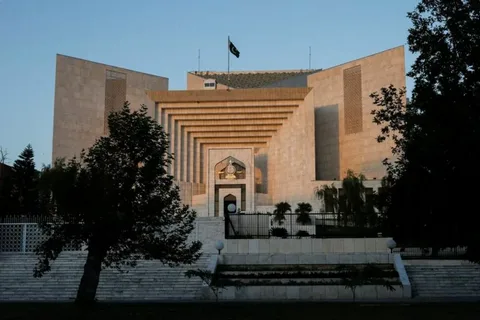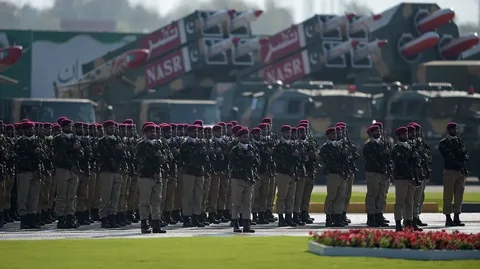

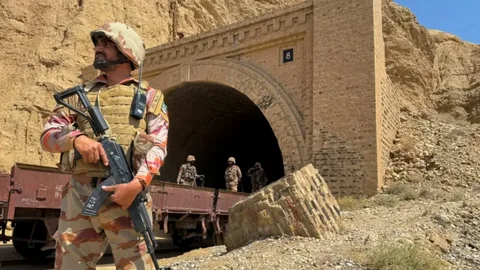
Security forces have destroyed several militant hideouts in Balochistan under the ongoing Operation Al-Azm, according to the latest Balochistan security update today from state security sources. Interior Minister Mohsin Naqvi commended the forces involved, reiterating Pakistan’s resolve to dismantle terrorist infrastructure across the province.
Background
Balochistan has faced a sustained wave of militant violence in 2026, with security forces launching several coordinated operations across the province’s districts. The latest phase, dubbed Operation Al-Azm, follows an earlier and larger campaign, Operation Shaban, which began on July 5 after a deadly attack on police personnel near Quetta.
Operation Shaban alone resulted in well over 100 reported terrorist deaths across weeks of joint operations by the Pakistan Army, Frontier Corps, and Balochistan Police. Officials say the campaign has continued in phases, expanding into districts including Surab, Mastung, Basima, and Panjgur as security forces track militant movements across the province.
Anyone following the Balochistan security update live from state media has noticed a familiar rhythm in recent months: near-daily reports of intelligence-based operations, followed by ISPR statements detailing militant casualties, weapons recoveries, and occasional losses among security personnel.
Details
According to the most recent statements from security sources, several hideouts belonging to what the state refers to as “Fitna al-Hindustan” were destroyed during operations under Al-Azm. The term is used by Pakistani authorities to describe banned groups it accuses of receiving support from India, a claim India has denied.
The Balochistan security update bbc and other international outlets have covered has framed the current unrest as part of a broader, decades-long insurgency in the province, rather than an isolated spike in violence. Recent weeks alone have seen operations in Surab and Mastung yielding weapons, ammunition, and improvised explosive devices, alongside separate incidents in which eight people, including two women, were killed.
Beyond the security operations themselves, Balochistan’s provincial government has continued pushing economic and administrative initiatives alongside the counterterrorism campaign. Chief Minister Sarfraz Bugti has reaffirmed commitments to expanding border barter trade, with officials targeting a $10 billion bilateral trade goal, even as security operations dominate daily headlines.
Arrests have also featured prominently in the Balochistan security update today cycle, with authorities confirming several individuals suspected of facilitating terrorism have been taken into custody in recent days. Officials describe this as part of a broader strategy that pairs battlefield operations with efforts to dismantle support networks believed to enable attacks.
Quotes
Interior Minister Mohsin Naqvi said the centre and the Balochistan government were moving forward in complete unity and coordination to establish lasting peace in the province, a statement issued as part of the government’s response to the Al-Azm operation’s latest results.
DG ISPR Lieutenant General Ahmed Sharif Chaudhry, briefing reporters on the broader security situation earlier this month, said dozens of security personnel had been martyred alongside significant militant casualties in a series of major incidents, describing the scale of recent violence as among the most serious the province has faced in years.
Balochistan Chief Minister Sarfraz Bugti, addressing a security review meeting in Quetta, vowed that operations against terrorist elements would continue without pause, stating security forces would keep up joint operations until what he called the elimination of the last terrorist.
Impact
The continuing violence and security response carry significant weight for Balochistan’s population and Pakistan’s broader security posture. Editorial commentary in Dawn newspaper has noted that despite security forces reporting hundreds of militant deaths through repeated operations, there has been little tangible sign the violence itself is abating, with some describing the unrest as spreading rather than shrinking.
For residents, the impact extends beyond direct casualties. Ethnic-targeted attacks on labourers and travelers in parts of the province, alongside disruptions to transport and trade routes, have deepened economic hardship in a region that already ranks among Pakistan’s least developed. Analysts have repeatedly argued that a security-only approach risks deepening alienation rather than resolving the province’s underlying political grievances.
Regionally, the conflict continues to strain Pakistan-India relations, given the government’s repeated framing of Baloch militancy as India-sponsored, an allegation that adds a geopolitical dimension to what remains, at its core, a domestic insurgency with roots stretching back decades.
Conclusion
With Operation Al-Azm ongoing and officials signaling no imminent end to counterterrorism activity, further updates are expected in the coming days as security forces continue operations across multiple districts. Whether the current strategy succeeds in reducing violence, or whether renewed calls for political engagement gain traction, will likely shape how the next phase of Balochistan’s long-running crisis unfolds.
For now, both provincial and federal officials describe the campaign as a long-term commitment, even as independent observers question whether battlefield gains alone can address a conflict that has now run through three distinct phases of unrest since Pakistan’s creation.
Frequently Asked Questions
Is Balochistan 44% of Pakistan?
Yes, Balochistan is Pakistan’s largest province by land area, covering approximately 44 percent of the country’s total territory, despite having one of the smallest populations relative to its size. This vast, sparsely populated landscape, combined with its long, porous borders with Afghanistan and Iran, has historically made it difficult for security forces to maintain consistent control across the province, a factor frequently cited in analyses of why militant groups have been able to operate in remote districts for extended periods. The province’s size also means that economic development and infrastructure projects face significant logistical challenges compared to more densely populated parts of Pakistan.
Is it safe to travel to Balochistan right now?
Multiple governments, including the UK Foreign Office and the US State Department, currently advise against all travel to most parts of Balochistan due to the ongoing security situation, terrorism risk, and sporadic militant attacks targeting security forces, infrastructure, and at times civilians. Some areas, particularly around Quetta and certain coastal regions like Gwadar, see heavier security presence but still carry elevated risk warnings. Travelers considering a visit to the province, whether for business or tourism, are strongly advised to consult current government travel advisories and register with their embassy, since the security landscape can change rapidly given the frequency of ongoing operations described in daily security updates.
What is the main problem in Balochistan?
Balochistan’s unrest stems from a combination of long-standing political, economic, and social grievances rather than a single cause. Many Baloch nationalists point to decades of perceived neglect by the federal government, limited local control over the province’s natural resources including gas and minerals, and underinvestment in infrastructure and public services despite the province’s strategic importance. This sense of marginalization deepened significantly after the 2006 killing of tribal leader Akbar Bugti, which triggered a fresh wave of insurgent violence that continues in evolving forms today. Editorial analysts have repeatedly argued that without addressing these underlying political and economic grievances alongside security operations, cycles of violence are likely to persist regardless of how many militants are killed in individual operations.