
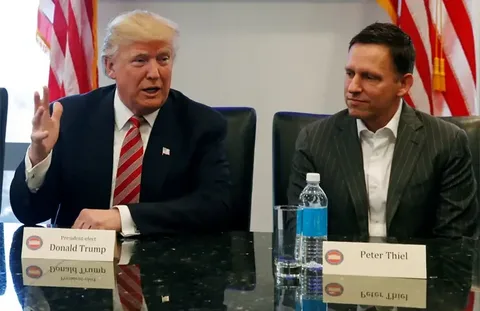
The Peter Thiel Rome conference — a secretive gathering of American conservative intellectuals, tech billionaires, and Catholic traditionalist figures organised by Peter Thiel — has drawn formal attention from the Vatican and senior Catholic Church officials who expressed concern about the conference’s agenda, its theological framing, and what Church sources described as an attempt to build an alternative conservative Catholic intellectual network outside official Church structures. The Peter Thiel Rome conference is the latest expression of Thiel’s years-long effort to connect Silicon Valley libertarian conservatism with Catholic integralist political theology — a project that has attracted significant political attention given Thiel’s role as a major Trump donor, a co-founder of Palantir, and one of the most influential figures in the American technology-politics nexus.
Background: Who Is Peter Thiel and Why Does the Peter Thiel Rome Conference Matter?
The Peter Thiel Rome conference cannot be understood without understanding who Peter Thiel is — and why a gathering he organises in Rome attracts Vatican attention.
Peter Thiel is one of the most consequential figures in American technology and politics. Born in Frankfurt, Germany, in 1967, Peter Thiel co-founded PayPal in 1998 — the company that created the modern digital payments industry and made him his first fortune when it was acquired by eBay for $1.5 billion in 2002. Peter Thiel was also the first outside investor in Facebook — purchasing a 10.2 percent stake in 2004 for $500,000, which later became worth over $1 billion. Peter Thiel net worth is currently estimated at approximately $11 billion, according to Forbes — making him one of the wealthiest individuals in the American technology sector.
Peter Thiel’s most politically significant business venture is Palantir Technologies — the data analytics and artificial intelligence company he co-founded in 2003. Palantir is the primary contractor providing data intelligence tools to the US intelligence community, the Department of Defense, and law enforcement agencies across America and its allies. Palantir’s contracts with the Pentagon and CIA made it the operational backbone of American counterterrorism surveillance infrastructure — and Palantir’s AI tools were confirmed to have been deployed in the 2026 Iran war under Operation Epic Fury.
Peter Thiel husband is Matt Danzeisen — a portfolio manager at Thiel Capital whom Peter Thiel married in 2017. The couple have been together since approximately 2012. Peter Thiel husband Danzeisen has largely remained out of the public eye, and the couple maintain a private life outside Thiel’s public political and business activities.
Peter Thiel is a self-described Christian and has engaged seriously with Catholic political theology — particularly the integralist tradition that argues political authority should be subordinate to and guided by the Church. The Peter Thiel Rome conference is the most direct institutional expression of that theological-political engagement.
Details: Peter Thiel Rome Conference — Full Story
Peter Thiel Rome Conference — What It Is and Who Attended
The Peter Thiel Rome conference — formally titled the Thiel Foundation Rome Forum — was held in early March 2026 at a private venue near the Vatican. The Peter Thiel Rome conference brought together approximately 80 to 100 participants including American conservative intellectuals, Catholic traditionalist theologians, Silicon Valley technology figures, European national conservative politicians, and a small number of current and former US government officials.
The Peter Thiel Rome conference was deliberately conducted without a public agenda, without press access, and without an official participant list — earning it the secretive designation that has drawn both media attention and Vatican concern. The Peter Thiel Rome conference’s secrecy was described by Thiel allies as a deliberate choice to allow frank intellectual discussion without the performance and posturing that accompanies public events.
The Peter Thiel Rome conference agenda — based on accounts from participants who spoke to reporters on condition of anonymity — covered the intersection of Catholic social teaching and Silicon Valley capitalism, the role of artificial intelligence in reshaping political and social order, the future of the Western family and demographic decline, and the relationship between national sovereignty and supranational institutions including the European Union and the United Nations.
The Peter Thiel Rome conference notably included discussion of Patrick Deneen’s Why Liberalism Failed — the book that has become the defining text of Catholic integralist political theory and which argues that liberal democracy’s own logic produces its dissolution. Deneen himself was reported to be among the Peter Thiel Rome conference participants.
Peter Thiel Rome Conference — Why the Vatican Is Concerned
The Peter Thiel Rome conference drew formal Church attention because it brought together significant financial resources, intellectual firepower, and political connections in a setting that appeared to some Vatican officials as an attempt to build an alternative Catholic intellectual centre of gravity outside official Church oversight.
Senior Vatican officials told Reuters that the Catholic Church had received reports about the Peter Thiel Rome conference and was monitoring its theological framing with concern — not because the participants were engaging with Catholic theology, but because the Peter Thiel Rome conference appeared to be promoting a particular strand of Catholic political theology — integralism — that some in the Church hierarchy consider incompatible with the Second Vatican Council’s affirmation of religious freedom and democratic pluralism.
Pope Francis has consistently opposed the Catholic integralist tradition embraced by some Peter Thiel Rome conference participants — describing it as a form of clericalism that contradicts the Church’s proper relationship with temporal political authority. The concern among Vatican officials was not that Peter Thiel was organising a conference about religion and politics — it was that the Peter Thiel Rome conference was doing so in Rome, with Vatican-adjacent venues and connections, in ways that could be perceived as carrying institutional Catholic endorsement.
Peter Thiel Rome Conference — The Integralist Political Theology Connection
The Peter Thiel Rome conference’s intellectual centre of gravity is Catholic integralism — a political theology that argues the Catholic Church has legitimate authority over temporal political matters and that a properly ordered society would subordinate political governance to the Church’s moral and spiritual direction. Catholic integralism has experienced a significant revival in American conservative intellectual circles over the past decade — attracting figures including Harvard Law professor Adrian Vermeule, Princeton philosopher Robert George, and theologians at the Pontifical University of Saint Thomas Aquinas in Rome.
The Peter Thiel Rome conference integralist dimension connects to a broader project Thiel has been quietly funding and promoting — the development of a conservative Catholic intellectual alternative to what he and his allies describe as the liberal secular consensus that has dominated American institutional life since the 1960s. Palantir’s surveillance infrastructure, Thiel’s political support for Trump, and the Peter Thiel Rome conference’s theological agenda are all, from this perspective, components of a coherent project to reshape American political and social order.
Peter Thiel Net Worth and Political Influence
Peter Thiel net worth of approximately $11 billion gives the Peter Thiel Rome conference and its broader agenda significant institutional weight. Peter Thiel has donated over $300 million to Republican political candidates and conservative causes since 2016 — making him one of the single most important financial backers of the American conservative movement.
Peter Thiel was a prominent Trump supporter in 2016, a delegate to the Republican National Convention, and an early backer of J.D. Vance’s Senate campaign — investing $15 million to support the man who is now Vice President of the United States. Peter Thiel’s political investments have produced significant political returns — and the Peter Thiel Rome conference represents the intellectual infrastructure through which Thiel is attempting to give his political investments a theological foundation.
Peter Thiel net worth also funds the Thiel Fellowship — a programme paying young people $100,000 to drop out of college and pursue entrepreneurial projects — and a network of conservative and libertarian think tanks, publications, and academic programmes that constitute the broader Peter Thiel Rome conference intellectual ecosystem.
Palantir — Peter Thiel’s Most Politically Significant Asset
Any discussion of the Peter Thiel Rome conference must account for Palantir — the AI and data analytics company that represents Peter Thiel’s most significant intersection of technology and political power. Palantir co-founder Peter Thiel remains a board member and major shareholder of the company, which has grown from a CIA-funded intelligence tool into one of the world’s most powerful AI platforms.
Palantir’s Pentagon contracts make it one of the primary providers of AI-enabled military intelligence to the US Department of Defense. Palantir’s tools were deployed in Operation Epic Fury — the 2026 Iran strikes — providing real-time targeting data and battle management intelligence. The Peter Thiel Rome conference theological discussion of AI and political order therefore occurs against the backdrop of Palantir actively deploying AI in active warfare — giving the Peter Thiel Rome conference’s academic agenda immediate real-world stakes.
Palantir CEO Alex Karp has described Palantir as a company with a Western civilisational mission — protecting liberal democracy through superior technology. The Peter Thiel Rome conference’s Catholic integralist framing adds a theological dimension to that civilisational mission that Karp does not share — creating an interesting tension at the heart of the Peter Thiel Rome conference’s intellectual project between Thiel’s religious conservatism and Palantir’s self-described liberal democratic mission.
Peter Thiel Husband — Personal Life Context
Peter Thiel husband Matt Danzeisen has not been publicly associated with the Peter Thiel Rome conference agenda or the Catholic integralist theological project. The question of Peter Thiel’s personal relationship with Catholic teaching on marriage and sexuality — given that Peter Thiel husband Danzeisen is a same-sex partner in a relationship that Catholic doctrine does not recognise — is one that participants in the Peter Thiel Rome conference’s theological discussions have not publicly addressed.
The tension between Peter Thiel’s public engagement with Catholic integralism — which is theologically incompatible with same-sex marriage — and his private life with Peter Thiel husband Danzeisen is one of the more philosophically unresolved aspects of the Peter Thiel Rome conference’s broader intellectual project. Church officials who have expressed concern about the Peter Thiel Rome conference have noted this tension without resolving it.
Quotes
Vatican spokesperson, on the Peter Thiel Rome conference Church concern: “The Holy See is aware of various gatherings taking place in Rome that engage with Catholic theological traditions. The Church monitors such events carefully when they appear to claim Catholic intellectual authority outside of official Church structures or endorsement.”
Senior Vatican official (speaking anonymously to Reuters), on the Peter Thiel Rome conference integralist agenda: “There is concern that this conference promotes a reading of Catholic political theology that the Second Vatican Council explicitly moved beyond. Holding it in Rome, in the shadow of the Vatican, creates an impression of institutional proximity that does not exist.”
Peter Thiel, on the relationship between technology and civilisation — from a prior speech echoing Peter Thiel Rome conference themes: “We are living through a civilisational crisis that no technology alone can solve. The deepest problems are anthropological, theological — questions about what the human person is and what kind of society is worthy of them.”
Patrick Deneen (reported Peter Thiel Rome conference participant), on liberalism and its alternatives: “Liberal democracy has not failed by accident. It has succeeded by its own logic — and that logic produces the dissolution of the very communities, families, and traditions that made liberal democracy possible.”
JD Vance, on Peter Thiel’s influence — from his Senate campaign period: “Peter Thiel is one of the most serious thinkers I know about the long-term future of Western civilisation. His support for our campaign reflects a shared conviction that America’s political and cultural crisis requires serious intellectual as well as political response.”
Technology policy analyst, on Palantir’s role in the Peter Thiel Rome conference context: “There is something genuinely novel about a conference on Catholic political theology being organised by the co-founder of a company that provides AI warfare tools to the Pentagon. The Peter Thiel Rome conference is where Silicon Valley’s surveillance capitalism meets medieval political theology — and neither side seems troubled by the combination.”
Impact: What the Peter Thiel Rome Conference Means
For Catholic Church Politics
The Peter Thiel Rome conference has drawn the Vatican into an uncomfortable position — neither endorsing nor condemning a gathering that uses Catholic theological language while operating outside Church structures. The Peter Thiel Rome conference adds momentum to the Catholic integralist movement at a moment when the Church under Pope Francis is moving in the opposite theological direction — toward synodality, democratic participation, and dialogue rather than the hierarchical authority integralism invokes.
For Palantir and AI Governance
The Peter Thiel Rome conference’s discussion of AI and political order occurs simultaneously with Palantir’s deployment in active warfare — creating a live political and ethical debate about who should govern AI systems that can kill. The Peter Thiel Rome conference theological framing adds a civilisational dimension to that governance debate that mainstream AI ethics discourse has not engaged with.
For Peter Thiel Net Worth and Political Investment Returns
Peter Thiel net worth has enabled a decade-long project to reshape American conservative intellectual life — from funding Vance’s Senate campaign to organising the Peter Thiel Rome conference. The political returns have been substantial: Vance is Vice President, Trump is president, Palantir has Pentagon contracts worth billions, and the Catholic integralist tradition the Peter Thiel Rome conference promotes has moved from academic obscurity to the centre of American conservative political debate.
For Silicon Valley and Religion
The Peter Thiel Rome conference is the most visible expression of a broader trend — the re-engagement of Silicon Valley’s most influential figures with religious and civilisational questions that the tech industry spent decades dismissing as irrelevant. From Peter Thiel’s integralism to Elon Musk’s civilisational anxiety to Marc Andreessen’s techno-optimism manifesto, the Peter Thiel Rome conference reflects a generation of technology billionaires concluding that secular liberal democracy is insufficient to answer the questions that unprecedented wealth and power have raised for them.
Conclusion
The Peter Thiel Rome conference is many things simultaneously — a theological salon, a political networking event, a civilisational project, and a provocation to the Vatican in whose shadow it was held. Peter Thiel net worth of $11 billion, Palantir’s AI warfare infrastructure, and Peter Thiel’s decades-long intellectual engagement with Catholic political theology all converge in the Peter Thiel Rome conference in ways that make it impossible to dismiss as merely an eccentric gathering of rich conservatives.
The Catholic Church’s attention to the Peter Thiel Rome conference reflects the institutional stakes. When one of the world’s most politically connected billionaires — the co-founder of Palantir, the kingmaker of J.D. Vance, the man whose AI tools help fight America’s wars — organises a secretive theological conference in Rome promoting an alternative vision of Catholic political authority, the Vatican pays attention.
Peter Thiel husband Matt Danzeisen lives quietly while Peter Thiel builds intellectual and political architecture for a conservative Catholic civilisational project that Catholic doctrine cannot formally endorse. The Peter Thiel Rome conference sits at exactly that contradiction — ambitious, serious, consequential, and deeply unresolved.
FAQs
What are Peter Thiel’s religious beliefs?
Thiel, who describes himself as a “small-o orthodox Christian”, believes the harbinger of the end of the world could already be in our midst and that things such as international agencies, environmentalism and guardrails on technology could quicken its rise.
Are Mark Zuckerberg and Peter Thiel friends?
Mark Zuckerberg and Peter Thiel have a long-standing relationship that began when Thiel became the first major investor in Facebook in 2004, putting in $500,000 for a 10% stake. Thiel also served on Facebook’s board for many years, playing a key advisory role during its early growth.
What is Peter Thiel’s famous question?
When Peter Thiel interviews someone he likes to ask the following question: What important truth do very few people agree with you on? This question sounds easy because it’s straightforward. Actually, it’s very hard to answer.