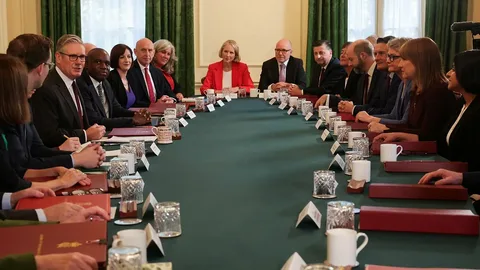
Westminster is bracing for another round of turbulence. The Prime Minister is facing mounting pressure from within his own party, as Labour MPs and ministers push for straight answers about where the government is headed next. It’s the kind of standoff that’s come to define the UK political crisis 2026 questions about leadership, staying power, and whether the people in charge actually have a plan.
At the heart of it all is one demand: a timetable for exit. Lawmakers want a roadmap, not vague reassurances, and that fight has quickly become one of the most talked-about stories in UK government news today.
Background
Political infighting is hardly new in Britain. Every government, at some point, runs into resistance from the opposition benches, restless backbenchers, or a public that’s simply lost patience. But when the cracks start showing from within when a party’s own MPs start asking hard questions that’s usually a sign something bigger is brewing.
This latest episode stems from a group of Labour MPs and ministers who feel they’ve been kept in the dark for too long. They’re not asking for much, on paper just a clearer sense of what comes next. But the request for a timetable for exit has reopened a debate that many had hoped was settled.
It’s worth remembering that this isn’t the first time. The phrase UK political crisis 2025 was all over the headlines not long ago, during an earlier bout of uncertainty. The fact that similar language is back in circulation in 2026 tells its own story. As political analysts often point out, the public’s trust in government rises and falls with how leaders handle exactly this kind of moment.
Current Political Situation
Right now, the Prime Minister is under real pressure to lay out a clear timeline and to start communicating better. Several MPs and ministers have made it known, privately and not so privately, that the current silence is starting to cost the government goodwill. Their worry is straightforward: uncertainty breeds mistrust, and mistrust makes it harder to actually govern.
The push for an exit timetable isn’t just about ticking a procedural box. Voters, by and large, expect their governments to explain themselves. When that explanation doesn’t come, speculation fills the gap and speculation has a way of spiraling once political tensions are already running high.
Searches for UK government resignations today have spiked, which says a lot about how closely people are watching. Online chatter moves fast, often faster than the facts can keep up, so it’s worth treating unconfirmed claims about resignations or reshuffles with a healthy dose of skepticism until something is officially confirmed.
Coverage from outlets people associate with serious political reporting the kind of searches behind terms like UK politics the guardian reflects a public that wants more than headlines. They want context, and they want to understand what any of this actually means for them.
Details of the Political Pressure
The pressure isn’t coming from one direction. Some lawmakers are pushing for a sharper, more decisive strategy. Others are more focused on the basics better communication, clearer messaging, less guesswork.
Labour MPs and ministers have reportedly been deep in discussions about what happens next, including how the government should be navigating the challenges ahead. Disagreements within a governing party aren’t unusual, but they carry more weight when senior figures are the ones raising concerns.
And the call for a timetable for exit goes beyond any single decision. It’s really a proxy for a much bigger conversation about leadership, accountability, and where this government is actually trying to take the country.
Unsurprisingly, political news live coverage has been tracking every twist, with analysts trying to read the tea leaves on how this plays out. The big question hanging over Westminster: can the Prime Minister claw back confidence, or is the pressure only going to build from here?
Quotes and Political Reactions
As you’d expect, reactions are split. Government loyalists are making the case that good governance takes time that hasty decisions under pressure rarely end well, and stability is worth protecting even if it means moving cautiously.
On the other side, critics argue that cautious has shaded into evasive. They say the public is owed a clear explanation, not careful phrasing designed to buy time. Transparency, in their view, isn’t optional during a moment like this.
Political commentators, for their part, tend to frame this as fairly familiar territory. Leadership tension is part and parcel of how democracies function governments can absolutely face internal pushback and still keep functioning day to day.
One political analyst summed it up plainly: public confidence hinges on clear communication and expectations that are actually realistic. Managing uncertainty, the analyst noted, is one of the toughest jobs any administration faces and arguably the one voters judge most harshly.
Wider Impact
Political instability rarely stays contained to Parliament. Businesses watch closely. Investors watch closer. A government that looks shaky can rattle economic confidence well before any actual policy changes.
Should the UK political crisis 2026 drag on, it could start shaping conversations well beyond Westminster public services, economic strategy, even how Britain is perceived on the international stage. That said, how far this goes really depends on what happens over the coming weeks.
It’s also worth noting that Britain’s political drama doesn’t stay local. Political news in the world tends to spotlight exactly this kind of story, because shifts in a major economy like the UK can ripple into trade talks, diplomatic relationships, and broader global dynamics.
All of this has pushed more casual observers to ask a more basic question: what is political news, really? At its core, it’s coverage of government decisions, leadership shake-ups, elections, and the policies that end up touching everyday life.
Public Reaction and Media Coverage
Public opinion is, predictably, all over the map. Some people want answers immediately. Others are urging patience, arguing that knee-jerk reactions rarely lead anywhere good. Social media has amplified the conversation considerably though, as always, it’s also amplified its fair share of misinformation.
For anyone trying to keep up with UK government news today, the advice is the same as ever: stick to sources you trust. Accurate reporting matters most precisely when things are murkiest.
Good journalism is doing a lot of heavy lifting here breaking down complicated developments, separating verified facts from rumor, and helping people make sense of a story that’s moving quickly.
The fact that both UK political crisis 2025 and UK political crisis 2026 are trending search terms says something important: this isn’t a one-off news cycle. People are genuinely unsure whether they’re watching a passing storm or the start of something more lasting.
Future Expectations
What happens next really comes down to the government itself whether it offers a real timetable, sharpens its messaging, or rolls out policy announcements that can shift the narrative.
If the disagreements persist, expect more public sparring in the weeks ahead. That said, political systems have a long history of working through tense periods before eventually settling into some kind of new normal.
Most observers seem to agree that the path forward hinges on whether ministers, MPs, and party leadership can actually get on the same page.For now, all signs point to more debate before any resolution and the country will be watching closely.
Conclusion
The growing pressure facing the Prime Minister has become one of the defining stories in British politics right now. With Labour MPs and ministers pushing hard for a timetable for exit, questions about leadership and direction are only getting louder.
The UK political crisis 2026 isn’t going away anytime soon not with citizens and international observers alike keeping a close watch. The uncertainty is real, but where things go from here will ultimately come down to political choices, honest communication, and whether the public’s trust can be rebuilt.
Until then, careful, well-sourced reporting remains essential for anyone following political news live and trying to make sense of what’s actually ahead for the UK government.
FAQs
What is the current crisis in the UK?
The current tension centers on growing pressure facing the Prime Minister, with Labour MPs and ministers demanding a clearer plan and a defined timetable going forward. It’s sparked wider debate about leadership and government stability. Given how fast political rumors travel, it’s best to rely on confirmed reporting rather than speculation.
Is the UK a declining country?
The UK remains a major global economy and political force, even as it navigates economic pressure, social debate, and political friction. Whether a country is “declining” really depends on what’s being measured economic performance, global influence, public services, or political stability — and experts don’t always agree on the answer.
Is England in turmoil right now?
England is going through a period of political debate and public disagreement, but that’s not the same as losing overall stability. Democracies regularly go through stretches like this leadership pressure, policy disputes, and so on. How serious it actually is depends on what happens next and how effectively leaders respond.