
The world recently mourned nine workers killed in a Colombian mine explosion. But India, too, has a long and painful history of sending men underground and not always bringing them back.
The Wound That Won’t Close
On May 4, 2026, a coal mine explosion in Colombia’s Cundinamarca province killed nine workers and injured six, with the National Mining Agency confirming the blast was caused by a buildup of gases. The tragedy was devastating yet not surprising to anyone who follows the global pattern of mine disasters.For India, such headlines stir deep, familiar grief. From the Raniganj coal mine disaster to the Meghalaya coal mine accident, from the Dhori mine disaster to the list of mining accidents in India that stretches across decades, the country has witnessed a recurring cycle of underground tragedy that raises one uncomfortable question: Why does it keep happening?
Raniganj Coal Mine Disaster 1989: Where It All Began
The Raniganj coal mine incident 1989 remains one of the most gripping rescue stories in Indian history. On 13 November 1989, a series of blasts struck the Mahabir Colliery in Raniganj, West Bengal, when someone accidentally touched the upper seam of the mine, triggering heavy flooding. Around 232 miners were working that night in the 320-foot-deep coal mine. While 161 miners near the lifts were immediately evacuated, 71 were left trapped. Six coal miners drowned, leaving 65 trapped deep underground.
What followed was nothing short of a miracle. Jaswant Singh Gill, serving as the additional chief mining engineer at Chitra Mines, voluntarily reached the Raniganj coal mine and led a daring rescue operation that began at 2:30 AM on 16 November 1989, lasting six hours and successfully rescuing 65 miners. He devised a steel capsule to transport miners to safety one by one.
Over 20,000 people had assembled to witness the tension-charged operation. Gill entered the mine at 2:30 AM and completed the mission by 8:30 AM, using a 12-tonne crane to lower and raise the capsule bringing all 65 miners up one by one before emerging last himself.
The Raniganj coal mine disaster is now immortalized in the 2023 Bollywood film Mission Raniganj, starring Akshay Kumar. But beyond the cinema screens, it represents something deeper the story of a nation that once mobilized its best minds to save the lives of its most vulnerable workers.
A Pattern of Tragedy: The List of Mining Accidents in India
The Raniganj coal mine disaster was not the first, and it was certainly not the last. The list of mining accidents in India is distressingly long. The Dhori mine disaster, flooding incidents in Jharkhand, and repeated tragedies in the northeast have collectively claimed hundreds of lives across decades.
Mine accident statistics in India paint a grim picture. India is one of the world’s largest coal producers, with Coal India Limited overseeing operations across multiple states. Yet safety enforcement remains inconsistent, particularly at illegal or semi-regulated mines.
The northeast corridor particularly Meghalaya has become synonymous with a particularly dangerous and exploitative form of mining. And the consequences have been catastrophic.
The Meghalaya Coal Mine Accident: Rat-Holes and Repeated Failures
The Meghalaya mining accident occurred on 13 December 2018, when 15 miners were trapped in a mine in Ksan, in the East Jaintia Hills district. After manually digging using a banned process known as rat-hole mining, the miners were trapped inside the coal mine at a depth of around 370 feet when the tunnel flooded with water from the nearby Lytein river.
Service personnel from the National Disaster Response Force and the State Disaster Response Force began operations shortly after. Teams from Coal India, the Indian Air Force, and the Indian Navy eventually joined the effort but the rescue proved far more difficult than 1989.
Gill himself was invited by Meghalaya Chief Minister Conrad Sangma to consult on the rescue operation, given his expertise in mine mishaps. Yet tragedy struck regardless.
Then, in 2026, the region witnessed yet another disaster. Twenty-seven miners were killed and nine injured in a deadly explosion inside an illegal rat-hole mine in Meghalaya’s East Jaintia Hills district. The incident occurred in the remote Mynsyngat village in the Thangsko area, around 22 kilometres from the district headquarters.
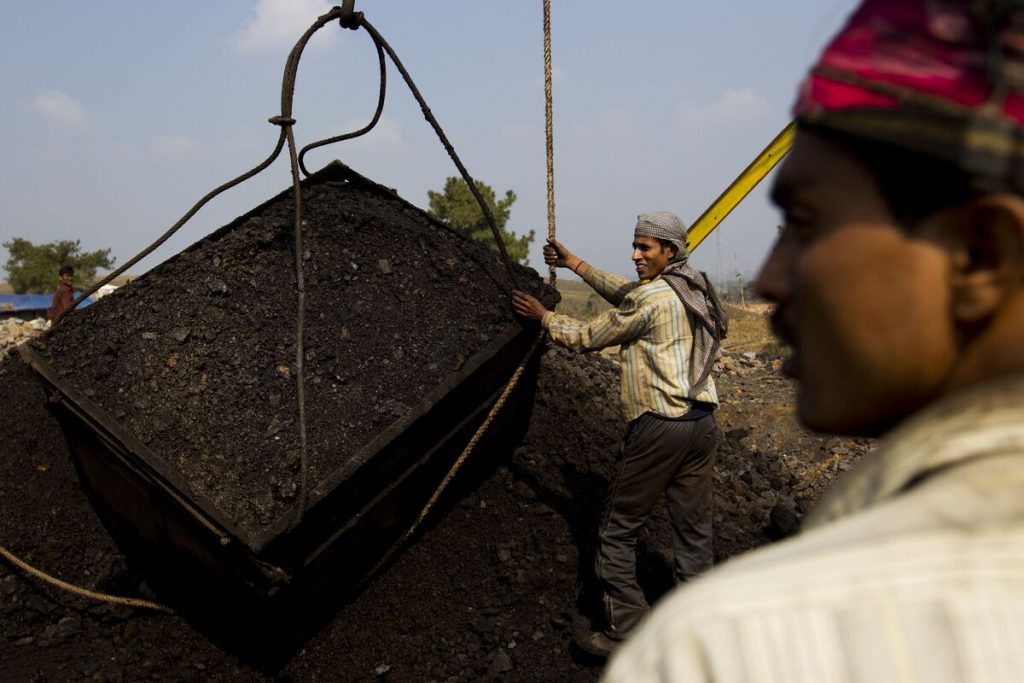
Unregulated coal pits are common in India’s east and northeast regions, with workers earning between $18 to $24 for a day-long shift risking their lives for wages that barely sustain a family.
The Meghalaya coal mining latest news today reflects a deeply troubling reality: despite court bans, Supreme Court orders, and repeated disasters, illegal rat-hole mining continues. Even after the Supreme Court upheld the NGT’s ban on coal mining in July 2019, there remains demand for fresh coal from Meghalaya, especially from Bangladesh and most of the illegally mined coal is reportedly sold across the border.
The Opinion: Why We Keep Failing Miners
Here is the hard truth that no politician wants to say plainly: India’s mine accident statistics in India do not reflect bad luck. They reflect bad governance.
The Raniganj coal mine disaster was an accident. The Meghalaya coal mine accident of 2018 was an accident. But when the same community suffers multiple mining tragedies within a span of a few years with the same regulatory failures, the same delayed rescues, and the same corporate impunity it becomes a policy failure. It becomes a choice.
The Dhori mine disaster, Raniganj coal mine incident 1989, and the repeated Meghalaya coal mine accidents are all entries on the list of mining accidents in India. But they are also entries in a list of warnings that were ignored, inspections that were skipped, and workers who were treated as expendable.
The National Green Tribunal banned rat-hole mining. The Supreme Court of India reaffirmed that ban. Yet as the Meghalaya High Court noted in early 2026, illegal coal mining continued in the Thangsko area even after a January 2026 death had already occurred there raising questions about what it actually takes for authorities to act.
The answer, unfortunately, seems to be: more bodies.
A Moment of Hope in an Unlikely Place
While India struggles with this ongoing crisis, a different kind of underground faith story has been making Meghalaya coal mining latest news today pale in comparison one rooted not in disaster but in devotion.
The Hinglaj Mata Temple, also known as Hinglaj Devi or Nani Mandir, is a Hindu temple located in a narrow gorge in the remote, hilly terrain of Lyari Tehsil in Lasbela district, Balochistan, within the Hingol National Park. It is one of the 51 Shakta Pithas in Shaktism and one of the two such Pithas in Pakistan.
The Hinglaj Mata temple recently seen in news is located in Balochistan, Pakistan specifically in the Lasbela district and it has been drawing global attention for reasons that stand in sharp contrast to mining tragedies. The annual Hinglaj Mata festival drew around 300,000 Hindu pilgrims this year, with the gathering regarded as the third-largest Hindu religious congregation after similar festivals in India and Nepal.
The Balochistan government has also decided to declare the historic Hinglaj Mata Temple a world tourism site, with special funds allocated for renovation and infrastructure development a step taken to enhance minority religious tourism and present a positive image of the province globally.
In a region often torn by conflict and suspicion, the Hinglaj Mata temple offers a rare story of community, reverence, and interfaith coexistence. It is a reminder that sacred spaces whether underground mines or mountain temples carry immense human meaning. The difference is: one is a place people go to seek blessing. The other, too often, becomes a place people never return from.
What Must Change
The mine accident statistics in India demand urgency. The Raniganj coal mine disaster showed that with the right engineering mind and political will, lives can be saved. The Meghalaya coal mine accident and its many repetitions shows what happens when that will is absent.
India needs a comprehensive and publicly accessible list of mining accidents in India that informs policy, not just history books. It needs real-time monitoring of all active mines, zero tolerance for illegal rat-hole mining, and miners’ rights frameworks that treat workers as human beings not as tools to be discarded when the seam runs dry.
The Dhori mine disaster, the Raniganj coal mine incident 1989, and the Meghalaya coal mine accident are not chapters in a closed book. They are warnings still being written. The question is whether India will finally choose to read them.
FAQs
Did all the 33 miners survive?
This question refers to the 2010 Copiapó mining accident in Chile, where 33 miners were trapped underground for 69 days. Yes all 33 miners survived and were rescued safely on October 13, 2010, in a globally celebrated operation. This is separate from the Raniganj coal mine disaster 1989 in India.
Is Mission Raniganj a real story?
Yes, Mission Raniganj: The Great Bharat Rescue (2023) is based on a true story. The film is based on the life of Jaswant Singh Gill, who rescued 65 mine workers during the Raniganj Coalfields collapse of 1989 in West Bengal. Akshay Kumar portrayed Gill in the biographical drama.
Is “The 59” a true story?
“The 59” refers to a mining drama based on the 2010 Chilean mine rescue, which involved 33 miners though the number 59 relates to the days some were trapped before the full rescue. The Chilean mine rescue is indeed a true story, distinct from India’s Raniganj coal mine incident 1989, though both share themes of extraordinary rescue under extreme pressure.