Team South Africa currently sits seventh in the medal table at Glasgow 2026, with 16 medals including four golds as of July 30, 2026. The 2026 Commonwealth Games are being held in Glasgow, Scotland, running from July 23 to August 2, and South Africa’s squad has delivered some genuinely jaw-dropping moments none bigger than what Chad le Clos has done in the pool.
The South Africa Commonwealth Games 2026 campaign has exceeded expectations across the board. From swimming dominance to strong performances in athletics and weightlifting, the rainbow nation has made its presence felt in Scotland. Fans following the South Africa Commonwealth Games live have had plenty to cheer about this week.
Le Clos Makes Commonwealth Games History
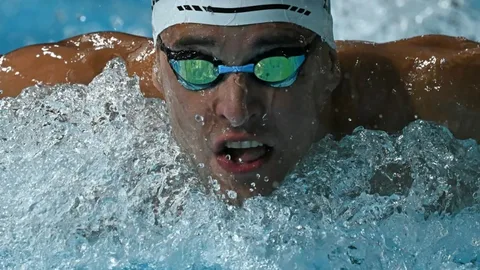
London 2012 Olympic champion Chad le Clos can finally add another superlative to his lengthy CV: the most decorated athlete in history at the Commonwealth Games. Winning bronze alongside Pieter Coetzé, Michael Houlie and Ruard van Henen in the men’s 4x100m medley relay at Tollcross Swimming Centre on Wednesday (29 July), he claimed his 21st Commonwealth medal — surpassing the 20-medal total put up by Australian swimming legend Emma McKeon at the Commonwealth Games.
It is a record that seemed almost untouchable just a few years ago. Yet here is le Clos, at 34 years old, still diving into pools and pulling out performances that leave the sporting world speechless. His medal tally across five Games editions Delhi 2010, Glasgow 2014, Gold Coast 2018, Birmingham 2022 and Glasgow 2026 now includes seven gold, five silver and nine bronze medals.
What makes the South Africa Commonwealth Games 2026 story so compelling is not just the numbers. It is the journey. Le Clos has spoken openly about mental health struggles in recent years, and his comeback in Glasgow has felt deeply personal.
“I Should Not Be Crying at Bronze”
Speaking after the medal win, le Clos said: “I should not be crying at bronze, I should be crying at gold, but honestly this means the world.” He added: “After the near misses and some really hard times over the past few years, this is unbelievable, and I am just so grateful to my family for all their support.”
Those words landed with real weight. Here is one of the greatest swimmers in Commonwealth Games history, reduced to tears over a bronze medal not because of the colour, but because of everything it represents. The South Africa Commonwealth Games team has rallied around him, and the scenes at Tollcross have been electric.
The South Africa Commonwealth Games Team at Glasgow 2026
Over 100 athletes are competing across 10 sports for South Africa at the Glasgow 2026 Commonwealth Games. South Africa are aiming to improve on a ninth-place finish last time out at Birmingham 2022, where they won seven gold and 27 total medals.
The South Africa Commonwealth Games team in 2026 has shown remarkable depth beyond le Clos. Young swimmer Pieter Coetzé has been one of the breakout stars of the entire Games, winning multiple gold medals in backstroke events. The 22-year-old has emerged as the future face of South African swimming and has been instrumental in the relay success that powered le Clos to history.
In athletics, South Africa have high hopes in the men’s 200m. Sinesipho Dambile is the world No. 5 in the event and competes in the semi-finals, while Aiden Smith is in the men’s shot put final and Tayla Kavanagh will run in the women’s 5,000m final.
The South Africa Commonwealth Games schedule on July 30 also features the netball team, who face England in a crucial must-win Group A match with a semi-final place on the line.
South Africa Commonwealth Games Results: Key Highlights
The South Africa Commonwealth Games results in Glasgow have been headlined by swimming, but medals have come from several disciplines. Here is a snapshot of the standout performances at the Commonwealth Games 2026 so far:
- Nathan Hendricks won South Africa’s first medal of the Commonwealth Games to open the tally.
- Pieter Coetzé and Ruard van Renen secured a famous 1-3 finish in the 50m backstroke, leading a stellar night for South Africa in the pool.
- South Africa set a new African record of 3:42.61 to win silver in the mixed 4x100m medley relay final, with Pieter Coetze, Michael Houlie, Erin Gallagher and Aimee Canny combining for the record-breaking swim.
- Chad le Clos anchored the men’s 4x100m freestyle relay team to bronze on opening night, becoming the most decorated male athlete in Commonwealth Games history with his 19th medal.
- Le Clos then extended that record further, finishing with 21 total Commonwealth Games medals.
Comparing South Africa Commonwealth Games 2022 and 2026
Those tracking the South Africa Commonwealth Games story over recent editions will notice a clear upward trajectory. At Birmingham 2022, South Africa finished ninth with seven gold and 27 total medals. The 2026 edition in Glasgow is shaping up as a similarly strong campaign, with the swimming team leading the charge and athletics adding further medal prospects in the final days of competition.
The South Africa Commonwealth Games 2022 campaign was itself notable le Clos equalled the all-time record in Birmingham before breaking it outright in Glasgow. Each edition has built on the last, and the programme at Commonwealth Games 2026 has given South Africa multiple realistic paths to the podium.
Commonwealth Games 2026: A Tournament for the Ages
The Commonwealth Games 2026 in Glasgow feature athletes from 74 nations and territories competing across 10 sports for 645 medals. The competition runs until August 2 and has already produced a string of world-class performances.
Among the Commonwealth Games countries represented in Glasgow, Australia leads the medal table, followed by England. South Africa’s seventh-place ranking reflects a strong showing from a nation with a relatively smaller delegation than the traditional powerhouses. The Commonwealth Games countries include nations from Africa, the Caribbean, South Asia, the Pacific, and the British Isles, making it one of the most diverse multi-sport events in the world.
Olympics South Africa: A Complex and Inspiring History
To understand what the Commonwealth Games mean to South Africa, it helps to know the country’s broader sporting history. The relationship between Olympics South Africa and the international community has not always been smooth.
Before the 1964 Tokyo Games, the International Olympic Committee decided to bar South Africa due to its racial segregation policy known as Apartheid, which saw non-white South Africans widely discriminated against in all aspects of life, including sport where only white athletes could represent the country. Due to the persistence of Apartheid and the influence of other African nations, the South African Olympic Committee was officially expelled from the IOC in 1970.
South Africa was re-admitted to the IOC in 1991, as part of the transition to multiracial equality, and competed at the 1992 Summer Olympics held in Barcelona. Since then, Olympics South Africa has grown into a respected and competitive force, producing champions in swimming, athletics, and boxing. The journey from exclusion to record-breaking glory is part of what gives moments like le Clos’s 21st medal such emotional power.
South Africa and the Commonwealth: Another Historical Chapter
The Olympics were not the only international body to exclude South Africa during the apartheid era. In March 1961, South Africa was forced to withdraw from the Commonwealth because of its racial policies. The country remained outside the Commonwealth for more than three decades.
The Republic of South Africa rejoined the Commonwealth on 1 June 1994 the same year Nelson Mandela was elected as the country’s first democratically chosen president. That return paved the way for South Africa’s re-entry into the Commonwealth Games, and decades later, the nation is now setting records at the very tournament it was once excluded from.
What’s Next for Team South Africa
With the Games running until August 2, there are still medal opportunities remaining for the South Africa Commonwealth Games team. Athletics finals, cycling events, and further swimming races all offer prospects for additional podium finishes. The netball team’s match against England on July 30 could determine whether South Africa advances to the semi-finals of that competition.
The South Africa Commonwealth Games live coverage has been available through broadcasters and streaming platforms worldwide, and interest in the team’s performances has surged following le Clos’s historic milestone. The South Africa Commonwealth Games schedule for the remaining days includes several high-profile finals that could push the overall tally even higher.
FAQs
Who will host the 2026 Commonwealth Games?
The 2026 Commonwealth Games are being hosted by Glasgow, Scotland, in the United Kingdom. The Games run from July 23 to August 2, 2026, and are held across multiple venues in and around Glasgow, including the Tollcross International Swimming Centre where Chad le Clos made his record-breaking history. Glasgow previously hosted the Commonwealth Games in 2014, making this the city’s second time welcoming the world’s top athletes from across Commonwealth Games countries. The event features athletes from 74 nations and territories competing across 10 sports for a total of 645 medals.
When was South Africa kicked out of the Olympics?
South Africa was first barred from the Olympics ahead of the 1964 Tokyo Games due to its policy of Apartheid, a system of institutionalised racial segregation that prohibited non-white athletes from competing alongside white counterparts. The situation worsened over the following years. In 1970, the South African National Olympic Committee was officially expelled from the International Olympic Committee altogether. South Africa remained outside the Olympic movement for more than two decades. The ban was lifted in 1991 as the country began its transition away from apartheid, and South Africa returned to the Olympic Games at Barcelona 1992. Today, Olympics South Africa competes as one of the continent’s most successful sporting nations.
Why was South Africa removed from the Commonwealth?
South Africa did not leave the Commonwealth because it was formally expelled rather, it was effectively forced to withdraw. In March 1961, during a Commonwealth Prime Ministers’ Conference in London, South Africa sought to remain in the Commonwealth after becoming a republic. However, strong opposition from African, Asian, and Caribbean member nations over the country’s apartheid policies made it clear that continued membership would not be accepted. Faced with this pressure, South Africa’s Prime Minister H.F. Verwoerd withdrew the country’s application. South Africa remained outside the Commonwealth for over 30 years. After the end of apartheid and the historic democratic elections of April 1994, the newly elected Nelson Mandela government rejoined the Commonwealth on June 1, 1994 a return that symbolised one of the most remarkable political transformations of the 20th century.