
The latest US Iran war news confirms that tensions between Washington and Tehran have flared up again after United States Central Command intercepted a wave of Iranian ballistic missiles aimed at American forces stationed in the Middle East. President Donald Trump responded within hours, warning that the United States would strike back with full force. The incident has ended a brief pause in hostilities and reignited fears of a wider regional war just weeks after an earlier ceasefire attempt collapsed.
Background
The current round of US Iran war news traces back to late June 2026, when a fragile ceasefire between the two nations began to unravel following attacks on commercial shipping vessels near the Strait of Hormuz. What followed was weeks of tit-for-tat military action, with American forces carrying out repeated waves of strikes against Iranian military infrastructure while Tehran responded with missile and drone attacks on US bases and allied positions across the region.
Earlier in July, US Central Command confirmed that American forces had struck more than eighty targets inside Iran in a single operation, while Washington simultaneously reimposed sanctions on Iranian oil exports. Iran, in turn, warned that it would deliver what officials called a “crushing response,” setting the stage for the escalation that has now unfolded. By mid-July, US forces had carried out seven consecutive nights of strikes on Iranian territory, and the conflict had already claimed dozens of lives on the Iranian side alone.
Details
According to the most recent US Iran war news, US Central Command announced that its forces successfully intercepted all Iranian missiles launched toward American positions during what officials described as an attempted surprise attack. The strike marked a notable shift from the previous pattern of the conflict, in which Iran had generally responded only after American strikes, suggesting that Tehran may now be willing to initiate hostilities on its own terms.
The attempted attack came just a day after President Trump had publicly stated that the United States had paused its strikes on Iran, raising hopes that a longer de-escalation might be possible. Those hopes were quickly dashed once CENTCOM confirmed the interception. In a coordinated move, American and Saudi Arabian forces also carried out joint strikes against Iran-aligned militant groups operating inside Iraq, expanding the geographic scope of the confrontation beyond Iranian territory alone.
The human cost of the conflict has continued to climb throughout July. Iran’s Health Ministry reported that at least fifty people have been killed inside the country since the latest phase of fighting began in late June, with roughly five hundred more injured. Officials said that women and children were among the casualties, and infrastructure including bridges and fuel facilities in southern Iran has sustained significant damage from repeated American strikes.
On the American side, the conflict has also produced its first confirmed military fatalities in months. US Central Command announced that two American service members stationed in Jordan were killed defending against an earlier wave of Iranian ballistic missile and drone attacks, with a third service member still listed as missing in action. Several additional troops were medically evacuated before being discharged from hospital care.
Quotes
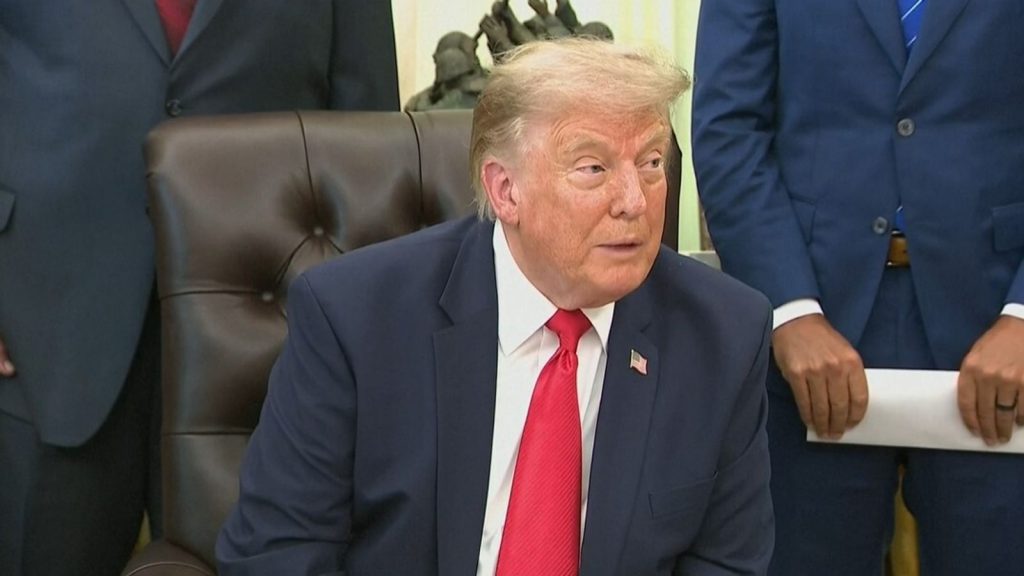
President Trump was blunt in his response to the intercepted attack, telling reporters at the Oval Office that the United States would strike Iran hard because, in his words, “it’s our turn to hit them.” He added that Iranian officials were already aware that retaliation was coming. In a separate interview with Fox News, Trump used even more forceful language to describe how the US military intended to respond to Tehran’s actions.
US Central Command, in its official statement, confirmed that American forces had intercepted the Iranian missiles and that joint operations with Saudi Arabia had targeted Iran-backed fighters inside Iraq. On the Iranian side, energy officials have described the mounting strain on the country’s infrastructure. Arash Najafi, head of Iran’s Chamber of Commerce Energy Commission, warned that the government may be forced to cut gas supplies to villages because of the ongoing fuel and electricity shortfall caused by the conflict.
Impact
The renewed fighting is being felt well beyond the battlefield. Global oil markets have swung sharply in response to each new development, with Brent crude and US crude prices dropping significantly during the brief pause in strikes before rebounding once the latest attack was confirmed. Analysts have repeatedly pointed to the Strait of Hormuz, a critical waterway for global energy shipments, as the single greatest risk factor for the broader world economy should the conflict continue to widen.
Regionally, the impact has spread into Yemen, Iraq, and the wider Gulf, where Iran-aligned groups such as the Houthi movement have staged their own protests and actions in solidarity with Tehran. Iran’s domestic energy grid is also under severe pressure, with officials warning of gas shortfalls reaching hundreds of millions of cubic meters per day and electricity shortages exceeding fifteen thousand megawatts, worsened further by extreme summer heat across the country.
For neighboring countries, including Pakistan, the conflict carries added weight given the shared border with Iran’s Sistan and Baluchestan province, where several recent strikes have taken place. Continued instability in the region also raises concerns for energy prices, trade routes, and the safety of expatriate workers across the Gulf, many of whom come from South Asian countries with close economic ties to the region.
Conclusion
As the latest US Iran war news makes clear, the brief pause in hostilities between Washington and Tehran has proven short-lived, and both sides now appear positioned for further escalation rather than de-escalation. President Trump’s promise of a forceful response suggests that additional American strikes on Iranian targets are likely in the coming days, while Iran’s shift toward initiating attacks signals a more assertive posture from Tehran going forward.
With oil markets on edge, regional allies drawn deeper into the conflict, and casualties mounting on both sides, the coming weeks are expected to be critical in determining whether this latest chapter of the US-Iran confrontation stabilizes into another fragile truce or spirals into a broader regional war. Readers are encouraged to follow trusted news sources closely as this remains a fast-developing situation.
FAQs
Why did the US attack Iran again?
The United States resumed strikes on Iran after the ceasefire reached earlier in the summer began to collapse, following attacks on commercial shipping vessels near the Strait of Hormuz and continued missile and drone attacks by Iran on American forces and allied positions across the Middle East. US officials say the strikes are intended to degrade Iranian military capabilities and to respond directly to Iranian aggression, including an attempted surprise missile attack that was intercepted by US Central Command in late July 2026.
How many US military killed in the Iran attacks?
US Central Command confirmed that two American service members stationed in Jordan were killed while defending against an Iranian ballistic missile and drone attack, with a third service member still listed as missing in action. Several other American troops were injured and medically evacuated to hospitals in Jordan, though most were later discharged and returned to duty after receiving treatment for their injuries.
Why did Trump attack Iran?
President Trump ordered the latest round of strikes after Iran attempted a surprise missile attack on US forces stationed in the Middle East, which was intercepted by American defenses. Trump said publicly that it was now “our turn” to strike back, framing the response as retaliation for Iran’s actions and warning that further American military action against Iranian targets would follow in the days ahead.