
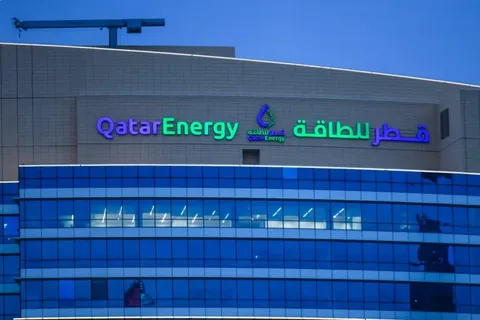
QatarEnergy LNG force majeure declaration on select long-term LNG supply contracts represents one of the most significant developments in global energy markets since the Iran war began on February 28 2026 — with the world’s largest LNG exporter formally invoking the extraordinary circumstances provision that releases it from contractual delivery obligations it cannot meet due to conditions entirely beyond its control.
QatarEnergy LNG force majeure invocation covers a specific subset of the company’s extensive long-term LNG supply portfolio — with QatarEnergy identifying the contracts most directly affected by the combination of Strait of Hormuz closure Iranian drone boat and sea mine threats to tanker transit and the broader security environment created by Iran’s multi-front retaliation campaign that has made some LNG tanker routes commercially uninsurable and operationally unsafe.
Qatar energy news of the QatarEnergy LNG force majeure declaration has sent shockwaves through global energy markets — with European gas futures spiking Asian LNG spot prices surging and energy security ministries across importing nations convening emergency meetings to assess the implications of a force majeure declaration by the supplier they depend on most critically for the liquefied natural gas that keeps their economies running and their populations warm.
Background: QatarEnergy and Global LNG
QatarEnergy’s Position in Global LNG Markets
QatarEnergy LNG force majeure significance cannot be overstated without first understanding QatarEnergy’s extraordinary position in global LNG markets — a position that makes any disruption to its supply operations an immediate global energy security crisis rather than a commercial inconvenience affecting individual contracts.
QatarEnergy is the world’s largest LNG exporter — operating the North Field the single largest natural gas reservoir on earth which straddles the maritime border between Qatar and Iran under the name South Pars on the Iranian side. Qatar’s LNG production capacity of approximately 77 million tonnes per annum is being expanded through the North Field Expansion project to approximately 126 million tonnes per annum by 2027 — a scale that makes QatarEnergy the dominant single supplier in global LNG trade.
QatarEnergy LNG force majeure affects a market in which Qatar supplies approximately 20 to 22 percent of total global LNG trade — with European buyers in particular having shifted dramatically toward Qatari LNG following the reduction of Russian pipeline gas supplies after the 2022 Ukraine war. Countries including the United Kingdom Belgium France Italy and Germany have built their energy security strategies around Qatari LNG as the most reliable large-scale alternative to Russian supply — making QatarEnergy LNG force majeure directly threatening to the energy security architecture that European governments have spent 3 years constructing.
QatarEnergy’s Long-Term Contract Structure
QatarEnergy LNG force majeure operates against the backdrop of QatarEnergy’s extensive portfolio of long-term sale and purchase agreements — 20 to 25 year contracts with national energy companies utilities and major energy corporations that form the commercial foundation of Qatar’s LNG export business.
QatarEnergy LNG force majeure declaration affects a specific subset of these long-term contracts — those whose delivery terms specify transit through the Strait of Hormuz as the routing mechanism and whose buyers are located in markets that the current operational and security environment makes effectively unreachable through normal tanker transit without commercially unacceptable risk.
QatarEnergy LNG Force Majeure — What Was Declared
The Force Majeure Notification
QatarEnergy LNG force majeure formal notification was issued to affected long-term contract buyers — with QatarEnergy’s legal and commercial teams having spent the days preceding the declaration assessing which specific contracts met the legal threshold for force majeure invocation under their governing law and specific force majeure clause language.
QatarEnergy LNG force majeure declaration covers contracts whose performance has been rendered impossible impracticable or commercially unreasonable by the combination of Strait of Hormuz security conditions Iranian naval threat to tanker transit and the war risk insurance market’s refusal to cover LNG tanker operations in the affected area at any commercially viable premium level.
QatarEnergy LNG force majeure scope as publicly communicated covers some rather than all of QatarEnergy’s long-term contracts — with the company having continued to supply buyers accessible through alternative routing and buyers located in Asian markets whose transit routes through the Strait of Hormuz are partially protected by the selective opening that Iran has implemented allowing certain vessel categories and flag states to transit without interference.
Qatar LNG force majeure specific contract count has not been publicly disclosed by QatarEnergy — with the company citing the commercially sensitive and legally consequential nature of identifying specific buyers as grounds for limiting public disclosure to the general force majeure declaration rather than detailed contract-by-contract specification.
Qatar LNG Force Majeure — Which Buyers Are Affected
Qatar LNG force majeure buyer impact is concentrated in 2 primary geographic categories — European buyers whose LNG receiving terminals are served exclusively or primarily by Qatari tankers transiting the Strait of Hormuz and buyers in markets whose specific contract terms specify Qatari origin LNG delivered through routes rendered operationally impossible by the current security environment.
Qatar LNG force majeure European buyer impact is most severe — with the UK Belgium France Italy and Germany all having long-term Qatari LNG supply agreements that are potentially within the scope of the QatarEnergy LNG force majeure declaration. European energy security officials have been in immediate contact with QatarEnergy and their own national energy companies to assess the specific impact on their countries’ supply security.
Qatar LNG force majeure Asian buyer impact is more limited — reflecting the selective nature of the Iran-imposed Strait of Hormuz disruption that has allowed certain vessel categories including some operating under neutral flag states to transit with lower interference risk. South Korean Japanese and Taiwanese buyers whose long-term Qatari LNG contracts specify delivery through Asia-routed shipping have been monitoring the QatarEnergy LNG force majeure declaration closely but are not uniformly within its scope.
Qatar LNG Force Majeure — Legal and Commercial Implications
What Force Majeure Means Legally
Qatar LNG force majeure legal implications reflect the fundamental purpose of force majeure clauses in commercial contracts — to allocate the risk of extraordinary unforeseeable events that render contract performance impossible or commercially unreasonable without attributing fault to either party.
Qatar LNG force majeure invocation by QatarEnergy releases the company from its contractual delivery obligations for the duration of the force majeure event — meaning that QatarEnergy is not in breach of contract for failing to deliver the LNG volumes it has committed to supply and that buyers cannot claim the financial penalties that contract non-performance would normally trigger.
Qatar LNG force majeure buyer rights during the force majeure period typically include the right to source alternative LNG supplies from other sellers to meet their requirements — with QatarEnergy generally not able to prevent buyers from purchasing spot LNG from other sources during the period when their contracted Qatari volumes are unavailable. Buyers may also have the right to terminate long-term contracts if the force majeure event extends beyond a specified duration — typically 6 to 18 months depending on the specific contract terms.
Qatar LNG force majeure market impact operates through the spot LNG market — with buyers who cannot receive their contracted Qatari volumes forced to purchase replacement volumes on the spot market at whatever price prevails. The simultaneous force majeure declarations from multiple Qatari contracts creates concentrated spot market demand that drives spot LNG prices to levels that would not occur if the long-term contract volumes were being delivered normally.
QatarEnergy Force Majeure — Contract Law Specifics
QatarEnergy force majeure clause language varies across QatarEnergy’s extensive long-term contract portfolio — with different contracts having been negotiated under different legal frameworks at different times and with different buyers whose legal teams negotiated specific force majeure language reflecting their assessment of the risks most likely to affect Qatari LNG delivery.
QatarEnergy force majeure typical clause elements include a definition of qualifying force majeure events that covers war armed conflict acts of hostility and interference with shipping lanes by governmental or military actors — all of which are clearly applicable to the current Iran war and its Strait of Hormuz consequences.
QatarEnergy force majeure notice requirements — typically requiring written notification to buyers within a specified period of the force majeure event occurring — have been met by QatarEnergy’s formal declarations — with the company having issued the required notifications to all affected buyers within the timeframes specified in their respective contracts.
QatarEnergy Force Majeure — Why Now
Timing of QatarEnergy LNG Force Majeure
QatarEnergy force majeure declaration timing reflects the progressive deterioration of the operating environment for Qatari LNG tanker transit through the Strait of Hormuz — with QatarEnergy having initially continued operations despite the Iran war before concluding that the force majeure threshold had been crossed as conditions worsened beyond the point of commercially viable management.
QatarEnergy force majeure triggering factors include the specific combination of circumstances that crossed the force majeure threshold — the Iranian drone boat attacks on commercial vessels in the Strait the sea mine deployment reports that have made Strait transit an uninsurable risk for many vessel operators and the specific targeting of LNG infrastructure in Iranian attacks on Qatar that made continued normal operations commercially and operationally untenable.
QatarEnergy force majeure legal assessment process involved QatarEnergy’s legal team conducting a contract-by-contract review of force majeure clause applicability — with the company having been conservative in its force majeure invocations to preserve commercial relationships and avoid the spot market disruption that force majeure declarations inevitably cause.
QatarEnergy force majeure alternative routing assessment also preceded the declaration — with QatarEnergy having explored whether Cape of Good Hope routing could substitute for Strait of Hormuz transit for affected deliveries. The conclusion that Cape rerouting adds 14 to 21 days to voyage times and creates delivery schedule disruptions incompatible with the specific delivery term obligations in many contracts contributed to the force majeure determination.
Strait of Hormuz — The Operational Context
Why the Strait of Hormuz Makes QatarEnergy LNG Force Majeure Necessary
QatarEnergy LNG force majeure root cause is the Strait of Hormuz closure — with all of Qatar’s LNG export infrastructure located on the Ras Laffan Industrial City complex that exports its production exclusively through tankers that must transit the Strait of Hormuz to reach international markets.
Qatar LNG force majeure geographic reality is inescapable — Qatar has no alternative maritime export route for its LNG production. Unlike oil producers that might theoretically access alternative export routes Qatar’s LNG terminals are physically configured to export through the Strait of Hormuz and cannot redirect exports through any other waterway regardless of operational conditions in the Strait.
Qatar LNG force majeure operational impossibility argument is therefore grounded not in contractual interpretation but in physical geography — with QatarEnergy literally unable to deliver LNG through any route other than the one that Iran’s military operations have rendered unsafe and uninsurable for many vessel operators.
Strait of Hormuz partial opening that maritime tracking data has confirmed — with Iran allowing some vessel categories to transit — has been insufficient to resolve the Qatar LNG force majeure situation because the insurance market’s refusal to cover many LNG tankers through the Strait regardless of Iran’s selective approach means that many vessel operators cannot legally operate in the affected area even if Iran would permit their physical passage.
Qatar Energy News — Market Reaction
Global Energy Market Response
Qatar energy news of QatarEnergy LNG force majeure declaration produced immediate and dramatic market reactions — with European gas futures surging Asian LNG spot prices spiking and energy security briefings being convened across importing nations within hours of the formal declaration becoming public.
Qatar energy news European gas market reaction saw the benchmark TTF Dutch natural gas price surge by the maximum daily price movement limit on the day of the force majeure announcement — reflecting the market’s assessment that QatarEnergy LNG force majeure removes a significant portion of the guaranteed supply that European energy security planning depends on and that replacement volumes will need to be sourced at spot market prices representing a multiple of the long-term contract prices affected buyers had been paying.
Qatar energy news LNG spot market reaction shows Asian spot LNG prices — the JKM Japan Korea Marker — rising to levels not seen since the 2022 European energy crisis when Russian gas supply reductions created the last major LNG market dislocation. The simultaneous European and Asian spot market pressure created by QatarEnergy LNG force majeure represents a globally coordinated energy market stress that individual importing nation responses cannot address without international coordination.
Quotes on QatarEnergy LNG Force Majeure
QatarEnergy CEO Saad al-Kaabi stated that the force majeure declaration was a deeply difficult decision made with full awareness of its consequences for QatarEnergy’s buyers and for global energy markets — adding that the company had exhausted every operational alternative before concluding that the legal and physical conditions for force majeure had been met and that QatarEnergy would work with all affected buyers to minimise the impact and restore normal supply operations as soon as conditions permitted.
European Commission Energy Commissioner stated that the QatarEnergy LNG force majeure declaration was a serious development that required an immediate European coordinated response — activating the EU’s energy emergency solidarity mechanisms and calling on member states to accelerate LNG import capacity utilisation from non-Qatari sources including the United States Australia and West Africa.
UK Energy Secretary Ed Miliband confirmed that British government officials were in immediate contact with QatarEnergy regarding the specific impact on UK LNG supply agreements — adding that the UK’s gas storage levels and diversified supply infrastructure provided a buffer against the immediate impact of QatarEnergy LNG force majeure but that a prolonged force majeure period would require emergency measures.
Goldman Sachs commodities analyst Samantha Dart described the QatarEnergy LNG force majeure as the most significant single supply disruption to global LNG markets since the facility was established — stating that the force majeure covered volumes representing approximately 8 to 12 percent of total global LNG trade and that the spot market implications would push European gas prices to levels not seen since the 2022 crisis peak.
South Korean Ministry of Trade Industry and Energy spokesperson confirmed that Korean officials were assessing the specific impact of QatarEnergy LNG force majeure on Korean energy companies’ long-term supply agreements — adding that South Korea’s LNG import diversification strategy had reduced but not eliminated exposure to Qatari supply disruption risk.
Impact: QatarEnergy LNG Force Majeure Consequences
For European Energy Security
QatarEnergy LNG force majeure European energy security impact is the most severe since the 2022 Russian gas crisis — with the force majeure removing supply volumes that European governments had specifically structured their energy security strategies to depend on as the primary alternative to Russian supply.
QatarEnergy LNG force majeure European response options include accelerated utilisation of existing LNG import capacity from US Australian and West African suppliers emergency gas storage drawdown reductions in industrial gas consumption through emergency demand management measures and the activation of EU energy solidarity mechanisms that allow member states to share gas supplies across borders during supply emergencies.
QatarEnergy LNG force majeure European price impact — with TTF prices surging to crisis levels — will translate into household energy bill increases and industrial energy cost spikes that compound the oil-price inflation already being generated by the Iran war and create the political pressure on European governments to pursue diplomatic resolution of the conflict that energy security logic demands.
For Global LNG Market Architecture
QatarEnergy LNG force majeure long-term implications for global LNG market architecture extend beyond the immediate supply disruption to raise fundamental questions about the concentration risk that Qatar’s dominant position in global LNG trade creates — and about whether importing nations have built sufficient supply source diversification into their energy security strategies to manage QatarEnergy force majeure scenarios.
Qatar LNG force majeure will accelerate investment in LNG supply source diversification — with importing nations whose vulnerability to Qatari force majeure has been painfully demonstrated likely to use the crisis as the catalyst for long-term supply agreements with alternative producers that reduce their dependence on any single supplier.
For Diplomatic Resolution of Iran War
QatarEnergy LNG force majeure creates additional and powerful economic pressure on all parties to pursue diplomatic resolution of the Iran war — with the global energy market consequences of a prolonged force majeure period making the economic cost of continued conflict tangible for importing nations far removed from the military conflict itself.
Frequently Asked Questions
What Is the Force Majeure in Qatar?
Force majeure in Qatar in the context of QatarEnergy LNG force majeure refers to the contractual provision in QatarEnergy’s long-term LNG sale and purchase agreements that allows the company to suspend its delivery obligations when extraordinary events beyond its control make performance impossible impracticable or commercially unreasonable. The specific force majeure events triggering QatarEnergy LNG force majeure in the current crisis are the Iran war and its consequences — specifically the Strait of Hormuz security disruption from Iranian drone boats sea mines and military threats that has made LNG tanker transit through the waterway unsafe and commercially uninsurable. Qatar’s force majeure legal framework is governed by a combination of Qatari law English law and other governing laws specified in individual contracts — with the specific force majeure clause language and threshold requirements varying by contract but uniformly covering war armed conflict and interference with international shipping lanes by governmental or military actors.
What Is the Force Majeure Clause in Oil and Gas Contracts?
Force majeure clause in oil and gas contracts is a standard contractual provision that allocates the risk of extraordinary unforeseeable events between buyer and seller — releasing the affected party from its contractual performance obligations when specified force majeure events prevent performance through no fault of that party. In LNG contracts like QatarEnergy LNG force majeure the force majeure clause typically defines qualifying events to include war armed conflict acts of terrorism natural disasters government actions that prevent export or import and interference with shipping routes by military or governmental actors. The clause typically requires the affected party to give written notice of the force majeure event within a specified period to provide evidence that the event genuinely prevents performance rather than merely making it more expensive and to make reasonable efforts to overcome or mitigate the force majeure conditions. The financial consequence of a valid force majeure invocation like QatarEnergy LNG force majeure is that neither party is liable to the other for non-performance during the force majeure period — with buyers typically having the right to source alternative supplies and potentially to terminate contracts if the force majeure extends beyond a specified duration.
Who Owns Qatar LNG?
Qatar LNG is owned and operated primarily by QatarEnergy — the Qatari state energy company that is wholly owned by the Government of Qatar. QatarEnergy holds the majority interest in Qatar’s LNG production through its ownership and operation of the Ras Laffan LNG facilities — the world’s largest LNG export complex — alongside joint venture interests with international energy companies. Qatar’s LNG joint ventures include partnerships with international oil companies including Shell TotalEnergies ConocoPhillips ExxonMobil and others who hold minority interests in specific LNG production trains in exchange for their technical expertise financial participation and marketing support in the early development of Qatar’s LNG industry. QatarEnergy’s majority state ownership means that QatarEnergy LNG force majeure decisions are ultimately backed by the full sovereign authority of the Qatari government — making force majeure declarations more commercially credible and legally defensible than equivalent declarations by private sector energy companies whose financial resources are more limited than a sovereign wealth state.
Conclusion
QatarEnergy LNG force majeure declaration is not a commercial dispute or a contract negotiation tactic — it is a sovereign state energy company formally acknowledging that war has made it impossible to honour the commitments that the global energy system depends upon.
Qatar LNG force majeure consequences — European gas prices spiking Asian LNG markets tightening energy security emergency meetings across importing nations — demonstrate more vividly than any economic model that the Iran war is not just a Middle Eastern military conflict. It is a global economic event whose consequences reach into every home heated by Qatari gas every factory powered by LNG and every government whose energy security planning assumed that QatarEnergy force majeure was a theoretical risk rather than an operational reality.
Qatar energy news of the force majeure declaration joins the oil price surge the Strait of Hormuz closure and the global inflation acceleration as evidence that the cost of the Iran war is being distributed globally — with populations far from the conflict paying prices they did not choose and cannot avoid for a war whose resolution depends on diplomatic decisions being made in Washington Tehran and the back-channels that Qatar itself — the nation now invoking force majeure on its own LNG contracts — is working to facilitate.
The force majeure will end when the war ends. The war will end when the parties choose diplomacy over destruction. And the global economy — now clearly paying the price of that choice being delayed — has never had a more powerful economic argument for why that choice cannot wait.