
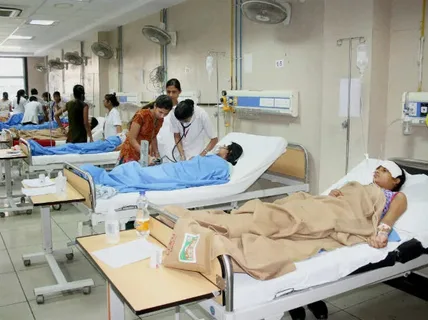
A major medical negligence case at Nishtar Hospital in Multan, Pakistan, has brought critical questions to the surface: do hospitals test for HIV before performing surgery, and do hospitals automatically test for HIV on every patient? Nine doctors and officials were found at fault after a patient underwent surgery without mandatory HIV screening being properly verified. The Punjab government swiftly suspended seven medics involved, shining a harsh light on hospital testing protocols across the country.
Background: The Multan Hospital Incident
An inquiry committee constituted by Nishtar Medical University found nine doctors and hospital officials guilty of misconduct and violation of screening protocols in a case involving surgery on a patient who was later found to be HIV-positive.
The inquiry report stated that the committee was constituted following allegations that a patient underwent surgery at Nishtar Hospital without mandatory HIV screening protocols being fully observed. The committee held several officials responsible for failing to communicate, upload, verify, and act upon the patient’s HIV screening report before surgery.
This case has triggered a nationwide conversation about whether do hospitals automatically test for HIV as standard practice and what happens when that system breaks down. The questions go beyond Multan: they touch on fundamental guidelines for surgery in HIV patients that every hospital is expected to follow.
Do Hospitals Test for HIV? What the Standard Protocol Says
The short answer is: yes, in most clinical settings, hospitals are expected to screen for HIV before elective surgery. Do hospitals test for HIV as a routine matter? In Pakistan and across the world, HIV screening is included in standard pre-operative blood work, especially for planned surgical procedures.
What blood tests are done before surgery typically includes a full blood count (CBC), blood typing, clotting tests, kidney and liver function panels, blood glucose levels, and infectious disease screening which includes hepatitis B, hepatitis C, and HIV. This battery of tests protects both the patient and the surgical team.
Do hospitals automatically test for HIV without being asked? In many countries, yes HIV testing is included as a routine opt-out component of pre-surgical blood panels. In Pakistan, the same standard applies under hospital infection-control protocols, which is exactly why the Nishtar case is considered such a serious failure of duty.
Details: How the Protocol Failed at Nishtar Hospital
According to the report, Senior Registrar (surgery) Dr Fariha Ahmed was found responsible for failing to perform the mandatory post-operative round on May 19 and for not informing senior officials regarding the HIV report in time. Staff Nurse Rida Zahra was found responsible for failing to report the HIV findings to the concerned authorities, including the head nurse.
Dr Anwar, demonstrator and admin registrar at Nishtar Lab, failed to coordinate with the surgical ward administration and failed to check the delay in uploading the HIV report on the hospital portal. A pathology postgraduate resident failed to timely communicate the HIV ELISA report to the surgical unit.
Two surgery postgraduate residents were accused of performing surgery without checking the mandatory checklist as per protocol. An anaesthesia medical officer was held responsible for not checking the HIV report before administering anaesthesia induction.
Essentially, every link in the chain from the lab to the ward to the operating theatre failed. The HIV test had been conducted, but the result was never verified by those who needed to act on it before proceeding with surgery.
Guidelines for Surgery in HIV Patients: What Doctors Must Follow
The guidelines for surgery in HIV patients are clear in both international and Pakistani medical practice. When a patient is confirmed or suspected to be HIV-positive, surgeons must use appropriate personal protective equipment (PPE), inform the full surgical team, and take additional infection-control precautions throughout the procedure.
Signs of HIV in CBC test a complete blood count can include a low CD4 lymphocyte count, anaemia, thrombocytopenia (low platelet count), or neutropenia. While a CBC alone cannot diagnose HIV, signs of HIV in CBC test results can raise enough concern to prompt further specific testing before surgery proceeds.
The guidelines for surgery in HIV patients do not prohibit surgery HIV-positive patients have the same right to surgical care as anyone else. The key requirement is that the entire care team is informed, so that proper precautions are taken to protect both the patient from complications and healthcare workers from potential exposure.
HIV Symptoms and Why Early Detection Before Surgery Matters
Understanding HIV symptoms is important context here. Many people living with HIV have no obvious HIV symptoms for years a phase called clinical latency. This makes pre-operative HIV screening all the more critical, because a patient may appear healthy while still being HIV-positive.
Early HIV symptoms when they do appear can include prolonged fever, unexplained weight loss, persistent fatigue, swollen lymph nodes, night sweats, and recurrent infections. However, these HIV symptoms overlap with many other conditions, which is why a dedicated HIV test not just a clinical examination is indispensable before surgery.
Signs of HIV in CBC test results may hint at immune system compromise, but a specific HIV antibody or antigen test remains essential for confirmation. The standard HIV test kit used in hospitals detects HIV antibodies or the p24 antigen and delivers results within hours, making it entirely feasible to complete HIV screening before any elective operation.
Do They Test for HIV When Pregnant? The Antenatal Parallel
The Multan case also draws comparison to another area of routine HIV screening: prenatal care. Do they test for HIV when pregnant? Yes antenatal HIV screening is a globally recommended standard practice. The WHO recommends that all pregnant women be tested for HIV at their first antenatal visit, and in Pakistan this is part of official antenatal care guidelines.
Do they test for HIV when pregnant in every hospital in Pakistan? Implementation remains inconsistent, particularly in rural areas. But in tertiary hospitals like Nishtar, the infrastructure for HIV testing including the HIV test kit and laboratory capacity is fully available. The Multan scandal was not a failure of equipment or resources. It was a failure of process, communication, and professional accountability.
Quotes: What Officials Said
Punjab Health Minister Khawaja Salman Rafique stated that negligence in treatment and patient care at hospitals would not be tolerated, and that strict action would be taken against those responsible.
Medical professionals across Pakistan have called for mandatory digital verification systems that lock surgical scheduling until all required pre-operative screening results including the HIV test are formally acknowledged in the hospital’s system by the responsible surgeon.
Impact: A Wake-Up Call for Hospital Protocols Nationwide
This case exposes a gap between policy and practice in Pakistani hospitals. Do hospitals test for HIV as required? The test was ordered at Nishtar. The HIV test kit was used. The results were available. But the result never reached the people who needed to act on it. That communication failure is at the core of this scandal.
For healthcare workers, the risk is real. Surgeons, nurses, and anaesthesiologists who operate without knowing a patient’s HIV status cannot take proper protective precautions. This places them at unnecessary occupational risk and violates their right to informed safety measures under guidelines for surgery in HIV patients.
For patients, the case underlines the importance of understanding what testing hospitals carry out. Do hospitals automatically test for HIV before your procedure? You have the right to ask, and hospitals have the obligation to answer and to act on the results.
Conclusion: What Must Change
The Nishtar Hospital case must serve as a turning point for hospital infection-control compliance across Pakistan. Digital checklists that require physician sign-off on every pre-operative test result including HIV screening should become mandatory. Hospitals must adopt systems where surgery simply cannot be scheduled in the electronic system if mandatory pre-op results, including the HIV test, remain unverified.
Do hospitals test for HIV correctly and consistently across Pakistan? The honest answer, after Multan, is: not always. That must change. Guidelines for surgery in HIV patients exist for good reason to protect everyone in the operating room. When those guidelines are ignored or bypassed through negligence, the consequences can be irreversible.
FAQs
What diseases can cause a false positive HIV test?
Several medical conditions can produce a false positive result on HIV antibody screening tests. These include autoimmune diseases such as lupus and rheumatoid arthritis, certain viral infections like Epstein-Barr virus and influenza, malaria, liver disease, and even recent vaccination. Pregnancy has also been associated with rare false positive results due to changes in the immune system. This is why a positive result on an initial HIV screening test such as a rapid HIV test kit result is always confirmed with a more specific follow-up test, typically a Western blot or a nucleic acid amplification test (NAAT), before a final diagnosis is given.
What is the window period of HIV?
The window period is the time between initial HIV infection and when a test can reliably detect the virus. This matters because a person may be infected and capable of transmitting HIV while still testing negative. For fourth-generation antigen/antibody combination tests the type most hospitals and modern HIV test kits use the window period is typically 18 to 45 days after exposure. For older antibody-only tests, the window period can extend to up to 90 days. During this window, signs of HIV in CBC test results may be subtle or absent, making timing of testing critically important in clinical decision-making.
How accurate is an HIV test after 2 weeks?
At two weeks post-exposure, the accuracy of an HIV test depends heavily on the type of test used. A fourth-generation combination test that detects both HIV antibodies and the p24 antigen can detect the majority of infections at around 18 days, but two weeks is still somewhat early and a negative result at this stage is not conclusive. Most experts recommend retesting at 45 days and again at 90 days for a definitive negative result. A HIV test kit used at home or in a clinic at two weeks should be interpreted cautiously, and the person should ideally consult a healthcare provider for follow-up testing within the appropriate window period timeline.