
Darkest Chapter for Children in Armed Conflict: A Defender’s Reflection on the 2025 UN CAAC Report
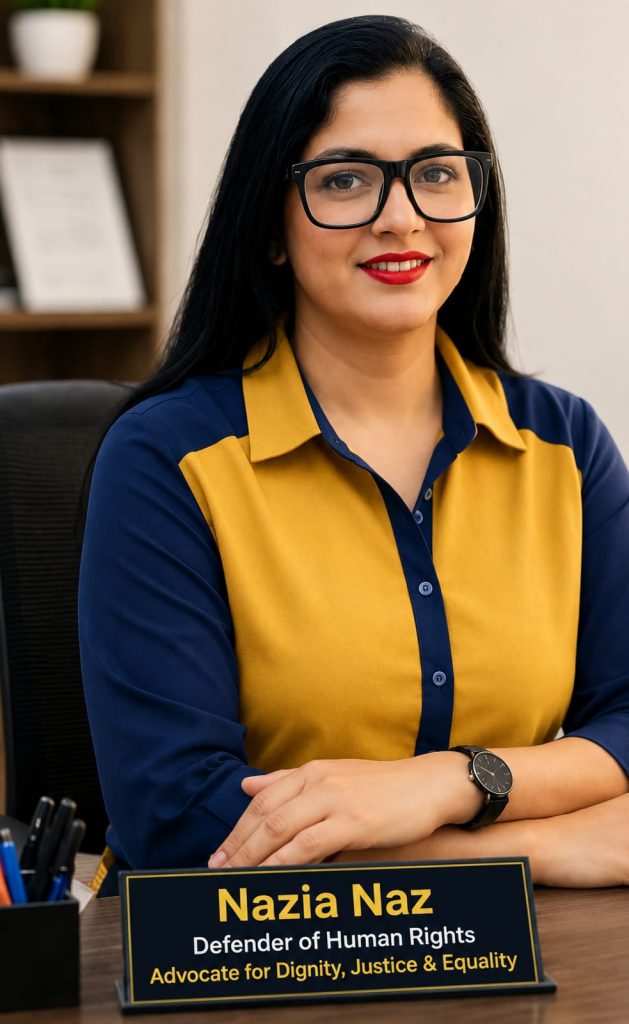
(Nazia Naz Defender international researcher on human Rights)
I am Nazia Ali, working as a Human Rights Defender and child protection researcher, engaged in save-children research through mutual learning programs and the TogetherForSDGs initiative under the UN Pact for the Future. In this role, I have consistently engaged with communities, institutions, and global frameworks to strengthen child protection systems and advocate for the rights of the most vulnerable.The 2025 annual report on Children and
Armed Conflict (CAAC), released under the mandate of the United Nations, presents one of the most alarming pictures in recent history. It has rightly been described as a “darkest chapter” for children in conflict zones, marking a devastating escalation in grave violations affecting children worldwide.
For the first time since monitoring began, Government and national forces have been identified as the leading perpetrators of grave violations against children, surpassing non-State armed groups. This shift is not only shocking but deeply concerning, as it challenges the fundamental responsibility of States to protect children under international humanitarian law.
The report verified 38,558 grave violations in 2025 alone, impacting 24,174 children many of whom suffered multiple forms of abuse. One-third of these victims were girls. This represents the highest number recorded in the 30-year history of the CAAC mandate, signaling a severe deterioration in global child protection standards.The six grave violations documented include killing and maiming, recruitment and use of children in armed conflict,
abduction, sexual violence, attacks on schools and hospitals, and denial of humanitarian access. Among these, killing and maiming remained the most widespread with 6,266 children killed and 7,958 injured. The report also highlights alarming increases of 34% in killings and 10% in maiming compared to previous years.Conflict zones such as the Occupied Palestinian Territory and Israel, the Democratic Republic of the Congo, Nigeria, Myanmar and
Somalia recorded the highest levels of violations. These crises reflect not only ongoing wars but also the growing normalization of violence in densely populated civilian areas.Equally troubling is the 8,322 documented incidents of blocked humanitarian access. In many cases, children were denied life-saving aid, including food, healthcare and protection services. Additionally, 6,607 children were recruited into armed groups,
while 5,129 were abducted, often for exploitation, forced recruitment or sexual violence.The continued use of sexual violence as a tactic of war remains one of the most disturbing findings. Reports of gang rape and systematic abuse underscore the deep psychological and physical scars left on children, particularly girls.
Furthermore, the widespread use of explosive weapons and landmines continues to endanger children long after active conflict ends, leaving survivors with lifelong disabilities and trauma.Despite this bleak reality, the report also highlights important efforts toward child protection. In 2025, 13,112 children formerly associated with armed forces or groups received reintegration support. Around 40 commitments were made by parties to conflict, including handover protocols, dialogue processes and capacity-building initiatives in countries such as Somalia, Ukraine and Colombia.As a Human Rights Defender working closely with SDG-focused initiatives,
I strongly believe that reintegration is not just a program it is a pathway to restoring dignity, hope, and future opportunities for children affected by war. Without reintegration, peace remains incomplete.
The UN Special Representative for Children and Armed Conflict has emphasized that 2025 demonstrates a deeper erosion of respect for international law. Yet, she also reminds us that protecting children is not optional—it is an obligation.As the CAAC mandate marks its 30th anniversary, the global community stands at a critical crossroads. Words alone are not enough.
What is required now is sustained political will, accountability for perpetrators and meaningful investment in child protection systems.
For those of us working at the grassroots level, this report is not just statistics—it is a call to action. It is a reminder that every child protected is a future preserved and every failure to act is a lost generation.
The time to act is not tomorrow. It is now.