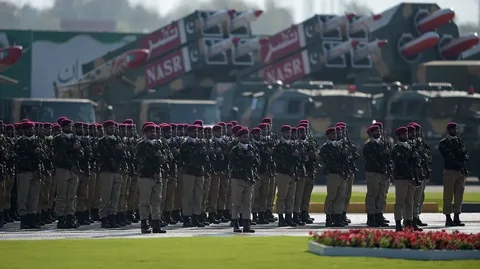

The security situation in Balochistan remains tense as Pakistan soldiers killed in fresh militant attacks add to a growing list of casualties this year. Security forces say dozens of terrorists have been neutralised in recent intelligence-based operations across the province. Officials continue to blame India for backing the militant groups behind the violence.
Background
Balochistan is part of Pakistan and forms the country’s largest province by land area. Its capital, Quetta, has repeatedly been a target of militant violence in recent years. The province is rich in natural resources but remains one of the least developed regions of the country.
Most residents of Balochistan follow Islam, the dominant Balochistan religion, alongside smaller communities practising other faiths. Despite its religious and cultural ties to the rest of Pakistan, the province has faced a decades-long insurgency rooted in demands for greater autonomy and a fairer share of resource revenues.
In recent years, groups such as the Balochistan Liberation Army (BLA) have escalated attacks on security forces, infrastructure projects and civilians. Islamabad has consistently linked this rise in militancy to what it calls a proxy war sponsored from across the border, using the term “Fitna al-Hindustan” for groups it says are backed by India.
Details
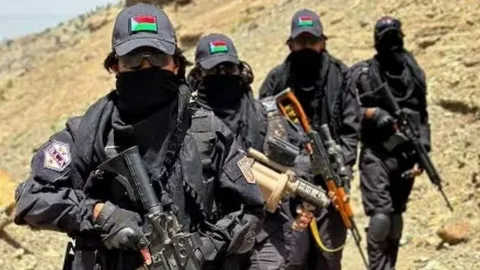
According to the Inter-Services Public Relations (ISPR), security forces killed eight terrorists belonging to Fitna al-Hindustan in two intelligence-based operations (IBOs) conducted in Balochistan’s Kharan and Mastung districts. The military’s media wing said the operation in Kharan on June 25 resulted in the “precise and skilful engagement” of three terrorists, while a separate pre-emptive operation the following day in Mastung neutralised five more, including a suicide bomber.
Earlier the same month, a soldier was martyred while security forces killed 14 terrorists in the Naal area of Balochistan’s Basima district. The ISPR said the militants had been planning to attack a nearby police station and banks before troops intercepted them. Weapons, ammunition and improvised explosive devices were recovered from the site.
This followed a string of operations in late May after a deadly train attack near Quetta, in which at least 14 people, including three Frontier Corps personnel, were killed. In response, security forces launched a coordinated campaign across Mastung, Nushki, Zehri, Khuzdar and Kech districts, killing 17 more militants within days.
The security situation in Balochistan took a particularly grim turn at the end of January 2026, when coordinated attacks struck multiple towns simultaneously, including Quetta, Gwadar, Mastung, Nushki, Pasni and Kharan. According to ISPR, 92 terrorists, including three suicide bombers, were killed as security forces repelled the assault, though 15 security personnel and 18 civilians also lost their lives. Combined with earlier clearance operations in Panjgur and Harnai, the overall militant death toll during that two-day operation reportedly climbed to 133.
Data compiled by the Armed Conflict Location and Event Data Project (ACLED) shows that attacks in Pakistan have risen sharply since 2022, nearly quadrupling by 2025. Balochistan, alongside Khyber Pakhtunkhwa, remains among the provinces worst affected by this surge in militant activity.
Quotes
President Asif Ali Zardari commended security forces following the recent operations, stating that “eradication of foreign-backed terrorism is our top priority” and that coordinated intelligence operations had “crippled the leadership and capacity of the foreign-backed terrorist networks.”
Prime Minister Shehbaz Sharif praised troops for their resolve, saying, “We are determined to completely eradicate terrorism from the country,” and added that the nation stood united behind the armed forces in their ongoing campaign.
Balochistan Chief Minister Sarfraz Bugti, commenting on the shifting nature of militant activity, said that terrorist groups were increasingly resorting to organised criminal acts such as bank robberies alongside ideological violence. He added that whenever attackers “come onto the streets, they will be defeated,” and that hideouts would be uncovered through intelligence-based operations.
Impact
The continued instability in Balochistan carries significant regional and economic consequences. The province hosts key infrastructure linked to the China-Pakistan Economic Corridor (CPEC), including the strategically important Gwadar port, making security a persistent concern for foreign investment and trade routes passing through the region.
Recurring militant violence has also strained Pakistan’s relationship with Afghanistan, with officials alleging that groups operating from across the border have found safe haven since 2021. This has added a cross-border dimension to what was once viewed primarily as an internal insurgency.
Regionally, accusations that India is fuelling the unrest in Balochistan have added further strain to an already tense Pakistan-India relationship. Islamabad has repeatedly raised these allegations at diplomatic forums, while New Delhi has denied any involvement in the province’s internal security matters.
For ordinary residents of Balochistan, the persistent violence has disrupted daily life, education and access to healthcare in several districts. Security operations, while aimed at neutralising militant networks, have also placed additional strain on local communities caught between the state and insurgent groups.
Conclusion
The security situation in Balochistan is likely to remain volatile in the coming months as security forces continue intelligence-based operations against Fitna al-Hindustan and allied militant networks. Officials have vowed that the counter-terrorism campaign under the “Azm-e-Istehkam” framework will continue “at full pace” until the threat is eliminated.
With Pakistan soldiers killed in near-continuous clashes and militant groups adapting their tactics, analysts expect the province to remain a key flashpoint. Further developments are expected as sanitisation operations continue in Kharan, Mastung and other affected districts, with officials pledging that the fight against foreign-sponsored terrorism will not relent.
FAQs
Who are the martyrs of Pakistan armed forces?
The martyrs of Pakistan’s armed forces are the soldiers, officers and law enforcement personnel who have lost their lives while conducting counter-terrorism operations, defending border posts, or responding to militant attacks across regions like Balochistan and Khyber Pakhtunkhwa. In recent operations, several soldiers, including field officers, have embraced martyrdom while engaging Fitna al-Hindustan terrorists during intelligence-based operations. The government regularly honours these personnel through official statements from the President and Prime Minister, recognising their sacrifice in defending national security and territorial integrity.
How many Pakistani soldiers died?
The number of Pakistani soldiers killed varies month to month depending on the intensity of militant activity. Recent reports indicate that a soldier was martyred during a June operation in Basima, while five personnel, including an army major, were killed during a sanitisation operation in Barkhan in May. During the coordinated attacks at the end of January 2026, 15 security personnel embraced martyrdom while repelling assaults across multiple Balochistan districts. Official figures are usually released by ISPR following each confirmed operation.
How many terrorists were killed in the Surgical Strike?
While Pakistan’s recent Balochistan operations are officially termed intelligence-based operations (IBOs) rather than surgical strikes, security forces have reported significant militant casualties in these campaigns. In the coordinated operations of late January and early February 2026, ISPR reported that 216 militants were killed across Panjgur, Harnai and surrounding districts, with a single two-day period accounting for 133 of those deaths. More recent IBOs in Kharan, Mastung and Basima have each resulted in the elimination of between six and seventeen militants per operation.