

Syria’s government looks nothing like it did just two years ago. Bashar al-Assad’s five-decade family dynasty collapsed in December 2024, and the country is now run by a transitional administration under President Ahmed al-Sharaa, a former rebel commander whose past as an Islamist insurgent leader makes him one of the more unlikely heads of state on the world stage today.
The bigger question isn’t really who’s in charge anymore. It’s whether al-Sharaa can hold a fractured, war-exhausted country together long enough to get it to real elections and whether “together” is even the right goal, given how deep some of Syria’s regional and sectarian divides have become.
How Syria Got Here
For decades, Syria was about as centralized a state as they came. Hafez al-Assad took power in 1970, built a system around the Ba’ath Party and the security services, and passed the presidency to his son Bashar in 2000, more or less like an inheritance.
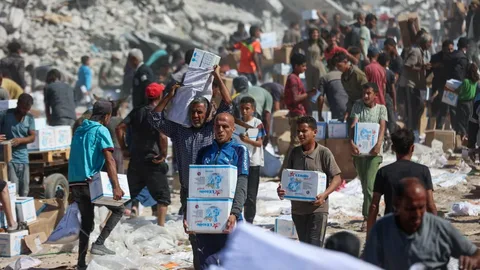
That system finally broke. Protests in 2011 spiraled into a brutal 13-year civil war involving government forces, a patchwork of rebel factions, extremist groups, and outside powers backing various sides. The war killed an estimated half a million people and displaced millions more, becoming one of the defining humanitarian catastrophes of the century.
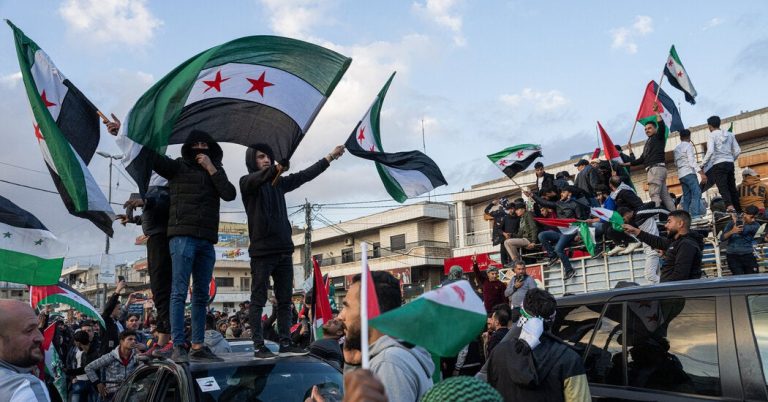
In November 2024, a rebel coalition led by Hay’at Tahrir al-Sham (HTS), a group with roots in al-Qaeda’s Syrian branch, launched a lightning offensive that reached Damascus within eleven days. Assad fled to Russia. The regime that had ruled Syria since 1970 was simply gone.
Who’s Running Syria Now
Ahmed al-Sharaa, HTS’s commander and formerly known by the nom de guerre Abu Mohammad al-Jolani, became Syria’s de facto leader almost immediately and was formally declared transitional president in January 2025 at a gathering of the country’s new political leadership. A provisional constitution adopted in March 2025 set up a five-year transition period, with a new permanent constitution and elections meant to follow.
The office of the prime minister was scrapped; executive power now sits directly with the president, who appoints the cabinet. Al-Sharaa has folded in ministers from several minority communities, Alawite, Druze, Christian, and Kurdish, alongside former opposition and HTS-aligned figures, describing the approach as merit-based rather than purely political. A partial cabinet reshuffle in May 2026 was the first change to that lineup since the government’s formation.
In July 2026, Syria got its first parliament since Assad’s fall, with al-Sharaa naming 70 of its 210 members directly, a legislature that is meant to draft election laws and lay groundwork for an eventual popular vote, though critics note it’s still largely handpicked rather than elected.
Is This Government Actually Democratic?
Short answer: not yet, and there’s real debate about whether it’s heading that way. Al-Sharaa has repeatedly promised free elections and inclusive governance, and steps like the new parliament and minority cabinet appointments are pointed to as evidence of good faith.
But independent analysts have flagged a familiar pattern: power concentrated around the president and his inner circle, limited transparency in how officials are picked, and minority communities complaining they have little real say despite token representation. Whether Syria evolves into a genuinely pluralistic system or simply swaps one centralized authority for another is, honestly, still an open question, and reasonable observers disagree about which way it’s trending.
Security Is Still the Hard Part
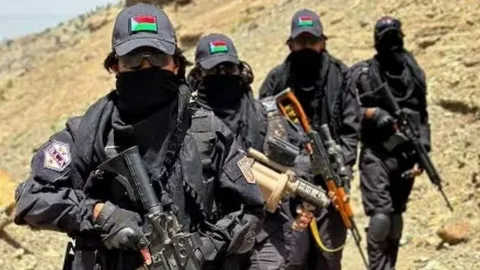
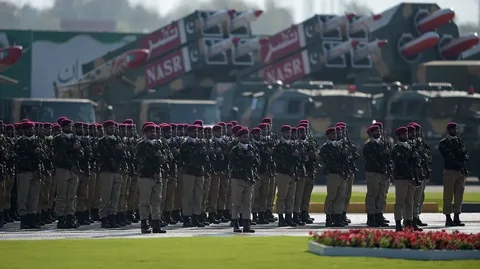
Rebuilding a unified Syrian military and security apparatus out of dozens of former rebel factions was never going to be simple, and it hasn’t been. Government forces have had to put down at least one attempted coup by officers loyal to the old regime, and the transitional authorities have said they’ve foiled multiple assassination attempts against al-Sharaa himself, reportedly involving ISIL remnants and other hostile actors.
Sectarian violence has been one of the government’s most serious black marks. Deadly clashes between pro-government militias and Alawite communities on the coast in March 2025 killed well over a thousand civilians, according to independent monitors, prompting al-Sharaa to set up an investigative committee. Later that year, violence between government-aligned forces and the Druze community in Suwayda led to a siege and a serious humanitarian crisis in the province, with some Druze leaders openly calling for outside protection rather than trusting Damascus.
The other major flashpoint is the northeast, where the Kurdish-led Syrian Democratic Forces (SDF) have resisted full integration into the national army. Talks dragged through 2025, fighting broke out around Aleppo in early 2026, and Turkey, which views elements of the SDF as linked to the PKK, has threatened to intervene militarily. A new agreement reached in January 2026 has the SDF ceding territorial control in some provinces in exchange for cultural and language protections, though Kurdish leaders say those promises need to be locked into a permanent constitution before they’ll fully trust them.
The Economy Is Still in Ruins
Years of war left Syria’s infrastructure gutted and its economy in crisis, and sanctions imposed under Assad initially compounded the damage even after he was gone. That’s shifted somewhat: the US lifted a broad range of sanctions in 2025, and in mid-2026 the European Union pledged several hundred million euros in financial assistance for reconstruction.
Still, the scale of what’s needed dwarfs what’s been pledged so far. Ordinary Syrians are dealing with high living costs, patchy basic services, and an economy that will likely take years, not months, to show real recovery, assuming the political and security situation stabilizes enough to attract serious investment.
Syria’s New Foreign Policy
One of the more striking parts of this transition has been how fast al-Sharaa has been welcomed onto the world stage. He’s met Saudi Arabia’s Crown Prince, French President Macron, US President Trump, Russia’s Putin, and European leaders, including Germany’s Chancellor and the UK’s Prime Minister, a remarkable run for a man who, a couple of years ago, had a US bounty on his head.
That diplomatic rehabilitation reflects genuine relief among Western and regional governments that Assad is gone, but it hasn’t erased skepticism. Israeli officials, in particular, have been openly hostile, with some calling for al-Sharaa’s assassination outright, and Israeli strikes inside Syria have continued periodically, officially framed as security measures.
The Road Ahead
Al-Sharaa’s government has notched real wins: international recognition, sanctions relief, a functioning cabinet, and now a parliament, progress that would have seemed unlikely given how fractured Syria’s opposition was during the war. But the harder tests are still ahead: actually integrating the SDF and other armed factions into a single national force, rebuilding trust with Alawite, Druze, and Kurdish communities after episodes of serious violence, and eventually running elections that a war-scarred, deeply divided population will accept as legitimate.
Whether Syria ends up more pluralistic or more centralized under new management is probably the single biggest open question in the country’s politics right now, and it’s likely to stay open for a while yet.
FAQs
Is Syria a democracy or a dictatorship right now?
Neither, exactly, it’s in a transitional phase. Power is concentrated in the presidency under a provisional constitution, with a five-year window meant to lead to a permanent constitution and elections. Analysts are split on whether the current trajectory looks genuinely democratic or just newly centralized under different leadership.
What kind of government does Syria have?
A presidential transitional system: executive power sits with President Ahmed al-Sharaa, who appoints the cabinet directly (there’s no prime minister). A provisional constitution adopted in March 2025 governs the transition period, and a partially appointed parliament was seated for the first time in July 2026.
Who is ruling Syria after Assad?
Ahmed al-Sharaa, the former commander of Hay’at Tahrir al-Sham, has led Syria since Assad’s fall in December 2024 and was formally named transitional president in January 2025. His government includes ministers from several of Syria’s minority communities alongside former rebel and opposition figures.