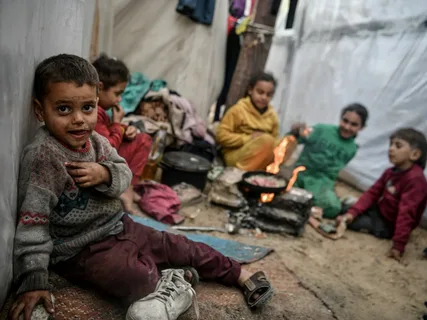

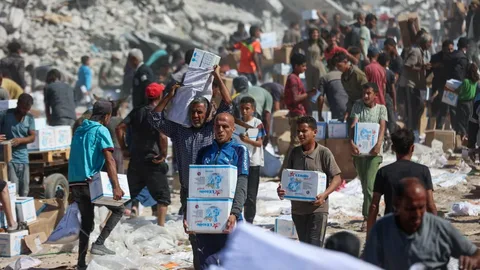
The Gaza humanitarian crisis 2026 remains one of the most severe emergencies in the world. Millions of Palestinians continue to face hunger, displacement, and a collapsing health system. Aid agencies say restrictions on fuel, medicine, and equipment are pushing basic services toward total failure. This report explains what is happening in Gaza today, why the crisis persists, and what humanitarian organizations are doing to respond.
Background: How the Crisis Began
The war in Gaza started after the Hamas-led attacks on Israel on October 7, 2023. Israel responded with a large-scale military campaign that has continued, with pauses and escalations, for nearly three years. A ceasefire took effect in October 2025, but a regional escalation at the end of February 2026 disrupted progress toward recovery.
Since then, humanitarian organizations have described the situation as a humanitarian crisis in Gaza unlike anything they have documented before. Infrastructure that took decades to build has been destroyed in a matter of months, leaving the population dependent on outside aid for food, water, and medical care.
Gaza Humanitarian Aid: Why Supplies Are Not Reaching People
One of the biggest questions people ask is simple: why is there no humanitarian aid in Gaza reaching everyone who needs it? The answer lies in a mix of access restrictions, damaged infrastructure, and funding shortfalls.
According to the UN Office for the Coordination of Humanitarian Affairs, funding shortages are forcing aid partners in Gaza to scale down or suspend critical services. Since March 2025, Israeli authorities have restricted UNRWA from directly bringing humanitarian staff and supplies into Gaza, leaving pre-positioned food parcels, flour, and shelter materials undistributed despite urgent need on the ground.
Fuel and spare parts shortages have also disrupted hospitals, water systems, and waste management. Roughly a quarter of UNRWA’s vehicles and generators are currently out of service, which threatens clean water access and basic sanitation across the territory.
Details: The Scale of Suffering in Gaza
The numbers behind the humanitarian crisis in Gaza are staggering. Health authorities report that tens of thousands of Palestinians have been killed since October 2023, with tens of thousands more injured. A large share of Gaza’s population has been displaced multiple times, often forced to move from one unsafe area to another.
Healthcare has been especially hard hit. Doctors Without Borders has reported that Israel barred several major aid organizations from working in Gaza earlier this year, cutting off hundreds of thousands of people from essential medical care. Medical stocks, including supplies needed to keep incubators running for newborns, remain critically low.
Public health conditions have worsened as a result. UN agencies have documented rising cases of chickenpox, scabies, and other diseases linked to overcrowding and poor sanitation. Nearly 90 percent of Gaza’s water and sanitation infrastructure has been destroyed or damaged, forcing most residents to depend on water trucking for daily needs.
Displacement continues in parallel with these health and aid challenges. Families are frequently uprooted as military operations expand, with some areas designated as closed military zones that block civilians from returning home.
Detentions and Accountability: The Case of Dr. Abu Safiya
A recurring flashpoint in the crisis involves the treatment of Gaza’s medical workers. Dr. Hussam Abu Safiya, the former director of Kamal Adwan Hospital, was detained by Israeli forces in December 2024 and has been held without charge since. In July 2026, the UN Working Group on Arbitrary Detention concluded that his detention was arbitrary and called for his immediate release, citing violations of international human rights law.
His lawyer and rights groups have raised alarm over his declining health, describing reports of solitary confinement and mistreatment. Israeli authorities have accused him of Hamas affiliation, an allegation that medical and rights groups say has not been backed by public evidence. The Israel Prison Service has previously denied claims of mistreatment. The case has become emblematic of wider concerns about the detention of Palestinian healthcare workers during the war.
Quotes: What Officials and Experts Are Saying
Humanitarian officials continue to warn that conditions could deteriorate further without urgent intervention. Aid workers describe a health system operating far beyond its limits, with generators and vehicles breaking down faster than they can be replaced.
Rights advocates have called the treatment of detained medical staff, including Dr. Abu Safiya, a serious violation of international law that demands accountability from the international community. Meanwhile, humanitarian coordinators stress that funding gaps, not just access restrictions, are limiting the aid that reaches Gaza’s population.
Impact: Regional and Global Consequences
The Gaza humanitarian crisis 2026 has consequences far beyond the territory itself. Neighboring countries, including Jordan and Egypt, have taken in medical evacuees and refugees, straining their own resources. International bodies, including UN commissions, have opened investigations into potential violations of international humanitarian law.
Globally, the crisis has fueled diplomatic tension, protests, and debate over the role of aid agencies, arms sales, and ceasefire enforcement. Public pressure has grown on governments to secure safe humanitarian corridors and push for the protection of civilians and aid workers alike.
Conclusion: What Happens Next
Humanitarian agencies say sustained access, adequate funding, and stronger protections for civilians and medical staff are essential to prevent further collapse. Calls for the release of detained medical personnel, including Dr. Abu Safiya, are likely to continue as part of broader efforts to hold all parties accountable under international law.
For now, the situation in Gaza remains fragile. Aid organizations continue to appeal for expanded access, more consistent supply routes, and long-term reconstruction support, even as the immediate humanitarian emergency continues to unfold day by day.
Frequently Asked Questions (FAQs)
Why is there no humanitarian aid in Gaza?
Humanitarian aid in Gaza is limited due to a combination of access restrictions imposed by Israeli authorities, damaged infrastructure, and severe funding shortfalls faced by international organizations. Since March 2025, agencies like UNRWA have faced restrictions on bringing staff and supplies directly into Gaza, which has left large amounts of pre-positioned food, flour, and shelter materials undistributed. In addition, shortages of fuel, spare parts, and generators have disrupted the transport and delivery systems needed to move aid safely across the territory. These overlapping barriers mean that even when aid exists nearby, it often cannot reach the people who need it most in a timely and consistent manner.
What is the meaning of humanitarian crisis?
A humanitarian crisis refers to a situation in which a large population faces a serious threat to their health, safety, or basic survival, often due to armed conflict, natural disaster, or severe deprivation of essential resources. It typically involves widespread displacement, food insecurity, lack of clean water, and breakdown of medical services, all occurring at a scale that overwhelms local capacity to respond. International organizations usually classify an emergency as a humanitarian crisis when civilian populations require urgent external assistance to survive, and when local systems for healthcare, shelter, and food distribution can no longer function on their own.
What is the main issue in Gaza?
The main issue in Gaza is the combination of prolonged conflict, severe humanitarian access restrictions, and the near-collapse of essential infrastructure, including healthcare, water, and sanitation systems. Continuous military operations have caused repeated waves of displacement, while shortages of fuel, medical supplies, and equipment have crippled hospitals and basic services. At the same time, funding shortfalls among humanitarian organizations have limited their ability to scale up relief efforts, leaving millions of people dependent on aid that frequently cannot reach them due to logistical and access barriers.