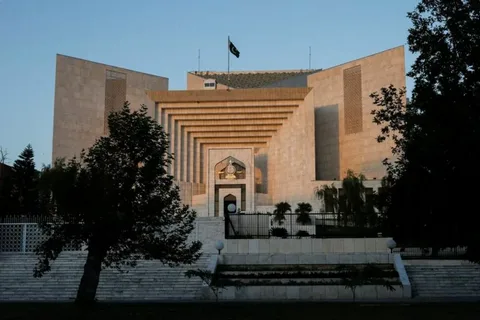


A Karachi sessions court has sentenced the main accused, Atif Zaman, to death twice for the 2019 murder of BOL News anchorperson Mureed Abbas and his friend Khizar Hayat. The verdict brings a long-running legal battle closer to a conclusion. Anyone tracking the case through the List of High Court Cases or the daily district court list can now confirm that the trial court has finally ruled after years of hearings, indictments, and bail applications.
Background of the Case
The case dates back to the night of July 9, 2019, when Mureed Abbas and his friend Khizar Hayat were shot in the Khayaban-e-Bukhari area of Defence Housing Authority, Karachi. Police said the killings stemmed from a monetary dispute involving a business investment worth several million rupees. The prime suspect, Atif Zaman, allegedly called the two victims to a private location before opening fire on them.
Following the incident, Zaman was arrested and later indicted, while his brother Adil Zaman, named as a co-accused, went into hiding after his bail was cancelled by the Supreme Court. Records related to the case have since appeared repeatedly on the daily district court list, as multiple bail pleas and procedural hearings were taken up over several years.
Court Proceedings and Legal Journey
The trial moved slowly through Karachi’s judicial system. Atif Zaman recorded his statement before the sessions court under Section 342 of the Criminal Procedure Code, denying all charges of murder. He claimed the incident did not happen the way the prosecution described it.
The prosecution relied on forensic evidence, CCTV footage, and witness testimony to build its case. Several bail applications filed by the defence were dismissed by different judges, with courts repeatedly observing that the evidence on record did not support release. Those seeking updates on such matters through the List of High Court Cases would have seen this case listed multiple times as it progressed toward final arguments.
Anyone who needed documentation from these hearings, such as an online certified copy high court order, could request such records through the court’s official channels once the relevant orders were issued. This is a standard process for parties and lawyers involved in ongoing litigation in Sindh.
Details of the Verdict
After hearing final arguments, the additional district and sessions judge handed down the verdict, sentencing Atif Zaman to death on two separate counts for the murders of Mureed Abbas and Khizar Hayat. The court also examined evidence related to the weapon used in the crime, along with witness statements collected over the course of the trial.
The judgment marks the conclusion of the trial court stage of this case, though legal experts note that a convict has the right to challenge the verdict before the Sindh High Court. This means the matter may soon reappear on records tracked through the List of High Court Cases if an appeal is filed.
Reaction and Statements
Mureed Abbas’s family had pursued the case for years, with his wife appearing before courts, including the Supreme Court, to oppose bail applications for the accused. Legal representatives for the family had consistently argued that strong evidence placed the accused at the crime scene.
At the time of the killing, several political figures and journalist bodies condemned the incident and called for swift justice. Pakistan has repeatedly been flagged by international press freedom organisations over the safety of journalists, and cases like this one draw attention to how the courts eventually handle such matters.
Impact of the Verdict
This ruling is significant for Pakistan’s judicial system and for journalists’ safety more broadly. A conviction and death sentence in a high-profile murder case sends a signal that the courts can pursue such matters to conclusion, even when trials take several years.
For legal professionals and researchers, this case is a useful example of how information moves through the system, from the daily district court list at the sessions court level to potential appeals recorded on the List of High Court Cases if the matter proceeds further. It also highlights why parties often need an online certified copy high court order to keep accurate legal records of each stage.
What Happens Next
Since the death sentence was awarded by a trial court, the case is not fully closed. Under Pakistani law, death sentences are typically referred to the High Court for confirmation, and the convict also retains the right to appeal. This means the case may soon be tracked again through the List of High Court Cases as it enters its next legal stage.
Family members of the victims have said they hope the higher courts uphold the verdict, while the defence is expected to challenge the ruling. Updates on this case, along with similar matters, are usually available through the daily district court list published by the relevant sessions courts in Karachi.
Conclusion
The Mureed Abbas murder case has finally reached a verdict after years of hearings, bail applications, and appeals. With Atif Zaman sentenced to death twice, attention now shifts to the Sindh High Court, where the case may be reviewed further. Those following such proceedings can continue to check the List of High Court Cases and the daily district court list for future developments, while parties involved may need to request an online certified copy high court order for official record-keeping.
FAQs
Is a death sentence legal in Pakistan?
Yes, the death penalty is a legal form of punishment in Pakistan and is applied under the Pakistan Penal Code for serious offences, including premeditated murder, terrorism, and certain other crimes. Once a trial court awards a death sentence, the case is automatically referred to the relevant High Court for confirmation before it can be carried out. The convict also has the right to file an appeal against the verdict. Pakistan has maintained the death penalty in its legal framework for decades, and courts continue to hand down such sentences in cases where the prosecution successfully proves guilt beyond reasonable doubt.
How much time is a death sentence?
A death sentence itself does not have a fixed “duration” in the way a jail term does, since it is a capital punishment rather than a term of years. However, the legal process surrounding a death sentence can take a long time to conclude. After a trial court verdict, the case typically goes through High Court confirmation, followed by a possible appeal to the Supreme Court, and in some cases, a mercy petition to the President. This entire process can take several years, during which the convict usually remains in custody while the case moves through different stages of appeal.
Who gave the death sentence to Bhutto?
Former Pakistani Prime Minister Zulfikar Ali Bhutto was sentenced to death by the Lahore High Court in March 1978, in a case related to the murder of a political opponent’s father. The verdict was later upheld by a narrow majority in the Supreme Court of Pakistan, and Bhutto was executed in April 1979. The case remains one of the most controversial and widely discussed legal proceedings in Pakistan’s history, with many historians and legal experts continuing to debate the fairness of the trial to this day.