
Yemen’s Houthi movement has launched a fresh wave of Red Sea attacks and declared a sweeping maritime blockade against Saudi Arabia, sending oil prices above $100 a barrel and raising alarms across international shipping networks. The Houthis Red Sea blockade, announced on July 20, 2026, marks a dangerous new chapter in an already volatile regional conflict one that now threatens to shut down two of the world’s most critical maritime chokepoints at the same time.
Background: Who Are the Houthis and Why Are They Attacking Ships?
To understand the current Red Sea crisis update today, it helps to go back to where this all started.
The Houthis, formally known as Ansar Allah, are an Iran-backed armed movement based in Yemen. They belong to Yemen a country on the southwestern tip of the Arabian Peninsula and have controlled the capital Sanaa and large parts of the country since they seized it in 2014. They are deeply embedded in Iran’s so-called “Axis of Resistance,” a loose network of armed groups that includes Hezbollah in Lebanon and Hamas in Gaza.
The Houthis first launched Red Sea attacks in late 2023, targeting vessels they claimed were linked to Israel or its allies. Their stated reason was solidarity with Palestinians during Israel’s military campaign in Gaza. That campaign caused massive disruption to international shipping passing through the Bab el-Mandeb Strait a narrow 19-mile-wide waterway between Yemen and the Horn of Africa that connects the Red Sea to the Gulf of Aden and the wider Indian Ocean.
After a Gaza ceasefire was announced in October 2025, the Houthis paused their maritime campaign. But by July 2026, they were back and this time with a broader and more dangerous agenda.
Why Are the Houthis Attacking Ships in the Red Sea Again?
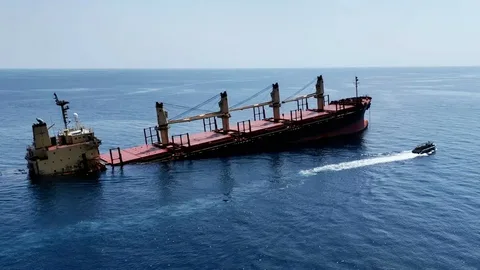
The Houthis resumed Houthi Red Sea attacks in July 2025, striking the Greek-owned cargo ship Magic Seas with drones, missiles, and small arms fire, forcing all 22 crew members to abandon the vessel. Three mariners were killed in a separate attack on the Eternity C shortly after. These twin assaults the first since November 2024 signalled that a new campaign had begun.
By July 2026, the motivation had shifted significantly. The Houthis declared a full naval blockade against Saudi Arabia on July 20, accusing Riyadh of imposing what they called “an unjust and oppressive siege” against Houthi-controlled ports and airports for nearly 12 years. In their own words, the “ultimate goal” of the blockade is to force Saudi Arabia to lift its embargo on Houthi-held territories.
There is also a broader strategic dimension to the current Houthi Red Sea crisis. With the United States and Iran locked in a direct military confrontation over the Strait of Hormuz since early 2026, Iran has been looking for additional pressure points. According to Reuters, Iran asked the Houthis to prepare to close the Bab el-Mandeb if Gulf nations joined the U.S.–Israel war on Iran. The timing of the Houthis Red Sea blockade, analysts say, is closely tied to Iran’s need for additional leverage in that wider conflict.
Red Sea Crisis Update Today: The Blockade and Its Immediate Impact
The Houthis Red Sea blockade came into effect with immediate consequences. The group declared that “all vessels loading or discharging cargo at or from any Saudi ports are prohibited,” according to a notice by the EU naval mission. Shortly after the announcement, two Saudi oil tankers were struck, with Saudi Arabia confirming at least one hit.
Global oil prices surged past $100 a barrel for the first time since May a direct market response to the threat of a second major maritime chokepoint being effectively closed. The Strait of Hormuz had already seen transits drop sharply, with London-based Lloyd’s List Intelligence recording only 78 transits between July 13–20, compared to 174 the week before. Now, with Houthi Red Sea attacks threatening the Bab el-Mandeb as well, the global energy supply chain faces pressure from two directions simultaneously.
According to Lloyd’s List reporting, some ship captains began making U-turns rather than risk transiting the Bab el-Mandeb after the blockade was declared. The Joint Maritime Information Center (JMIC), headquartered in Bahrain, warned mariners in a notice that the Houthis had “completed preparations to attack shipping, including the deployment of missiles and drones positioned near Bab el-Mandeb.”
The Houthis also appear to be selectively allowing certain ships through vessels with ties to China and possibly Russia seem to be permitted passage even if they carry Saudi oil, according to analysts cited by USNI News. This selective enforcement points to a politically calibrated strategy rather than an indiscriminate blockade.
The Houthis Red Sea Strait Ambition: Copying Iran’s Hormuz Playbook
Perhaps the most alarming development in the Red Sea crisis update today is a stark warning from Yemen’s own internationally recognised government. Yemen’s Foreign Minister-designate Afrah al-Zouba, speaking at the Yemeni embassy in Riyadh on July 27, 2026, said plainly: “The Houthis want to copy the Iranian model, and this will shut down two main straits, the gateways into the Gulf and Red Sea.”
The Houthis Red Sea Strait ambition mirrors what Iran has done at Hormuz using a narrow waterway as a geopolitical weapon to control the flow of global trade and energy. The Bab el-Mandeb Strait, much like the Strait of Hormuz, is a critical chokepoint. It handles roughly 12 percent of global seaborne oil trade and serves as the gateway for cargo moving between Europe and Asia via the Suez Canal.
Al-Zouba also stressed that the Houthis have been “emboldened by an insufficient international response” to their activities over the years. This is not a new grievance. Critics of Western policy have long argued that the failure to deter Houthi aggression particularly during the 2023–2024 Red Sea attacks campaign created the conditions for the current Houthi Red Sea crisis to escalate.
Are Houthis Still Attacking Ships in the Red Sea? Yes and Escalating
The short answer to whether are Houthis still attacking ships in the Red Sea is: yes, and the situation is intensifying. After attacking and sinking the Magic Seas in July 2025 and striking the Eternity C, the Houthis have now moved from targeting individual vessels to declaring an outright naval blockade against an entire nation’s shipping fleet.
The Houthis Red Sea attacks during the 2023–2024 campaign killed at least nine mariners and sank four ships, according to Al Jazeera. They caused oil shipments through Bab el-Mandeb to fall by more than half from 9.3 million barrels per day in 2023 to just 4.1 million barrels per day in 2024. The International Monetary Fund estimated that Houthi attacks reduced foreign exchange inflows through the Suez Canal by $6 billion in 2024 alone.
The July 2026 campaign looks poised to be even more consequential, given that it is coinciding with simultaneous disruption at the Strait of Hormuz.
Global Impact: What the Houthis Red Sea Blockade Means for the World
The implications of the Houthis Red Sea blockade extend far beyond the Arabian Peninsula. The Red Sea corridor is one of the most important shipping lanes on earth. Before the 2023 crisis, approximately $1 trillion worth of goods passed through it each year. The Suez Canal which depends on Red Sea access provides Egypt alone with around $10 billion annually in transit fees.
A sustained blockade at Bab el-Mandeb, combined with the ongoing Hormuz crisis, could:
- Further reduce global oil supply, pushing prices even higher
- Disrupt the flow of consumer goods, raw materials, and agricultural products between Asia and Europe
- Force shipping companies onto far longer alternative routes around the Cape of Good Hope, adding weeks and significant costs to voyages
- Deepen the economic strain already being felt by countries dependent on affordable energy and trade financing
Saudi Arabia has already been rerouting some of its oil exports by pipeline to the western port of Yanbu to avoid the Hormuz disruption. But from Yanbu, those exports still need to transit the Red Sea and Bab el-Mandeb precisely the route now under Houthi threat. With an estimated 3.5 million barrels per day flowing through that route, a successful blockade would deal another severe blow to global oil markets.
Quotes from Officials and Experts
Afrah al-Zouba, Yemen’s Foreign Minister-Designate (July 27, 2026): “The Houthis want to copy the Iranian model, and this will shut down two main straits, the gateways into the Gulf and Red Sea.”
Mohammed al-Bukhaiti, Houthi spokesperson, explained that the naval blockade against Saudi Arabia is designed to “force Riyadh to lift its embargo on the ports and airports controlled by the Houthis.”
Bridget Diakun, Senior Analyst at Lloyd’s List Intelligence, noted that whether ships continue to use the Red Sea “will depend on owners’ risk appetite,” and confirmed that Houthi attacks have already sharply reduced transit numbers through Bab el-Mandeb.
Ali Akbar Velayati, adviser to Iran’s supreme leader, stated in April 2026: “Today, the unified command of the Resistance front views Bab al-Mandeb as it does Hormuz.”
Conclusion: What Comes Next in the Red Sea Crisis
The Houthi Red Sea crisis is not showing signs of resolution. If anything, the convergence of the Hormuz standoff and the new Houthis Red Sea blockade has created a dual chokepoint scenario that the global economy has never faced before and for which no clear diplomatic pathway currently exists.
International response remains fragmented. The EU’s Operation Aspides naval mission continues to protect commercial shipping in the region, and the United States has threatened to bomb the Houthis if attacks continue. However, as Yemen’s Foreign Minister-designate warned, the insufficient global response to Houthi aggression over the years has only made the group bolder.
Shipping markets, oil traders, and governments from Europe to Asia will be watching the Houthis Red Sea Strait situation very closely in the days ahead. With oil already above $100 a barrel and ships turning around at the entrance to Bab el-Mandeb, the next move from the Houthis or the international community could have consequences far beyond the Red Sea.
Frequently Asked Questions (FAQs)
Which country do the Houthis belong to?
The Houthis, formally known as Ansar Allah, originate from and are based in Yemen — a country located at the southwestern tip of the Arabian Peninsula, bordering Saudi Arabia to the north and Oman to the east. The movement began as a religious and political group in the northern Saada governorate of Yemen in the early 2000s, and it seized control of the Yemeni capital Sanaa in 2014. As of 2026, the Houthis control Sanaa and large swathes of western and northern Yemen, despite facing a Saudi-led coalition and an internationally recognised rival government based elsewhere. They receive significant financial, military, and logistical support from Iran, making them a key player in Iran’s regional network of allied armed groups, often called the “Axis of Resistance.”
Why do the Houthis hate Saudi Arabia?
The Houthi-Saudi Arabia rivalry is deep-rooted and has multiple layers. At its core, the Houthis accuse Saudi Arabia of imposing a crushing blockade on Houthi-controlled ports and airports for nearly 12 years, which they say has caused severe economic hardship and humanitarian suffering for Yemenis under their control. Saudi Arabia, on the other hand, entered the Yemen civil war in 2015 alongside a coalition of Arab states specifically to push back the Houthis and restore the internationally recognised Yemeni government after the Houthi takeover of Sanaa. The Houthis view this military intervention as an act of aggression and occupation, while Saudi Arabia sees it as a necessary defence against an Iran-backed militia threatening regional stability. The conflict is also infused with sectarian dimensions — the Houthis are Zaidi Shia Muslims, and they view Saudi Arabia’s Sunni Wahhabi establishment as an ideological enemy. Over the years, Houthi forces have launched hundreds of drone and missile strikes deep into Saudi territory, including attacks on oil facilities and airports, turning the two sides into bitter adversaries with no signs of near-term reconciliation.
When did the Houthis start attacking the Red Sea?
The Houthis began their first major campaign of Red Sea attacks in late October 2023, shortly after Israel launched its military offensive in Gaza following the Hamas-led October 7 attacks. The Houthis framed their maritime campaign as solidarity with Palestinians, declaring they would target any vessel linked to Israel or its supporters. Through 2023 and 2024, they attacked more than 100 ships, killed at least nine mariners, and sank four vessels. The campaign caused oil shipments through the Bab el-Mandeb Strait to fall by more than half, severely disrupting Suez Canal traffic and rerouting global shipping around Africa. After a Gaza ceasefire was announced in October 2025, the Houthis announced a pause to their Red Sea attacks. However, attacks resumed in July 2025, and by July 2026, the group had escalated further by declaring a full naval blockade against Saudi Arabia transforming what had been a campaign targeting Israel-linked ships into a broader strategy aimed at controlling the Bab el-Mandeb Strait itself, much as Iran aims to control the Strait of Hormuz.