
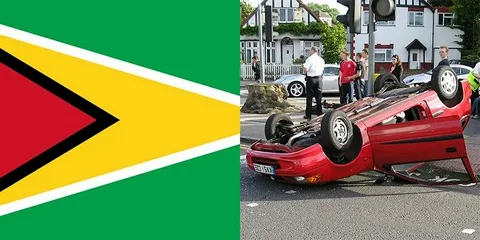
Guyana’s roads have become one of the most dangerous aspects of daily life for its citizens. From speeding minibuses in Georgetown to poorly lit rural highways, transport safety in Guyana remains a serious public health and policy concern that demands urgent national attention.
The Ground Reality of Transport Safety in Guyana
Every year, hundreds of Guyanese families are shattered by road accidents that could have been prevented. Transport safety in Guyana has consistently ranked among the most pressing issues facing the country’s infrastructure and public safety systems. Whether in urban Georgetown or along the remote Linden-Soesdyke Highway, road users face daily risks that expose deep systemic failures in enforcement, infrastructure, and public awareness.
Reports on transport safety in Guyana for 2021 and 2022 revealed deeply troubling trends. The number of fatal road accidents remained stubbornly high during both years, with speeding, drunk driving, and poor road conditions identified as the leading contributors. Government agencies, civil society groups, and international organizations all sounded the alarm, yet meaningful reform continues to move slowly on the ground.
What Is the Transportation System in Guyana?
Guyana’s transportation system is a mixed network that includes road transport, river and boat services, and limited air travel to remote interior regions. The road network is the backbone of daily movement for most Guyanese, particularly on the coast where the majority of the population lives. However, this network is riddled with challenges including aging infrastructure, narrow two-lane highways, inadequate signage, and limited street lighting in many areas.
Minibuses serve as the primary mode of public transportation in urban and semi-urban areas, while taxis, private vehicles, and motorcycles are widely used throughout the country. The interior regions of Guyana rely heavily on river transport and small aircraft, given the near-absence of paved roads connecting those communities to the coast.
The Demerara Harbour Bridge and the Berbice Bridge are critical transport links that connect different parts of the country. Ferry services also operate along major rivers. Despite ongoing infrastructure investments tied to Guyana’s oil boom revenues, the transport system still falls well short of international safety standards in many critical areas.
Transport Safety Guyana 2021: A Year of Concern
The year 2021 was particularly alarming for road safety advocates and policymakers. Transport safety data from Guyana in 2021 showed a spike in fatal accidents, many of which involved speeding vehicles, unlicensed drivers, and late-night road use without adequate lighting or reflective road markings.
Official records from the Guyana Police Force traffic division documented dozens of fatal crashes along key highways, including the East Bank Demerara and East Coast Demerara corridors. Pedestrian fatalities were also recorded with disturbing regularity, as walkers navigating poorly lit roads at night faced extreme risks from oncoming vehicles.
A significant number of accidents in 2021 also involved motorcycles, a vehicle type that has grown rapidly in use across Guyana but remains poorly regulated in terms of licensing and safety equipment requirements. Helmet use, though legally required, was inconsistently enforced by traffic authorities during this period.
Transport Safety Guyana 2022: Did Things Improve?
When looking at transport safety in Guyana for 2022, the data painted a similarly grim picture. While certain enforcement initiatives were launched mid-year, their impact on reducing accident rates was limited. Drunk driving continued to be a recurring factor in fatal crashes, particularly during holiday periods and weekends.
Road safety campaigns were conducted in 2022 by the Guyana Road Safety Council and supported by international partners including the Pan American Health Organization. These campaigns targeted drivers, pedestrians, and school children, emphasizing the importance of road safety and the consequences of reckless behavior behind the wheel.
Despite these efforts, transport safety Guyana 2022 records showed that the country still had one of the highest road fatality rates per capita in the Caribbean and South American region. The World Health Organization’s regional data continued to place Guyana among countries requiring urgent road safety reform.
What Is the Leading Cause of Death in Guyana?
Road traffic injuries consistently feature among the leading causes of premature death in Guyana. While non-communicable diseases such as cardiovascular disease and diabetes remain the top killers overall, road accidents represent one of the most preventable categories of death in the country.
According to public health data and reports aligned with WHO assessments, road traffic fatalities disproportionately affect young men between the ages of 18 and 35. This demographic is most heavily represented among motorcycle riders and minibus passengers, two of the most vulnerable groups on Guyana’s roads.
Alcohol-related crashes, drowning incidents linked to ferry and boat accidents, and pedestrian fatalities in poorly lit areas all contribute to transport-related mortality. Addressing transport safety in Guyana is therefore not just a traffic management issue — it is a public health emergency that intersects with poverty, infrastructure inequality, and governance.
Is Guyana Safe to Work and Travel In?
Many people considering work opportunities or travel to Guyana ask whether the country is safe. The honest answer is nuanced. Guyana is relatively stable politically and has experienced significant economic growth due to oil revenues. However, personal safety on the roads remains a legitimate concern for residents and visitors alike.
Expatriate workers and international organizations operating in Guyana routinely include road safety briefings as part of their onboarding processes. Organizations such as the United Nations and various NGOs operating in the country advise staff to avoid travel at night on highways and to use only vetted transport providers rather than informal minibuses where safety conditions are inconsistent.
For daily commuters and working Guyanese, the risks are unfortunately a routine part of life. Road safety awareness and the broader importance of transport safety in Guyana have become topics of public conversation in workplaces, schools, and community organizations across the country.
10 Importance of Road Safety: Why It Matters More Than Ever
Understanding the importance of road safety is the first step toward demanding change. Here are ten reasons why road safety must be prioritized in Guyana and globally:
- Saves Lives Directly
Road safety measures reduce fatal accidents. Wearing seatbelts, obeying speed limits, and avoiding drunk driving can prevent thousands of deaths every year. - Reduces Serious Injuries
Proper road safety practices lower the rate of life-altering injuries including spinal damage, traumatic brain injury, and limb loss. - Protects Children and Students
The importance of road safety for students cannot be overstated. Children walking to school or travelling in school buses face serious risks on unregulated roads. - Reduces Economic Burden
Road accidents cost nations billions in medical care, lost productivity, emergency services, and legal proceedings. Safer roads mean a stronger economy. - Supports Vulnerable Road Users
Pedestrians, cyclists, and motorcyclists benefit enormously from structured road safety enforcement and infrastructure improvements. - Builds Public Confidence in Transport
When people feel safe using roads, they engage more freely in economic and social activities, boosting national productivity. - Reduces Pressure on Healthcare Systems
Hospitals in Guyana face ongoing capacity challenges. Fewer road accidents mean fewer emergency admissions and better healthcare resource allocation. - Promotes Lawfulness and Civic Responsibility
Road safety culture encourages broader respect for law and order in public spaces, which benefits society at large. - Protects Livelihoods
Drivers, transport operators, and workers who depend on road travel for their income are protected when safety standards are enforced. - Advances National Development Goals
A nation with safe roads attracts investment, tourism, and skilled workers. Transport safety in Guyana is directly linked to the country’s development ambitions.
Types of Road Safety Measures Applicable in Guyana
There are several recognized types of road safety interventions that experts recommend for countries like Guyana where traffic fatalities remain high. These fall into three broad categories.
Engineering and Infrastructure Measures involve physical improvements to road design, including speed bumps near schools and hospitals, better road markings, improved lighting on highways, clearly marked pedestrian crossings, and guard rails on dangerous curves. Many of Guyana’s deadliest stretches of road lack even basic engineering protections.
Enforcement and Legal Measures include stricter penalties for speeding, drunk driving, and operating vehicles without a valid license. Regular road checkpoints, breath-testing programs, and traffic camera deployment form the backbone of enforcement-led road safety strategies in more advanced transport systems.
Education and Awareness Measures target behavior change through public campaigns, school curricula that include road safety education, and community engagement programs. The importance of road safety for students is particularly emphasized in educational interventions, as young people who learn road safety habits early are more likely to become responsible adult road users.
Expert Voices on Transport Safety in Guyana
Road safety professionals and public health experts have repeatedly called on the Guyanese government to treat road traffic injuries as the national emergency they represent.
“Road traffic crashes are not accidents — they are predictable and preventable events that reflect failures in policy, enforcement, and investment,” one regional transport safety advisor noted in alignment with WHO regional frameworks.
Organizations working on transport safety Guyana PDF resources and policy documents have highlighted that the country needs dedicated funding, a strengthened Road Safety Council, and legislative reform to bring its traffic laws in line with international best practices. Access to transport safety Guyana PDF reports from agencies like the Caribbean Community (CARICOM) and PAHO has grown in recent years, providing policymakers with data-driven tools for reform.
The Importance of Road Safety for Students in Guyana
Schools in Guyana are often located along busy main roads with no pedestrian infrastructure. Children walk along roadsides, cross unmarked intersections, and board minibuses that are frequently overcrowded and driven by operators who prioritize speed over safety.
The importance of road safety for students goes beyond physical survival. When children witness accidents or lose peers and family members to road crashes, it creates lasting psychological trauma. Schools that integrate road safety education into their curricula are equipping students with life-saving knowledge that extends to their families and communities.
Pilot programs introducing road safety modules in primary and secondary schools have been discussed at the ministry level in Guyana. Civil society groups advocate for making road safety a formal part of the national school curriculum, treating it with the same seriousness as health education and civic studies.
What Needs to Change: A Path Forward
Fixing transport safety in Guyana requires a coordinated national strategy. Several priority actions stand out clearly from available data and expert consensus.
The government must allocate dedicated funding to road safety infrastructure, including highway lighting, pedestrian bridges over busy intersections, and road resurfacing on accident-prone stretches. Enforcement agencies need more resources, better training, and political backing to apply traffic laws consistently and without favoritism.
Public awareness campaigns must move beyond occasional announcements and become sustained, year-round initiatives embedded in media, schools, and community organizations. Partnerships with the private sector, particularly with the transport and logistics industry, can amplify these efforts significantly.
Digital tools, including dashboards tracking road accident data in real time, should be made publicly available so that civil society, journalists, and researchers can hold authorities accountable for progress or the lack of it.
Conclusion: Guyana’s Roads Can Be Made Safer
Transport safety in Guyana is a solvable problem. The country now has unprecedented oil revenues that could fund transformative infrastructure and public safety programs. What is needed is political will, community pressure, and a genuine commitment to treating every road death as an avoidable tragedy rather than an inevitable cost of development.
The importance of road safety whether documented in a transport safety Guyana PDF report, taught in a classroom, or discussed in parliament ultimately comes down to a simple truth. Every life lost on a preventable road accident represents a failure that communities, governments, and individuals all share responsibility for preventing. Guyana has the tools, the knowledge, and now the financial resources to make its roads safer. The time to act is now.
FAQs
What is the transportation system in Guyana?
Guyana’s transportation system is built primarily around road transport along the coastal plain where most of the population lives, supported by river and boat services for interior communities and small aircraft connecting remote regions. Minibuses dominate public urban transport, while private vehicles, motorcycles, and taxis are widely used. The road network, though central to daily life, suffers from aging infrastructure, inconsistent maintenance, poor lighting on highways, and limited pedestrian safety features. Major river bridges and ferry services also form critical links between different parts of the country. The system is under gradual improvement as oil revenues provide new funding opportunities, but safety standards continue to lag behind international benchmarks in many areas.
Is Guyana safe to work in?
Guyana has become an increasingly attractive destination for international workers due to its booming oil economy, political stability, and growing infrastructure investment. In terms of general personal security, Guyana is considered manageable for expatriates who take basic precautions. However, road safety is a notable concern that organizations and employers consistently flag for workers relocating to the country. Many international firms operating in Guyana implement their own transport safety protocols for staff, including restrictions on night driving and requirements to use approved vehicles and drivers. Working in Guyana can be rewarding and safe provided individuals remain informed about transport risks and follow established safety guidelines when travelling by road.
What is the leading cause of death in Guyana?
Non-communicable diseases including cardiovascular conditions, diabetes, and cancers are the leading causes of overall mortality in Guyana. However, road traffic injuries consistently rank among the most significant causes of premature and preventable death in the country, particularly among young men. Transport-related fatalities account for a disproportionate share of emergency hospital admissions and sudden deaths. Factors such as drunk driving, speeding, poor road conditions, inadequate vehicle maintenance, and the widespread use of motorcycles without proper licensing contribute significantly to the road death toll. Addressing transport safety in Guyana is therefore a critical public health priority alongside the management of chronic diseases.