
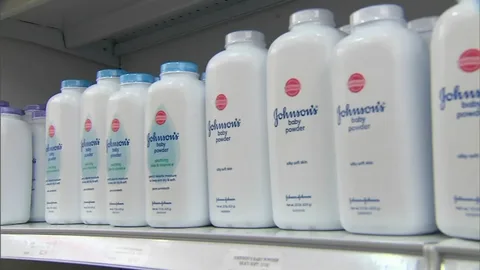
Johnson & Johnson has announced it will pay $5.5 billion to resolve tens of thousands of lawsuits in the United States that allege its baby powder and other talc products caused ovarian cancer, in what is being called a landmark settlement aimed at closing a long and contentious chapter of litigation. The announcement came on Monday, July 27, 2026, and marks one of the most significant developments in the Johnson & Johnson talc lawsuit in years. For tens of thousands of women and their families, this Johnson and Johnson lawsuit update brings a long-awaited sense of resolution after more than a decade of legal battles.
Background: How the Johnson and Johnson Baby Powder Scandal Began
To understand why this Johnson & Johnson talc lawsuit settlement matters so much, it helps to go back to where this all started. Johnson & Johnson launched its baby products business in 1894 with talc-based Johnson’s Baby Powder, which became one of the company’s most iconic consumer products. For generations, families trusted it as a safe and gentle everyday product for babies and adults alike.
That trust began to unravel when internal company documents and scientific testing revealed something alarming. Court records show that Johnson & Johnson knew of potential asbestos risks associated with its talc as early as the 1970s. Even so, the company continued to market its powders as “pure” and “safe” and sold talc-based products for several decades before eventually switching to cornstarch. Asbestos, a known carcinogen, is naturally found near talc deposits during mining and is notoriously difficult to separate from the mineral.In 2024, the World Health Organization classified talc as “probably carcinogenic to humans,” adding significant scientific weight to the claims made by hundreds of thousands of plaintiffs across the United States and beyond.
The Johnson and Johnson Lawsuit List: A Decade of Legal Battles
The Johnson and Johnson lawsuit list is long, complex, and spans multiple decades. One of the most striking early verdicts came in 2018, when a Missouri jury awarded $4.69 billion to 22 women who alleged that asbestos-contaminated talc in J&J products caused their ovarian cancer. This verdict, though later reduced on appeal, signaled that juries were taking these claims seriously.
Over the years, the company tried multiple legal strategies to contain its liability. Johnson & Johnson attempted to file for bankruptcy multiple times to avoid the claims filed against them. Most recently, the company proposed an $8 billion settlement to resolve all current and future ovarian cancer claims. However, a bankruptcy judge rejected this proposal in March 2025, forcing J&J back to the negotiating table with plaintiffs and their attorneys.
The litigation resumed in March 2025, after being put on hold for more than three years during J&J’s repeated failed attempts to resolve the lawsuits through a shell company’s bankruptcy. With those bankruptcy strategies exhausted, the company had no choice but to negotiate a direct settlement.
Full Details: What the $5.5 Billion Settlement Covers
This latest Johnson & Johnson talc lawsuit update is the most concrete development yet. J&J said the settlement covers about 69,000 cases consolidated in federal court in New Jersey, and related cases in state court, totalling 99.75 percent of the remaining talc claims. In simple terms, this settlement is designed to bring nearly the entire talcum powder lawsuit to a close in one sweeping agreement.
The deal must be accepted by 95 percent of the ovarian cancer claimants in state or federal court before it becomes final. The settlement also still requires approval from the federal judge overseeing the litigation. Until both conditions are met, the agreement while historic in scale remains subject to legal process.
It is also important to note that unlike the proposed bankruptcy settlements, Monday’s agreement applies only to existing claims and does not address future lawsuits. Anyone who develops ovarian cancer or other talc-related illness in the future would not be covered under this deal and would need to file separately.
What Johnson & Johnson Is Saying
J&J has been consistent in its position throughout the long Johnson and Johnson baby powder scandal. The company has never admitted wrongdoing, and that stance has not changed with this announcement.
J&J’s vice-president of litigation, Erik Haas, said the claims were “meritless” and that the company was willing to settle in order to get closure. In a statement, Haas framed the settlement as a pragmatic business decision rather than an admission that its talc products were ever unsafe or caused cancer.
J&J has denied that its talc products caused cancer, saying that talc was safe and did not contain asbestos. The company stopped selling talc-based baby powder in the U.S. in 2020, switching to a cornstarch product. That product switch came quietly and was widely interpreted at the time as an acknowledgment that the company wanted to move away from the controversy, even as it continued to deny any wrongdoing publicly.
Reaction from Plaintiffs and Their Lawyers
The response from those on the other side of this decade-long battle has been cautiously positive. Plaintiffs’ law firms confirmed the deal on Monday, saying that it was a good resolution after a decade-long court battle. For many of the women and families who have been waiting years to see the talcum powder lawsuit settled, this news carries enormous emotional weight.
The settlement represents the end of a legal journey that began with individual women telling doctors they had ovarian cancer and then connecting that diagnosis to a product they had used faithfully for years, sometimes decades. Many claimants are elderly, seriously ill, or have lost loved ones while waiting for a resolution. For them, the answer to the question of when will the talcum powder lawsuit be settled has finally arrived.
The UK Lawsuit: The Fight Is Not Over Globally
While the United States settlement covers the bulk of the Johnson & Johnson talc lawsuit globally, the legal fight is not finished everywhere. Thousands of people in the United Kingdom have filed a joint legal claim estimated to be worth more than £1 billion against Johnson & Johnson, accusing the U.S. pharmaceutical giant of selling baby powder that it knew was contaminated with carcinogenic asbestos.
The UK lawsuit, which covers the years 1965 to 2023, claims that Johnson & Johnson “knew their talc products contained carcinogenic fibres, including asbestos, for more than fifty years and chose to keep it on the market in pursuit of profit.” The UK case involves around 3,000 claimants and is being heard before the UK High Court. A settlement resolves thousands of US lawsuits, with a record UK case against the company still under way.
This means that even as the Johnson and Johnson lawsuit update in the US points toward resolution, the company continues to face serious legal exposure in Britain and potentially other markets.
Global Impact: What This Settlement Means Beyond the Courtroom
The implications of this Johnson & Johnson talc lawsuit settlement go far beyond a single company paying a large sum of money. This case has fundamentally reshaped how consumers, regulators, and corporations think about the safety of everyday personal care products.
For consumers, it has raised a legitimate and uncomfortable question: if a product as trusted and widely used as Johnson’s Baby Powder could carry hidden risks for this long, what else might be lurking on pharmacy and supermarket shelves? Regulatory agencies around the world have begun tightening standards for talc testing and labeling as a direct result of this litigation.
For corporations, the Johnson and Johnson baby powder scandal serves as a stark warning about the long-term consequences of withholding safety information from the public. The company’s strategy of denying, delaying, and attempting to use bankruptcy proceedings to shield itself from liability ultimately cost it far more in money, in reputation, and in public trust than early transparency might have.
For the legal industry, this case has established new precedents in mass tort litigation, particularly around the use of bankruptcy as a strategy to resolve product liability claims. Courts have signaled they will scrutinize such strategies more carefully going forward.
Is Johnson’s Baby Powder Talc-Free Now?
The company stopped selling talc-based baby powder in the U.S. in 2020, switching to a cornstarch product. Johnson’s Baby Powder sold in the United States today is made with cornstarch, not talc. The product is reformulated, repackaged, and marketed differently. However, older talc-based stock may still exist in some markets or in private collections, and the existing litigation covers products used over several decades.
Conclusion: When Will the Johnson and Johnson Lawsuit Be Settled?
The short answer, as of July 28, 2026, is: it is being settled right now. The $5.5 billion agreement announced on Monday is the closest this case has come to a final resolution. The deal must be accepted by 95 percent of the ovarian cancer claimants in state or federal court before it becomes final, and it still awaits judge approval. If both conditions are met, the distribution process for claimants can begin.
For anyone still asking when will the talcum powder lawsuit be settled in full the answer depends on how quickly claimants vote to accept the deal and how swiftly the court moves to ratify it. Legal observers widely expect the process to move forward given the overwhelming coverage of 99.75 percent of remaining claims. The era of mass Johnson & Johnson talc lawsuit trials appears to be drawing to a close, even if individual legal threads continue to unravel in the UK and elsewhere.
What this settlement cannot do is undo the harm suffered by thousands of women who developed ovarian cancer while trusting a product they believed was safe. For them, and for their families, no dollar amount will ever feel like enough.
Frequently Asked Questions (FAQs)
Is Johnson’s Baby Powder talc-free now?
Yes, Johnson’s Baby Powder sold in the United States is now made entirely with cornstarch and does not contain any talc. Johnson & Johnson made this switch in 2020, quietly discontinuing its talc-based formula in the US and Canada. The company later extended this to global markets in 2022. The decision came after years of mounting legal pressure and thousands of lawsuits alleging that the talc in the original formula was contaminated with asbestos and caused ovarian cancer in women who used it regularly. Today, if you purchase Johnson’s Baby Powder from a US retailer, the active ingredient listed on the label is cornstarch, not talc. That said, if you have older products at home that were purchased before 2020, those may still contain talc and should be discarded. The reformulated cornstarch version has not been linked to the same cancer-related concerns as the original talc formula.
Is J&J powder safe now?
The cornstarch-based Johnson’s Baby Powder currently sold in the United States has not been linked to the same cancer risks as the previous talc-based version. Cornstarch is a widely used, food-derived ingredient with no known links to ovarian cancer or mesothelioma. However, it is worth noting that J&J has never formally admitted that its original talc product was unsafe the company maintained throughout all litigation that talc was safe and free of asbestos. The current product is reformulated, and most health authorities have not raised concerns about the cornstarch version. If you are concerned about any personal care product’s safety, it is always advisable to consult your doctor and check for updated guidance from health regulatory agencies such as the FDA. The broader lesson from the Johnson and Johnson baby powder scandal is that ingredient transparency and independent product testing matter enormously for consumer protection.
Can you still buy real talcum powder?
Yes, talcum powder is still legally available for purchase in many countries, including in some specialty stores and online platforms in the United States. However, its presence on mainstream retail shelves has declined significantly in recent years. Several major brands have moved away from talc formulas following the Johnson & Johnson talc lawsuit and the broader increase in public awareness about potential asbestos contamination in talc products. In 2024, the World Health Organization classified talc as “probably carcinogenic to humans,” which has further accelerated this shift. Some cosmetic and personal care brands still use talc in products like face powders and body powders, particularly in markets outside North America where regulatory pressure has been slower to materialize. Consumers who wish to avoid talc entirely should read product ingredient labels carefully, as talc may appear under names including magnesium silicate or cosmetic talc on packaging.