
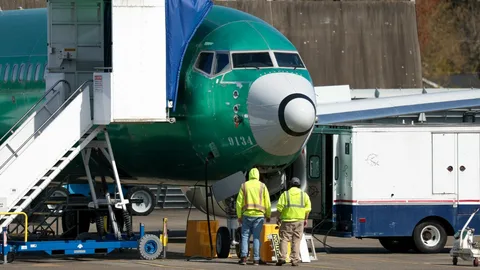
Boeing has been fighting a public trust problem for years. It started with the 737 MAX crashes in 2018 and 2019 that killed 346 people. Then came the door plug blowout on an Alaska Airlines flight in January 2024. Now, in mid-2026, the U.S. aviation regulator is warning that seat safety systems on hundreds of Boeing jets may not have been properly tested or verified and that’s a serious problem.
The Federal Aviation Administration (FAA) confirmed the alert affects aircraft across multiple Boeing fleets. The agency is requiring airlines to conduct Boeing aircraft safety tests on affected seat restraint systems before those planes continue in regular passenger service. The scale of the warning has shaken confidence in Boeing’s internal quality control processes all over again.
The Boeing safety scandal that has unfolded over the past several years isn’t just about individual incidents. It reflects something more systemic a Boeing safety culture that, according to regulators, engineers, and whistleblowers, prioritized production speed over rigorous safety checks for far too long.
What the FAA Warning Actually Says
The FAA’s latest directive targets seat systems that may not have passed the required Boeing aircraft safety test protocols during manufacturing or installation. According to the agency, the issue affects hundreds of jets currently in active service with U.S. and international carriers.
Airlines have been given a compliance window to carry out inspections and, where necessary, replacements. The FAA has not grounded any aircraft outright, but the warning carries legal weight any carrier that fails to act within the given timeframe could face penalties or operational restrictions.
The scope of the directive is wide enough to concern aviation safety experts. It raises questions about how these gaps passed through Boeing’s Boeing safety and quality plan without being flagged earlier.
The Boeing Safety and Quality Plan Under Scrutiny
Boeing introduced its Boeing safety and quality plan in the aftermath of the 737 MAX scandal. The plan was designed to overhaul internal audit processes, tighten manufacturing checks, and rebuild confidence among regulators and airlines. Boeing executives presented the plan at the Boeing aviation safety conference 2025 as evidence that the company had turned a corner.
But the 2026 seat inspection warning suggests the plan still has holes. Former Boeing engineers who testified before the U.S. Senate in 2024 warned that cultural change at Boeing was slow, and that pressure on factory floor workers to meet delivery timelines had not meaningfully decreased.
One whistleblower, whose testimony was widely covered after his death earlier in 2024, alleged that components were sometimes signed off without full verification. His claims were dismissed by Boeing at the time but later prompted a formal FAA investigation into manufacturing practices.
The Boeing Safety Conference 2026 is expected to address these latest findings directly. Regulators, airline executives, and aviation safety researchers are scheduled to discuss what the seat inspection directive means for the industry and what reforms still need to happen at Boeing.
Quotes From Officials and Experts
The FAA said in a statement: “We are committed to ensuring that every aircraft operating in U.S. airspace meets the highest safety standards. Where we identify gaps, we will act without hesitation.”
Senator Maria Cantwell, who has led congressional oversight of Boeing, told reporters: “This is yet another example of why we cannot take Boeing’s word on safety. We need independent verification, and we need it consistently.”
Aviation safety analyst Richard Aboulafia, widely quoted in coverage of the Boeing safety scandal, told industry media: “The problem at Boeing isn’t technical in isolation. It’s organizational. Until the safety culture genuinely changes from the top down, you will keep seeing these kinds of gaps surface.”
A spokesperson for the Association of Flight Attendants said the union was “deeply concerned” and called on airlines to accelerate inspections rather than wait until the final compliance deadline.
Boeing 787-8 Safety Record: A Closer Look
Amid the broader warnings, passengers and aviation analysts have also been paying attention to the Boeing 787-8 safety record. The 787 Dreamliner family has generally been considered one of Boeing’s more reliable platforms in recent years. It was not the aircraft involved in the 737 MAX crashes or the January 2024 door plug incident.
However, the Boeing 787-8 safety record has not been without issues. Battery fires grounded the entire 787 fleet in 2013. There have been fuel leak incidents, electrical system anomalies, and manufacturing defects flagged at Boeing’s South Carolina plant many of which were documented by FAA audits.
The 787-8 remains in wide service globally. Airlines including United, American, and several Gulf carriers operate the type on long-haul routes. No current FAA directive has specifically targeted the 787-8 in the seat inspection warning, but aviation insiders note that any Boeing aircraft safety test failure across one platform tends to trigger reviews across the wider fleet.
The Boeing Safety Culture Problem
The phrase “Boeing safety culture” has come up repeatedly in regulatory filings, congressional hearings, and whistleblower accounts over the past three years. What does it actually mean?
A safety culture in aviation refers to the organizational environment in which employees feel empowered to raise safety concerns without fear of retaliation, in which management acts on those concerns promptly, and in which safety is genuinely prioritized over production targets.
By multiple accounts from FAA audits, whistleblower testimony, and academic research Boeing’s safety culture broke down significantly in the 2010s, following the company’s merger with McDonnell Douglas in 1997. Critics argue that McDonnell Douglas’s cost-cutting philosophy gradually took over Boeing’s engineering-first culture.
The result, many argue, was a company where delivery schedules drove decisions, where safety engineers felt sidelined, and where internal quality checks became box-ticking exercises rather than genuine safeguards. The Boeing safety scandal of the MAX era was, in this reading, not an accident but an organizational failure that had been building for years.
Boeing’s current leadership has pledged publicly including at the Boeing aviation safety conference 2025 to fix this. Whether those pledges translate into structural change is something regulators are watching closely.
Global and Regional Impact
The latest FAA warning has ripple effects beyond the United States. Hundreds of Boeing aircraft are operated by airlines across Asia, Europe, the Middle East, and Africa. European regulators have already requested more information from Boeing about the seat inspection findings. Several Asian carriers have said they are reviewing their own fleets proactively.
The financial impact is also significant. Boeing’s stock fell on news of the directive. The company is already under pressure from production delays on the 737 MAX and 787 programs, and any additional regulatory scrutiny adds to the timeline pressure of getting those delivery backlogs cleared.
For passengers, the more immediate concern is what the warning means for flights booked in the coming weeks and months. Aviation lawyers note that airlines bear legal responsibility for operating safe aircraft and that carriers who slow-walk the inspection process could face liability exposure if an incident occurs on an aircraft that had been flagged.
What Boeing Has Said
Boeing issued a statement saying it is “cooperating fully” with the FAA and that passenger safety “remains our absolute priority.” The company said it was working with airlines to provide technical guidance for the inspections and expected the process to be completed without significant disruption to flight schedules.
Boeing also pointed to progress under its Boeing safety and quality plan, saying that the number of internal safety audits conducted in 2025 had increased by over 40 percent compared to 2023.
Critics say these numbers, while technically accurate, miss the point. More audits mean little if the underlying culture that allowed problems to go undetected has not changed.
Conclusion: What Comes Next
The seat inspection warning is unlikely to be the last regulatory action Boeing faces in 2026. The FAA has made clear it intends to maintain what it calls “elevated oversight” of Boeing’s manufacturing and quality systems for the foreseeable future.
The Boeing Safety Conference 2026 will be an important moment. If regulators, airlines, and Boeing can agree on a credible and verifiable roadmap for reform one that goes beyond the Boeing safety and quality plan as currently written there is a path toward restoring trust. If the conference produces more pledges without binding accountability measures, the industry’s patience, already stretched thin, will wear thinner still.
For passengers, the picture is complicated. Boeing aircraft remain among the most flown in the world. Statistically, commercial aviation is still extraordinarily safe. But the repeated emergence of safety gaps at one of the world’s two dominant aircraft manufacturers is not something anyone in the industry or anyone who flies can afford to treat as routine.
Frequently Asked Questions (FAQs)
Is it still safe to fly on Boeing aircraft?
This question comes up every time a new Boeing safety warning surfaces, and the honest answer is: statistically, yes but with caveats that deserve acknowledgment rather than dismissal. Commercial aviation remains one of the safest forms of transport in the world, and Boeing aircraft make up a huge portion of the global fleet. The overwhelming majority of Boeing flights operate without incident. However, the repeated pattern of safety findings the 737 MAX crashes, the 2024 door plug blowout, and now the 2026 seat inspection directive reflects real and documented failures in Boeing’s Boeing safety culture and quality processes. Passengers are not wrong to notice this pattern. Airlines and regulators are required by law to conduct Boeing aircraft safety tests and comply with FAA directives before affected planes can continue flying, which provides a structural layer of protection.
Which Boeing planes are considered the safest?
The Boeing 787 Dreamliner family, including the Boeing 787-8, is widely considered the most modern and carefully certified aircraft in Boeing’s current lineup. The 787 introduced a composite airframe, improved fuel efficiency, and went through an extensive certification process. Despite the 2013 battery fire groundings which were resolved through hardware and software fixes the Boeing 787-8 safety record over the past decade has been relatively strong compared to other Boeing types. The 777 family also has a long and generally solid operational history, though no aircraft is without incident over a multi-decade service life. The 737 MAX remains the most scrutinized Boeing aircraft in service today. It was recertified by the FAA in 2020 after a 20-month grounding and has flown billions of passenger miles since without a recurrence of the MCAS-related issues that caused the two fatal crashes. Whether that recertification should give passengers full confidence is a question reasonable people disagree on.
Are Boeing planes safer than Airbus planes?
Comparing Boeing and Airbus on safety is more complicated than it sounds, and the answer depends heavily on which models and which time periods you are looking at. Airbus has had its own serious accidents over the years the Air France 447 crash in 2009, which killed 228 people, involved an Airbus A330. Both manufacturers produce aircraft that must meet the same international certification standards, overseen by the FAA in the United States and EASA in Europe. For most of aviation history, neither manufacturer had a clearly worse safety record than the other. What has changed the calculus in recent years is Boeing’s specific run of high-profile failures: the 737 MAX crashes, the 2024 door plug incident, and now the ongoing Boeing aircraft safety concerns flagged by regulators in 2026. These events, and the organizational issues they revealed, have put Boeing under a level of scrutiny that Airbus is not currently facing. That does not automatically mean Airbus aircraft are safer in every scenario.