
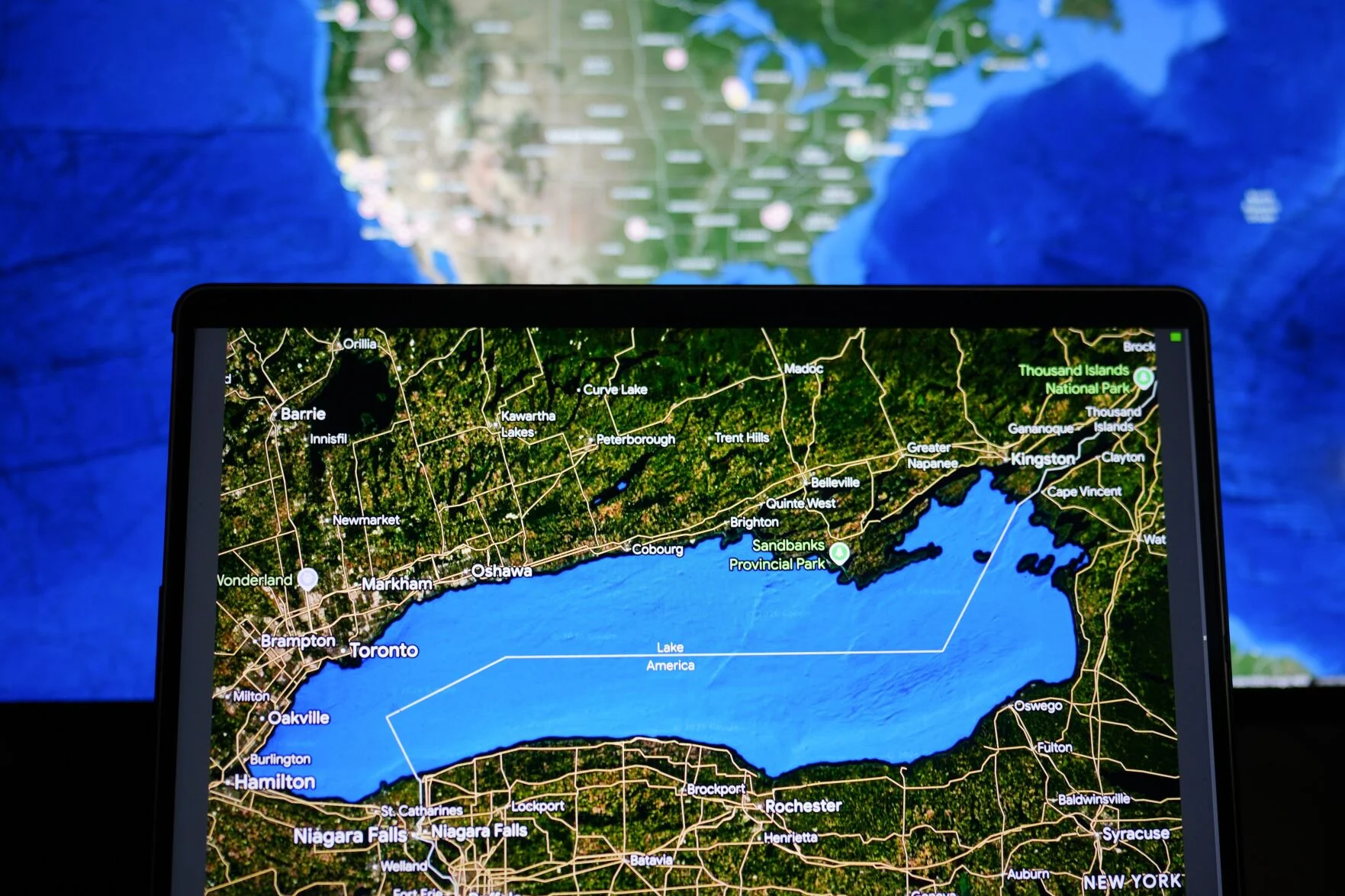

Millions of US map users opened their apps this week to find a familiar Great Lake carrying an unfamiliar name. Lake Ontario now appears as “Lake America” on both Google Maps and Apple Maps, but only for people located inside the United States.
The change did not happen by accident. It is the direct result of a presidential executive order, a federal database update, and a decision by two of the world’s largest tech companies to follow that update. Here is a closer look at how it happened and what it actually changes.
Background: A Pattern That Started With the Gulf of Mexico
This is not the first time a major US map has been renamed by presidential order. Earlier in his term, President Trump signed an order renaming the Gulf of Mexico as the “Gulf of America.” Apple and Google both updated their maps to reflect that change for US users at the time.
Lake Ontario now follows the same script. Trump signed a fresh executive order last week instructing federal agencies to record the lake’s name as “Lake America.” The order set off an update process that mapping companies are required to follow if they rely on US government data.
The timing is notable. Trump has connected the renaming to an ongoing trade dispute with Canada, tying the symbolic move to broader tariff tensions between the two countries.
The Technical Details Behind the Update
Executive orders do not directly rewrite map apps. Instead, they instruct the Department of the Interior’s Board of Geographic Names to update the US Geographic Names Information System, known as GNIS. This is the federal database that companies like Google and Apple pull from when labeling US locations.
Once GNIS listed the new name, Google Maps updated first, rolling out the change late on a Saturday. Apple followed a few days later on Tuesday, September 1, with reports indicating that Trump had also contacted Apple directly to request the switch.
Both companies applied the same regional logic they used for the Gulf of Mexico change. US-based users see “Lake America.” Canadian users continue to see “Lake Ontario.” Everyone else sees both names displayed together.
What Officials and Companies Are Saying
Interior Secretary Doug Burgum confirmed on Fox Business that the president had personally reached out to Apple about the update. He described the standard process, explaining that an executive order triggers a database change that then “cascades down to all the map providers.”
Google issued a statement pointing to its existing policy for international bodies of water with names that differ by country, saying it always displays the locally recognized name to local users. Not every company has gone along with the shift. MapQuest chose to stay out of the controversy entirely, launching a playful tool that lets users rename the lake themselves rather than adopting an official new label.
Why This Matters: The Wider Impact
For everyday users, the practical effect is small. Directions and search results still work the same way regardless of which name appears on screen. The bigger significance lies in what the change represents.
It shows how quickly a political decision can ripple into everyday digital tools used by hundreds of millions of people. It also highlights the different approaches tech companies take when a government order touches on contested or shared geography.
The change has already caused friction. Some Canadian government and business websites that embed Google Maps briefly displayed “Lake America” over the past weekend, a mix-up that drew criticism from Canadian officials and residents who felt a shared natural landmark was being rebranded without their input.
Conclusion: What Happens Next
For now, “Lake America” is locked in for US-based Apple Maps and Google Maps users, while Canada keeps the name Lake Ontario. Whether other services such as Bing Maps or MapQuest eventually follow the same path remains an open question, and the broader trade dispute between the US and Canada shows no sign of cooling down.
As with the Gulf of Mexico renaming before it, the Lake Ontario change is likely to remain a point of debate rather than a settled matter, especially given that the lake itself sits on land and water shared by two countries.
Frequently Asked Questions
Was Lake Ontario actually renamed?
Yes, but only within United States government records and US-facing map applications. President Trump’s executive order changed how the lake is listed in the US Geographic Names Information System, and companies including Apple and Google updated their maps to match that listing for American users. The lake’s internationally recognized name, Lake Ontario, has not changed in Canada or in any international body outside the US federal system.
Why is Google changing the name of Lake Ontario?
Google Maps follows official government sources to determine how it labels locations, and for places inside the United States, that source is the Geographic Names Information System. When GNIS updated its database to show “Lake America” after the executive order, Google’s existing policy for internationally shared bodies of water kicked in automatically, updating the label for US users while leaving the Canadian version unchanged.
What has Trump renamed?
The Lake Ontario to Lake America change follows a similar earlier order that renamed the Gulf of Mexico as the “Gulf of America.” Both orders instructed federal agencies to update official US geographic naming records, which then prompted major mapping platforms to adjust their US-facing apps. In each case, the original name has remained in place for other countries and for international map views.