
Summary
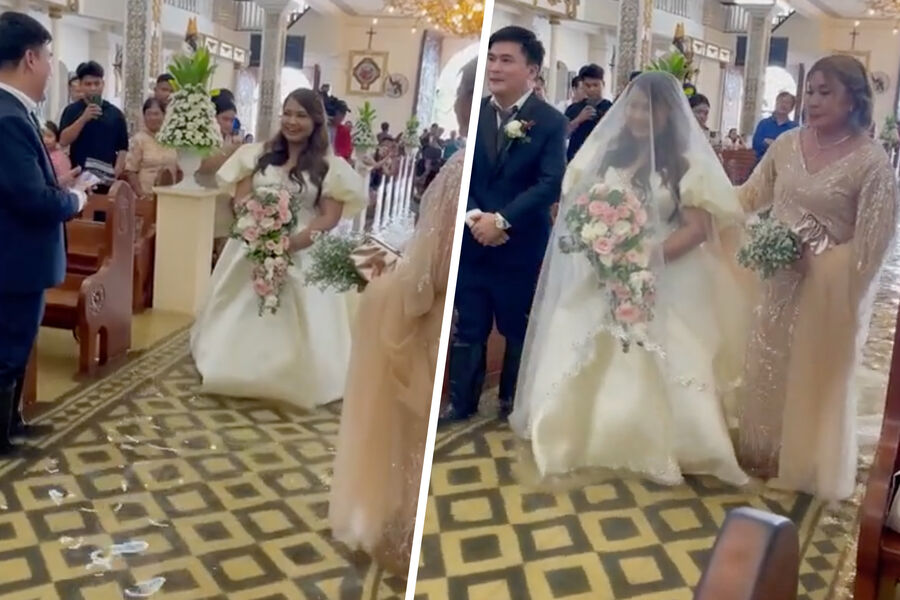
A couple in the Philippines went ahead with their wedding ceremony this week even though their parish church was standing in hip-deep floodwater. Leian Lieza Galang and Gilbert Chico exchanged vows at St. John the Baptist Parish in Hagonoy, Bulacan, a town just north of Manila. Weeks of relentless monsoon rain had left the church partially submerged for nearly a month, yet the pair refused to postpone their big day.
Background
The northern Philippines has been battered by unusually heavy seasonal rains for over a month now. Landslides and flash floods triggered by the downpours have already claimed at least 34 lives, according to the latest official count. Bulacan province, where Hagonoy sits, has been among the hardest hit areas in this stretch of bad weather.
This is not the first time a Philippines wedding ceremony has gone forward despite flooding. Couples across Bulacan and nearby provinces have made headlines in past monsoon seasons for the same reason, choosing love and tradition over postponement. It says a lot about how central the wedding day is in Filipino culture, flood or no flood.
Details
Galang arrived at the church courtyard aboard a rickshaw with a raised chassis, a small trick that kept her gown dry before she had to step into the water herself. Photographer Mikko Rey Alfonso, who documented the ceremony, said the bride’s gown had its train shortened beforehand so she could move through the flood more easily.
Dressed in an off-shoulder white gown and carrying a bouquet of white flowers, Galang waded through the murky brown water to reach Chico at the altar. The parish priest kept the service short, pronouncing the couple husband and wife during a scaled-down late-morning ceremony. Fewer than 15 guests were present to witness it.
Parish staff had reportedly urged the couple to delay the wedding given the rising water levels flowing in from upstream. Galang and Chico decided against waiting. Church volunteers instead focused on making the day feel special under difficult conditions, arranging plastic flowers along the pews since fresh ones would not have survived the water.
Quotes
Photographer Alfonso told AFP the parish had advised postponement because of the rising floodwaters, but the decision to proceed rested entirely with the couple. He added that parish volunteers did what they could to make the occasion memorable despite the setting.
The groom, Chico, kept his reaction simple when asked about the soaked gown and suit. He said the couple did not mind their clothes getting wet, since going through with the wedding mattered more than staying dry.
Alfonso summed up the mood at the church in a single line, saying nothing could stop the couple’s union once they had made up their minds.
Impact
Stories like this one tend to spread quickly online, and this wedding is no exception. Footage shared on the parish’s own Facebook page shows the bride being embraced by her parents near flooded pews, a moment that resonated with viewers well beyond the Philippines. For many, it became a small symbol of resilience during a rough monsoon season.
On a more practical level, the flooding itself remains a serious regional problem. Local authorities are still dealing with displaced families, damaged roads, and the ongoing risk of further landslides across Bulacan and neighboring provinces. The viral wedding photos have, if anything, drawn extra attention to how badly the region needs relief and drainage support.
Filipino Wedding Traditions and Costs
A typical Philippines wedding ceremony leans heavily on Catholic ritual, since the country is overwhelmingly Catholic. Expect a full Mass, a unity candle, a veil and cord ceremony symbolizing the couple’s bond, and coins or arrhae presented by the groom as a pledge of provision. These customs show up at almost every Filipino wedding, rain or shine.
So who pays for a wedding in the Philippines? Traditionally, the groom’s family covers a large share of the costs, including the dowry-like gifts and sometimes the reception. In practice today, many modern couples split expenses with both families, or rely on “ninongs” and “ninangs” — godparents who sponsor specific parts of the wedding, from the cake to the flowers to the entourage gowns.
A Filipino-American wedding often blends these Catholic customs with Western touches, since many Filipino families abroad want to keep traditions like the veil-and-cord ritual and the money dance alive while adapting the format to venues and guest lists in the United States. It is a common sight at diaspora weddings from California to New Jersey.
Conclusion
Galang and Chico’s flooded wedding has already become one of the more talked-about moments of this year’s monsoon season in the Philippines. Whether the water recedes soon or not, their ceremony stands as a reminder of how much a Philippines wedding ceremony means to the families involved, flood or no flood.
Authorities continue monitoring rainfall and river levels across Bulacan, and further flooding cannot be ruled out in the coming weeks. Locals and disaster agencies will be watching closely to see whether conditions improve before the next round of scheduled community events and ceremonies in the region.
FAQs
What happens in a Filipino wedding?
A Filipino wedding usually centers on a full Catholic Mass with several symbolic rituals woven in. The veil ceremony represents unity, the cord (or yugal) symbolizes an unbreakable bond, and the arrhae, or thirteen coins, represent the groom’s promise to provide for his family. Many ceremonies also include a money dance during the reception, where guests pin cash to the couple’s clothing while they dance, along with toasts from family elders and a shared meal that often stretches late into the evening.
What color do Filipino brides wear?
White remains the standard choice for Filipino brides today, following Western and Catholic bridal tradition, much like Leian Lieza Galang’s off-shoulder white gown in this flooded wedding. That said, older and more rural ceremonies sometimes feature brides in traditional Filipiniana-inspired gowns with butterfly sleeves, occasionally in soft pastel shades rather than pure white. Regional and family customs can still influence the final choice.
Who pays for a Filipino wedding?
Historically, the groom’s family shouldered most of the wedding costs as part of a broader courtship tradition, including gifts to the bride’s family. Today, the answer is far less fixed. Many couples now split expenses evenly with both sets of parents, while others lean on godparents, or ninongs and ninangs, who sponsor individual wedding elements like the cake, flowers, rings, or entourage outfits, spreading the financial responsibility across the extended family and close friends.