
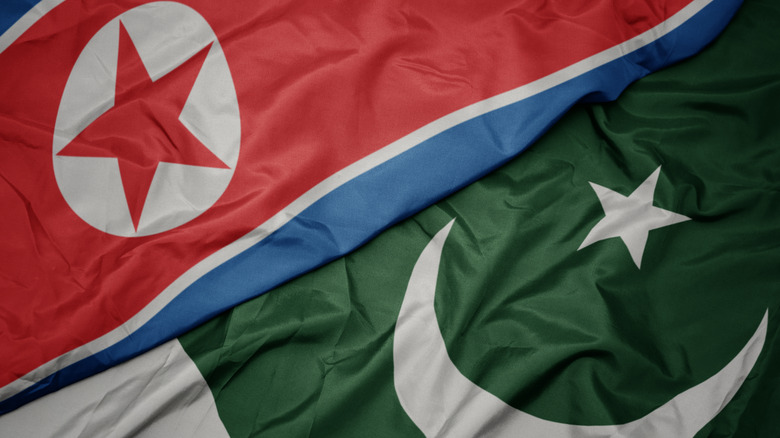

Why Islamabad’s Greeting to Pyongyang Is Drawing Attention
A short congratulatory letter rarely makes news. But when President Asif Ali Zardari sent one to North Korean leader Kim Jong Un this week, marking Pyongyang’s 78th founding anniversary, it was enough to prompt questions about where Pakistan North Korea ties actually stand today. The answer, it turns out, involves a relationship that is technically intact but practically dormant, shaped by history that most people have forgotten and a diplomatic caution that has never quite gone away.
Background: Formal Ties, Informal Distance
Pakistan established diplomatic relations with North Korea decades ago, and on paper, that relationship has never lapsed. What has changed is the amount of actual contact between the two governments. Pakistan’s embassy in Pyongyang is currently listed as closed on the Foreign Office’s own website, meaning there is no resident Pakistani diplomatic presence in North Korea right now. That single fact says a lot about how the relationship has drifted from formal recognition toward something closer to benign neglect.
This didn’t happen by accident. Pakistan’s foreign policy has been shaped for decades by its relationship with the United States, its alliance-building with Gulf countries, and more recently its deepening partnership with China. North Korea, isolated by international sanctions and treated as a pariah state by most of the Western world, simply doesn’t fit into that picture. Add to that a controversial chapter from the early 2000s, when investigations linked figures connected to Pakistan’s nuclear program to unauthorized dealings with North Korea, and it becomes easier to understand why Islamabad has kept Pyongyang at a careful distance ever since.
Details: What Actually Happened This Week
The exchange itself was simple. President Zardari’s letter to Kim Jong Un referenced “cordial relations based on mutual trust and goodwill” and expressed hope that ties would keep developing for the benefit of both nations. Pakistan’s Foreign Office separately posted its own message on social media, extending “warmest felicitations” and tagging the Pyongyang mission, despite that mission not being operational.
North Korea’s founding anniversary, observed each year on September 9, is typically an occasion for its closest partners, China and Russia chief among them, to send formal congratulations. Pakistan’s decision to do the same publicly this year, rather than through quiet diplomatic channels as has often been the case, is what turned a routine courtesy into a talking point. Diplomatic Islamabad, generally cautious about anything involving North Korea, doesn’t make gestures like this without at least some awareness of how it will be read.
Quotes: Officials Keep It Low-Key
When asked directly about the exchange, Foreign Office spokesman Sajjad Haider Khan gave a measured response. He told Dawn that “exchange of felicitation messages are a common practice,” a line clearly meant to close the door on speculation about any deeper policy shift. No other Pakistani official has commented publicly on the matter, and North Korea’s state media had not issued any notable response to the message at the time of writing.
Impact: Reading the Signals Without Overreading Them
It would be a stretch to call one letter a turning point in Pakistan North Korea ties. Sanctions on North Korea remain firmly in place, Pakistan’s strategic priorities haven’t shifted, and there’s no sign of renewed embassy staffing, trade discussion, or high-level visits on either side. The Foreign Office’s own comments suggest Islamabad wants this treated as routine, not as the start of something new.
That said, the regional context still matters. Pakistan operates in a neighborhood where China, a close Pakistani partner, maintains an active and warm relationship with North Korea. A public gesture like this, however small, is a reminder that Islamabad’s foreign policy doesn’t operate in isolation from Beijing’s broader regional posture. It also gives Pyongyang, which spends much of the year isolated diplomatically, one more country publicly acknowledging its existence on the world stage, even if the substance behind the gesture is thin.
Conclusion: A Relationship Worth Watching, Not Overstating
Pakistan North Korea ties are unlikely to become an active diplomatic story anytime soon. The embassy in Pyongyang remains closed, the sanctions environment hasn’t changed, and Pakistan’s foreign policy priorities are firmly anchored elsewhere. Still, this week’s exchange is a useful reminder that even dormant relationships occasionally surface, and that when Islamabad does choose to speak publicly about Pyongyang, it’s worth paying attention to what that timing and framing might signal, even if officials insist there’s nothing more to it.
Frequently Asked Questions
Does Pakistan have relations with North Korea?
Formally, yes. Pakistan and North Korea established diplomatic relations decades ago, and neither government has ever officially severed them. In practice, the relationship has been mostly inactive for years. Pakistan currently has no operating embassy in Pyongyang, and public exchanges between the two governments, like this week’s founding anniversary greeting, are uncommon enough that they draw notice when they happen. Officials have repeatedly framed these exchanges as standard diplomatic courtesy rather than evidence of any active or deepening partnership, and nothing about Pakistan’s broader foreign policy priorities suggests that is about to change.
Can Pakistanis visit North Korea?
In principle, yes, but in practice it’s difficult. North Korea has long restricted independent foreign travel, typically requiring visitors to join officially sanctioned, guided tours rather than travel freely. With no active Pakistani embassy in Pyongyang, Pakistani nationals would have very limited consular assistance available if they encountered problems while there. International sanctions on North Korea, combined with the country’s own periodic restrictions on foreign visitors, mean that travel from Pakistan to North Korea is rare in practice, even though there is no specific Pakistani government policy that bans it outright.
How many Pakistanis live in North Korea?
There is no credible or publicly available figure for a resident Pakistani population in North Korea, and there is no strong reason to believe one exists in any meaningful size. North Korea keeps a tight lid on foreign residency generally, allowing only a small number of diplomats, aid workers, and business representatives from select countries to stay long-term. Combined with the closure of Pakistan’s own diplomatic mission in Pyongyang and the general difficulty of travel between the two countries, it is reasonable to treat this as a case where reliable data simply doesn’t exist rather than assume any specific number.