


Summary
Monday’s airstrikes on militant hideouts in Kunar and Paktika are not an isolated event. They are the latest chapter in a cycle of cross-border strikes and retaliation between Pakistan and Afghanistan that has played out repeatedly since February 2026. Understanding the pattern helps explain why another round of violence was, in many ways, expected.
Background
The current phase of hostilities traces back to February 2026, when Pakistani airstrikes on Afghan territory triggered retaliatory attacks from Afghan forces. By June, Pakistan launched a further ground operation and calibrated strikes along the border that it said killed 29 militants, prompting Kabul to accuse Islamabad of killing civilians instead. A similar round followed in early September, with Pakistan citing 26 militants killed.
Each round has followed a near-identical script: a deadly attack inside Pakistan blamed on the TTP, a Pakistani strike into Afghan territory days later, and an Afghan government rejection of the casualty figures Islamabad provides.
Details
Pakistan’s central grievance is consistent across each episode. Islamabad argues that the Afghan Taliban government, despite retaking power in 2021, has failed to prevent the TTP from using Afghan territory as a base to plan and launch attacks. Pakistan’s Information Ministry reiterated this position just days before Monday’s strikes, warning it could act again if attacks continued.
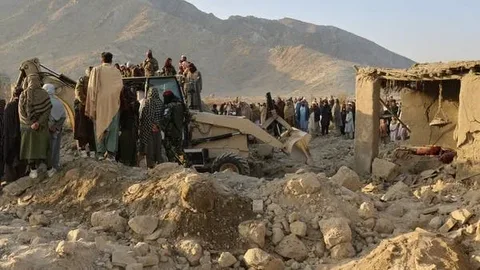
Kabul’s position has also stayed consistent. Afghan officials deny sheltering TTP fighters and instead describe Pakistani strikes as violations of Afghan sovereignty that disproportionately harm civilians. Afghan spokesperson Hamdullah Fitrat’s account of Monday’s strikes, naming a specific villager killed in Nurgal district, reflects this recurring framing.
Quotes
Pakistan’s Defence Minister Khawaja Asif described the broader confrontation in stark terms earlier this month, with officials reportedly framing the state of relations as an “open war” following months of clashes.
Impact
The recurring cycle has real regional consequences. Diplomatic efforts by neighbouring countries, including Chinese-led mediation attempts, have so far failed to break the pattern. Each new round of strikes further erodes trust between Islamabad and the Taliban government, narrowing the space for any negotiated arrangement over TTP sanctuaries.
There is also a humanitarian dimension. Afghan officials have reported civilian deaths in nearly every round of strikes this year, even as Pakistan maintains its targets are militant hideouts. This gap between the two narratives makes independent verification difficult and fuels further distrust.
Conclusion
Unless Islamabad and Kabul find a mechanism to address Pakistan’s security concerns without resorting to cross-border strikes, the pattern seen since February is likely to continue. Monday’s airstrikes suggest neither side is currently prepared to break the cycle, and further attacks — in either direction — remain a real possibility in the coming weeks.
FAQs
Is there a strike today in Pakistan?
No strike has hit Pakistani territory today. The September 21, 2026 airstrikes were conducted by Pakistan against targets inside Afghanistan’s Kunar and Paktika provinces. The violence within Pakistan in recent days has come from militant bomb and gun attacks, not airstrikes on Pakistani soil.
Are there bombings in Pakistan?
Yes, bombings and armed attacks have continued to affect Pakistan through September 2026, including a suicide bombing at a police compound in Kohat and an armed assault that followed it, together killing at least 21 people. These attacks are central to why Pakistan has continued its cross-border military operations.
Is there an airstrike today?
Yes, Pakistan carried out airstrikes early Monday on suspected militant hideouts in eastern Afghanistan, part of a recurring pattern of strikes that has continued in phases since February 2026. Pakistani officials cite 28 militants killed, while Afghanistan disputes this and reports civilian casualties instead.