
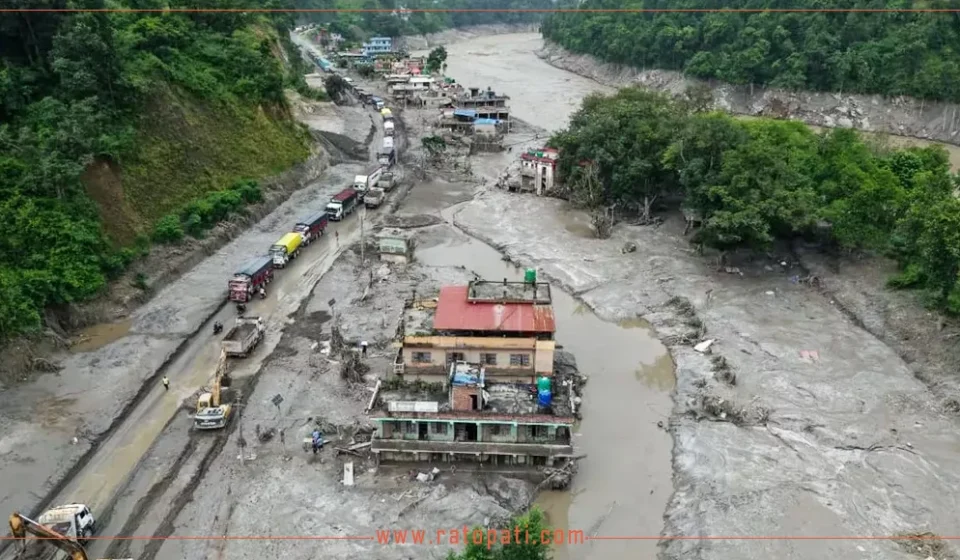
Floods and landslides have caused an estimated Rs 21.5 billion in damage to roads and bridges across Nepal, putting renewed focus on the country’s infrastructure resilience.
The damage has affected important transport links and raised concerns about the ability of existing infrastructure to withstand increasingly severe weather events.
The estimated losses include damage to roads and bridges affected by floods and landslides. These structures play a key role in connecting communities, supporting trade and maintaining access to essential services.
Heavy rainfall can weaken roads, trigger landslides and damage bridges in vulnerable areas. As a result, repairs can place a significant financial burden on the government.
Authorities are assessing the impact and considering measures to reduce future infrastructure losses
In response to the damage, the government plans to revise Nepal’s infrastructure design standards.
The proposed changes aim to make roads and bridges more resilient to floods, landslides and other natural hazards. Updated standards could influence how new infrastructure projects are designed, constructed and maintained.
The government is also expected to consider lessons from recent damage when developing future infrastructure policies.
The latest losses have highlighted the need for stronger infrastructure planning in disaster-prone areas.
Better design standards could help reduce damage during extreme weather and improve the long-term durability of roads and bridges.
Meanwhile, authorities face the immediate task of restoring damaged transport links and ensuring safe movement for affected communities.
The estimated Rs 21.5 billion infrastructure damage underlines the economic impact of floods and landslides on Nepal’s transport network. Revising design standards could become an important part of efforts to strengthen the country’s infrastructure against future disasters.