

SOUTH ASIAN CHRONICLE
The AAPI Vote in 2026: What Has Shifted Within This Diverse Electorate?
A community of communities, not a monolith: researchers and organisers explain who is voting, who is being missed and what South Asian families need to know before 3 November
By Nasreen Khan
Source: American Community Media (ACoM) national news briefing, Friday, 16 October 2026
Asian American and Pacific Islander (AAPI) voters are one of the fastest-growing electorates in the United States, and also one of the most diverse. They span different sub-ethnicities, immigration histories, languages, income levels and political views, yet they are often treated as a single voting bloc. That tension ran through an American Community Media (ACoM) national news briefing held on Friday, 16 October 2026, ahead of the 3 November midterm election.
Moderated by Sunita Sohrabji, the briefing, titled “The AAPI Vote in 2026: What Has Shifted Within This Diverse Electorate?”, brought together Christine Chen, Executive Director of APIAVote; Mary Lou Akai Ferguson, Executive Director of the Asian American Power Network; Shekar Narasimhan, Chairman of the AAPI Victory Fund; and Karthick Ramakrishnan, Founder and Director of AAPI Data. With almost 17 million eligible AAPI voters, 56% of whom cast a ballot in 2024, the speakers said the community can decide close races if it is reached and registered.
A Community of Communities
Ramakrishnan presented findings from AAPI Data’s State of AANHPIs report, which draws on public opinion data gathered with APIAVote, the Associated Press and NORC, and the National Council of Asian Pacific Americans. He said Asian Americans actually have slightly higher language needs than Latinos, with more people who speak English less than very well, and that Asians are the only major racial group in which the vast majority are foreign-born. Recent arrivals include communities that may surprise long-time observers, such as Kazakh, Uzbek, Nepalese and Mongolian Americans.
Economic worries cut across groups. Ten per cent of Asian Americans and 17% of Pacific Islanders live below the federal poverty line, but far more are anxious about the cost of groceries, health care and housing. Narasimhan said the lesson for campaigns and journalists is to look inside the community and break the numbers down, and not to take any segment for granted.
Ethnic identity does not automatically decide votes, the speakers said. Asked whether voters back candidates who share their background, Ramakrishnan pointed to the 2024 surveys, in which few Indian Americans were enthusiastic about Nikki Haley or Vivek Ramaswamy, and said party identification and values tend to outweigh ethnicity in a polarised society. Narasimhan agreed that the picture is mixed, citing a 2017 Seattle race in which East Asian voters appeared indifferent to the candidates’ backgrounds and Indian Americans were curious but did not vote on that basis alone. He said representation matters most when people from the community are in the room where decisions are made, including campaign staff.
What the Survey Shows
In the AAPI Voter Survey, 90% of registered voters said they plan to vote in the midterms and 64% said they are absolutely certain they will, which Ramakrishnan said points to turnout near the record level of 2018 if people can actually reach the ballot box. Cost of living and inflation are the dominant concerns. Democratic candidates lead the congressional vote, younger voters lean more strongly Democratic, and about a quarter to a third of the community are independents.
Trusted messengers include family and friends and academic experts, and trust in community organisations is especially high among Pacific Islanders. Ramakrishnan also noted that support for mass deportation among AAPI respondents fell from 38% in December 2024 to 29% in February 2026, and that 53% of South Asians said they or someone they know had started carrying papers in the past year, compared with 41% of AAPIs overall.
Chai, Chat and Year-Round Organising
Akai Ferguson described how the Asian American Power Network, a national network of state-based organisations, reaches voters who are often called low-propensity voters. She prefers the term inconsistent or unreached voters, because the issue is outreach, not the voter. In Georgia, member organisations hold multi-generational “Chai and Chat” gatherings in coffee shops and tea houses, a judgment-free space to ask questions about politics, such as how a Public Service Commission race can affect utility bills.
The network has knocked on 450,000 doors and spoken to more than 85,000 people by phone this year, and 26,000 Asian Americans had already voted early in Michigan. Yet funding across the sector is about half of 2022 levels, which forced cuts to early programmes, including the hiring of Korean American and Chinese American organisers in Nevada and training for local micro-influencers who act as trusted messengers.
Lessons From the Campaign Trail
Narasimhan, who is based in Virginia, said campaigns now ask for help reaching voters in Chinese, Korean, Hindi, Bangla and Urdu, and want to know which temples, churches and mosques to visit. He recalled a congressman who once asked which of ten Diwali invitations to accept, and said his advice is to show up in the community and ask for the vote. The AAPI Victory Fund is concentrating on Alaska, where Filipino American fishing communities in Kodiak and Ketchikan could help supply the roughly 10,000 votes that often decide an election, as well as Texas, Georgia and Michigan, where it is working with groups including Rising Voices and the Muslim American group Engage. He also pointed to Cindy Munson, a Korean American woman running for governor of Oklahoma, and noted that AAPI lawmakers lead legislative chambers in states including New Mexico and Arizona.
Reaching Gen Z
Younger voters are less enthusiastic, the speakers said. Akai Ferguson said affordability, including the price of petrol for commuter students and federal education cuts, weighs on Gen Z, and that candidates who build community spaces and treat young people as people rather than numbers draw more excitement, as Zohran Mamdani did in New York. Narasimhan said young voters respond to authenticity, naming Mamdani and Abdul El-Sayed. Chen said APIAVote works on 35 college campuses and finds that students angered by anti-DEI measures are motivated to vote, and she encouraged elders to create voting traditions, recalling that her family took her to the polls at 18 and then out to eat.
Know the Rules Before You Vote
Chen warned that rules are changing. Some states have narrowed ID options, limited drop boxes, reduced early voting days or made mail voting harder, and Tarrant County, Texas, cut polling places from 316 to 224, affecting more than 75,000 AAPI voters. She urged voters to check their registration, know their state’s ID rules, review their ballot at vote411.org, choose when and how to vote, find their polling place and return mail ballots early. APIAVote has mailed translated materials to 1.2 million households in 11 languages across 19 states, and its hotline, 888-API-VOTE, offers help in English and nine other Asian languages.
How Community Media Can Help
Ramakrishnan told reporters not to hesitate to run reminders again, because immigrants with busy lives may need six or seven touchpoints before acting. Akai Ferguson and Ramakrishnan said the work will not end on 3 November, with misinformation and challenges expected as votes are counted, which in California can take a month. In closing, Narasimhan called the election existential for democracy, and Chen asked everyone to help a loved one make a plan to vote.
Meet the Speakers
 |
Christine Chen
Executive Director, APIAVote Christine Chen has led APIAVote, the nonpartisan organisation working to increase Asian American and Pacific Islander voter and civic participation, as Executive Director since January 2011, after serving as its founding executive director from 2006 to 2008. A coalition builder with more than two decades of experience on immigration, hate crimes, voting rights, election reform and census issues, she was national executive director of the Organization of Chinese Americans from 2001 to 2005, a Resident Fellow at Harvard Kennedy School’s Institute of Politics in 2022, and is a member of the Committee of 100. |
 |
Mary Lou Akai Ferguson
Executive Director, Asian American Power Network Mary Lou Akai-Ferguson is Executive Director of the Asian American Power Network, a national network of state-based and local organisations serving AAPI communities. Before joining the network she founded Akai Strategies, which ran trainings and workshops for campaigns, advocacy organisations and nonprofits. Her career includes senior advisory work for the Association of Flight Attendants, service as campaign manager and Chief of Staff for Boston Mayor Michelle Wu, and a role as Senator Elizabeth Warren’s AAPI Outreach Director in 2020. She recently moved to San Diego, California. |
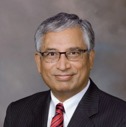 |
Shekar Narasimhan
Chairman, AAPI Victory Fund Shekar Narasimhan founded and chairs the AAPI Victory Fund, a SuperPAC focused on building the political power of the AAPI community. A leading expert on rental housing and affordable housing finance, he is Managing Partner at Beekman Advisors and Chairman of Papillon Capital, and was formerly Chairman and CEO of the WMF Group. Appointed by Governors McAuliffe and Northam to the Virginia Housing Development Authority, he now serves as its Chairman, and he was a founding board member of Indiaspora, which unites Indian American community leaders. |
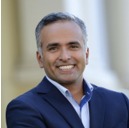 |
Karthick Ramakrishnan
Founder and Director, AAPI Data Karthick Ramakrishnan (he/him) founded AAPI Data and is its executive director. A scholar of political science and public policy, he was previously executive director of California 100, chair of the California Commission on APIA Affairs for six years, and a member of the board of the U.S. Census Bureau’s National Advisory Committee. He has written dozens of op-eds, appeared in nearly 3,000 news stories and been named to the Frederick Douglass 200. He is also Strategy Lead for the Americas at School of International Futures. |