
Karachi said goodbye to its guests from around the world on Sunday, and it did so with music, colour and a lot of warmth.
The World Culture Festival Karachi closed with a simple message: peace has no borders
After 25 days of performances, the third edition wrapped up at the Arts Council of Pakistan Karachi, where artists from about 150 countries had gathered. Sindh Chief Minister Murad Ali Shah called the city a meeting point of cultures, ideas and creative expression, and many in the audience seemed to agree.
Background: how the festival grew into a city tradition
The World Culture Festival Karachi did not appear overnight. It has been built over several editions by the Arts Council of Pakistan Karachi, which wanted to give the city a stage where artists from different parts of the world could meet ordinary people face to face. Each round brought more performers, more countries and more curiosity from the public.
The third edition was the biggest yet in terms of ambition. Before it began, organisers said that more than 1,000 foreign artists and around 500 Pakistani artists were expected to take part. They also said that about 80 percent of the programmes would be free, which meant a student with just a bus fare could walk in and watch a performance that would normally cost a lot to see.
The stated purpose was never only entertainment. Organisers said again and again that the Karachi peace festival was meant to carry a message of peace, equality, love and cultural harmony. In a world where news is often heavy, that idea felt like a small but real attempt to change the mood.
Chief Minister Murad Ali Shah inaugurated the third edition, and the Sindh government stood behind it as one of the most visible Sindh cultural events of the year. For a city that people often describe through traffic, heat and crowds, the festival offered a different picture. It showed Karachi as a place that can host the world and still feel like home.
Details: what the final days looked like
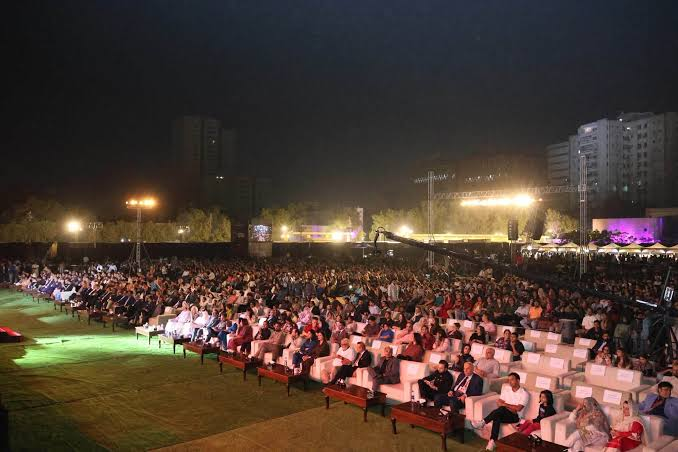
By the time the closing day arrived, the Arts Council felt like a small world of its own. Visitors moved between stages, stopped to listen to musicians they had never heard before and clapped for dancers in costumes from far away places. Families came with children, and groups of friends sat on the grass, sharing food while the music carried on.
International artists in Karachi shared the same spaces as local performers, and that mix was the real charm of the event. A folk singer from Sindh could watch a dancer from another continent, and both would end up applauding each other. Moments like these are hard to plan, and they are what people usually remember after a festival is over.
Over the 25 days, the programme included concerts, dance shows, theatre, exhibitions and cultural exchanges. Many of these were open to the public at no cost, which kept the crowds steady from the first week to the last. Organisers thanked the visitors for coming and the artists for travelling so far to be part of the cultural festival in Pakistan.
The closing ceremony itself was a celebration of everything the weeks had brought together. There were final performances, words of thanks and a general feeling of pride in the room. Even people who attended only one evening seemed to leave with a story to tell.
Quotes: what officials and organisers said
Speaking at the closing, Murad Ali Shah described Karachi as a global stage for peace and culture. He said the festival had sent a powerful message that peace knows no borders and that humanity speaks a universal language. He also thanked the foreign artists who chose to come to Pakistan and the organisers who made it possible.
Before the festival opened, Arts Council head Ahmed Shah explained the thinking behind it in plain words. He said the goal was to bring people closer through culture and convey a message of peace. That same idea ran through the speeches at the end, which made the closing feel connected to the opening.
Not every voice around the festival was only celebratory, and that is healthy. One opinion piece published while the event was running argued that the world will take Pakistan’s message of peace seriously only if society also lives by those values every day. It is a fair point, and it reminds readers that a festival can inspire change but cannot replace it.
Impact: what the festival means for Karachi, Sindh and beyond
For Karachi, the biggest impact is the feeling of pride it created. Residents saw their city host artists from nearly every corner of the globe, and many shared photos and videos online with real excitement. That kind of positive attention matters, because it changes how people talk about the place where they live.
For local artists, the World Culture Festival Karachi was also a chance to learn. Performing next to experienced international artists gives young musicians, dancers and actors a clear sense of what is possible. Some of them may find new collaborations, invitations or ideas that they carry into their own work for years.
For Sindh, the festival strengthened the image of a province that is welcoming, tolerant and proud of its culture. The chief minister has often described Sindh as a land of peace and hospitality, and an event of this size gives that claim something concrete to stand on. Visitors who experienced it first hand will likely speak about it back home.
For Pakistan as a whole, the festival offered a softer face to the outside world. Cultural diplomacy works quietly, through shared experiences rather than official statements. When audiences watch artists from different nations perform together, it becomes harder to see each other as strangers.
There is an economic side as well, even if it gets less attention. Big events bring spectators, give work to technicians and event staff, and bring business to food stalls and nearby shops. A well run cultural festival in Pakistan can therefore support the creative sector and the local economy at the same time.
Across South Asia, more cities are using art as a way to build bridges between communities. Karachi’s festival adds to that trend and shows that cultural exchange can continue even when the wider news cycle feels tense. Readers who want more reporting like this can find it on South Asian Chronicle.
Conclusion: what to expect next
The curtain has come down on the third edition, but the story is not really over. Officials have praised the event, and the Arts Council of Pakistan is expected to build on this response when it plans future editions. Many visitors have already said they hope the festival keeps its free programmes, since that is what made it feel like a festival for everyone.
The harder test lies ahead. The message of peace shared on stage will mean more if it is carried into schools, neighbourhoods and public life long after the lights go off. If that happens, the World Culture Festival Karachi may be remembered not only as a big event but as a turning point for how the city sees itself.
For updates on the next edition and other cultural news from Pakistan, keep following South Asian Chronicle. More stories on arts, society and regional affairs are available on our homepage as they are published.
Key Facts About the World Culture Festival Karachi
About the festival
The World Culture Festival Karachi is an international cultural event organised by the Arts Council of Pakistan Karachi. It brings artists from many countries together to perform music, dance, theatre and visual art in one place. The main idea is to promote peace, love, equality and understanding through culture. The third edition ran for 25 days and ended on Sunday, with artists from about 150 countries taking part.
Organisers and inauguration
The Arts Council of Pakistan Karachi organised the Karachi peace festival, with the support of the Sindh government. Chief Minister Murad Ali Shah inaugurated the third edition and also spoke at the closing. Arts Council officials looked after the programme, the artists and the arrangements at the venue. Their stated aim was to use art as a bridge between people and nations.
Countries and artists
Organisers said artists from around 150 countries were part of the festival. Before it began, they expected more than 1,000 foreign artists and about 500 Pakistani artists to perform. This made it one of the largest gatherings of international artists in Karachi. Final numbers may differ a little from early estimates, so readers should rely on the latest official statements.
Public access
Organisers announced that about 80 percent of the programmes would be free. This allowed families, students and art lovers to attend many performances without buying tickets. A few special shows may have had separate arrangements, so access depended on the event. The focus on free entry helped this cultural festival in Pakistan reach a wide audience across the city.
Message from the chief minister
Murad Ali Shah called Karachi a meeting point of cultures, ideas and creative expression. He said the festival had shown that peace knows no borders and that humanity speaks a universal language. He also praised the artists who travelled to Pakistan and the organisers who made the event possible. His message was that art and culture can bring people together when distance and differences try to divide them.