
The Indian automotive industry finds itself at the centre of a growing public controversy after the government’s mandatory ethanol-blended fuel policy triggered widespread anger among vehicle owners. Complaints about reduced mileage and engine damage have flooded social media, putting pressure on both policymakers and major car manufacturers to respond.
The backlash has reignited a debate that many believed had settled down months earlier. It now threatens to become one of the most closely watched consumer disputes facing the Indian automotive industry this year, drawing in politicians, oil companies, and some of the country’s biggest carmakers.
Background: What Sparked the Controversy
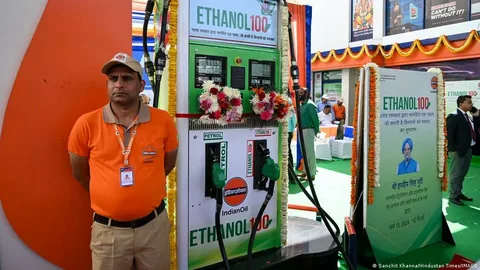
India introduced E20 fuel, a blend containing 20 percent ethanol, as the standard petrol sold at its roughly 90,000 fuel stations toward the end of last year. The move was part of a broader plan to reduce dependence on imported crude oil, support domestic sugarcane farmers, and cut vehicle emissions across the country.
The rollout initially caused some public unease, but that anger largely faded within a few weeks. However, tensions resurfaced recently after a senior government lawyer described E20 as an “experiment” during a court hearing, a comment that spread quickly online and reignited public concern over the policy’s long-term safety for vehicles.
Understanding this controversy requires a basic Indian automotive industry overview. The sector is one of the largest in the world by production volume, manufacturing everything from budget hatchbacks to premium SUVs. Any policy touching fuel standards has an outsized impact given how many households depend on personal vehicles for daily transport.
Details: Vehicle Owners Demand a Choice
Hundreds of motorists have taken to social media platform X to allege that E20 fuel has reduced their car’s fuel efficiency and increased wear and tear on engine parts. Many drivers say they were never given the option to purchase unblended petrol once E20 became the default fuel nationwide.
Opposition politician Arvind Kejriwal, a former chief minister of Delhi, held a press conference where he read directly from vehicle owner manuals belonging to Maruti Suzuki and Toyota cars. He argued that many older vehicles were only rated for E10 compatibility, meaning they were never designed to run safely on the higher ethanol blend.
Kejriwal has since written formal letters to Toyota and other manufacturers demanding clarity on which vehicle models are actually E20 compliant. Mahindra responded with a statement confirming that its E20-compliant vehicles could safely use the fuel, though it did not directly address concerns from owners of older, non-compliant models.
This dispute also touches on a common search query: what counts as an original Indian car manufacturing company versus a foreign brand operating locally. Companies like Tata Motors and Mahindra are often cited as homegrown examples, while Maruti Suzuki and Toyota operate as joint ventures or subsidiaries with strong Indian manufacturing footprints.
Quotes From Officials and Experts
Transport Minister Nitin Gadkari pushed back strongly against the criticism, publicly challenging anyone to prove their vehicle had been damaged specifically because of E20 fuel use. His comments were seen as an attempt to reassure the public while defending the government’s broader energy strategy.
Petroleum Minister Hardeep Singh Puri also weighed in, noting that ethanol-based fuels are widely used in high-performance racing vehicles around the world. He acknowledged that some decline in fuel efficiency was possible but argued the environmental and economic benefits outweighed the drawbacks for most drivers.
Opposition leader Priyank Kharge questioned why ordinary citizens were being asked to personally prove vehicle damage while comprehensive government studies on the fuel’s long-term impact remained incomplete. His remarks reflected a broader frustration among critics who feel the rollout moved faster than the available safety data could support.
Impact on the Indian Automotive Industry
This controversy arrives at a sensitive moment for India’s auto sector, which remains one of the fastest-growing automobile markets in the world. The Indian automotive industry 2022 period marked a strong post-pandemic recovery for manufacturers, and the sector has continued expanding steadily since then, making it a significant contributor to national employment.
Indian automotive industry jobs number in the millions when accounting for manufacturing plants, dealerships, component suppliers, and after-sales service networks. Any sustained consumer trust issue around fuel compatibility carries real economic weight, since it can influence purchasing decisions, resale values, and long-term demand for new vehicles.
For readers researching deeper background, resources like an Indian automotive industry pdf report or the Indian automotive industry Wikipedia page typically outline how the sector evolved from a protected, license-based market in the 1980s into one of the most competitive automobile industry examples globally today, hosting both domestic and multinational manufacturers.
The dispute also carries political weight. Activist Tehseen Poonawalla has announced plans for public protests in New Delhi, claiming strong interest from citizens frustrated with the lack of fuel choice. A separate public interest case has also been filed at India’s Supreme Court, though it remains unclear whether the court will agree to hear it given a similar case was dismissed the previous year.
Conclusion: What Happens Next
The government has signalled it remains firmly committed to its ethanol expansion programme, citing long-term benefits like reduced crude oil imports, stronger foreign exchange reserves, and support for domestic farmers. Officials appear unlikely to reverse the E20 mandate despite mounting public pressure.
At the same time, growing scrutiny from opposition leaders, consumer groups, and the courts suggests this issue is far from resolved. Whether the government eventually offers vehicle owners a choice of fuel blend, or provides clearer compliance data from manufacturers, will likely shape public trust in the policy going forward. For now, the controversy remains a live and closely watched story within India’s broader automotive industry introduction into cleaner fuel alternatives.
FAQs
What car color is most popular?
White remains the most popular car color across most global automotive markets, including India, largely because of its heat-reflective properties in hot climates and its association with easier resale value. Studies from vehicle industry analysts have consistently shown that white, followed by grey and black, dominates new car sales worldwide. In India specifically, white and silver tones are especially popular among buyers of hatchbacks and sedans due to their practicality and lower visible maintenance in dusty conditions.
Who are the big 3 in automotive?
The term “Big Three” traditionally refers to General Motors, Ford, and Chrysler (now part of Stellantis), the three dominant American automakers that have shaped the U.S. auto industry for over a century. However, in a global context, the term is sometimes loosely applied to the largest automakers by production volume, which today would more likely include groups like Toyota, Volkswagen, and Hyundai-Kia depending on the specific market being discussed.
How big is the automobile industry in India?
India’s automobile industry is among the largest in the world by production volume, ranking as one of the top manufacturing hubs for both two-wheelers and passenger vehicles. The sector contributes significantly to the country’s manufacturing GDP and supports millions of direct and indirect jobs across manufacturing, component supply, and dealership networks. Continued growth in domestic demand, along with rising exports, has kept India positioned as one of the fastest-expanding automotive markets globally, even as policy debates like the current ethanol fuel controversy test consumer confidence.