
Israel withdrew from southern Lebanon in May 2000 after nearly two decades of military occupation, ending one of the most costly and controversial foreign deployments in Israeli history. But more than two decades later, the same disputed territory is once again at the center of a major conflict. Following the 2024 war between Israel and Hezbollah, Israeli forces returned to parts of southern Lebanon, raising urgent questions about how much of Lebanon Israel controls today, where the Litani River fits into the equation, and when or whether a full Lebanon Israel withdrawal will actually happen.
Background
To understand what is happening today, it is essential to go back to 1978 and 1982. Israel first entered southern Lebanon in 1978 in what it called Operation Litani, a military campaign specifically designed to push Palestinian Liberation Organization fighters north of the Litani River Lebanon border zone and away from Israeli communities. The Litani River, which runs roughly 30 kilometers north of the Israeli border, became the symbolic and strategic line that Israel insisted must be cleared of armed groups.
In 1982, Israel launched a full-scale invasion that pushed all the way to Beirut. After enormous international pressure and severe casualties on all sides, Israeli forces eventually pulled back but maintained a self-declared “security zone” in a strip of southern Lebanese territory. That occupation lasted 18 years and cost the lives of hundreds of Israeli soldiers, thousands of Lebanese civilians, and countless Hezbollah and Palestinian fighters. The human and financial toll eventually turned Israeli public opinion decisively against the presence.
Why Did Israel Leave Lebanon in 2000?
The question of why did Israel leave Lebanon in 2000 has both a military answer and a political one. On the military side, Hezbollah had developed into a sophisticated guerrilla force that was inflicting a steady and unsustainable casualty rate on IDF south Lebanon patrols. The so-called security zone, rather than making Israel safer, had become a killing ground where Israeli soldiers died in ambushes, roadside bombs, and rocket attacks with little strategic gain to show for it.
On the political side, Israeli Prime Minister Ehud Barak had campaigned on a clear promise to end the Lebanon occupation within one year of taking office. He kept that promise. On May 24 and 25 of 2000, Israel completed a rapid and largely unilateral Lebanon Israel withdrawal. The departure was so fast that it surprised even Hezbollah. The South Lebanon Army, a Lebanese militia that had fought alongside IDF south Lebanon forces for years, collapsed almost overnight. Many of its members and their families fled to Israel, fearing reprisals.
The United Nations certified the withdrawal in June 2000 as being complete and in line with UN Security Council Resolution 425, which had demanded Israel leave Lebanon since 1978. From the international community’s perspective, the Lebanon Israel withdrawal of 2000 closed a chapter. Hezbollah declared victory and presented itself as the Arab force that had defeated Israel where others had failed.
What Part of Lebanon Is Israel Occupying Now?
The situation changed dramatically again in 2024 when a full-scale war erupted between Israel and Hezbollah following the broader escalation connected to the Gaza conflict. Israeli forces crossed back into southern Lebanon in a ground campaign that targeted Hezbollah infrastructure, weapons depots, tunnel networks, and command positions throughout the south.
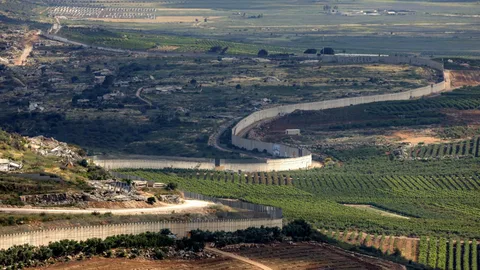
As of mid-2026, the question of what part of Lebanon is Israel occupying remains deeply contested. Israeli forces maintain positions in what the Israeli military describes as a limited buffer zone along the southern Lebanese border. However, Lebanese officials, Hezbollah, and international observers including the United Nations Interim Force in Lebanon, known as UNIFIL, have reported that IDF south Lebanon forces are present in areas beyond what Israel publicly acknowledges.
Reports from villages near the border confirm that Israeli troops remain in several communities and hilltop positions in the area south of the Litani River Lebanon corridor. The Lebanese government, France, the United States, and the United Nations have all called on Israel to complete a full Lebanon Israel withdrawal from these positions. Israel has argued that a withdrawal can only happen once Hezbollah is fully disarmed and pushed back, and once the Lebanese army is able to deploy effectively in the south.
The Litani River: Why It Matters
Any serious discussion of IDF south Lebanon operations or the question of how much of Lebanon does Israel control requires understanding the significance of the Litani River. The Litani River Lebanon geography is simple on a map of Lebanon showing Litani River positions: it flows from the Bekaa Valley in the east and curves westward toward the Mediterranean Sea, roughly forming a line about 28 to 30 kilometers north of the Israeli border.
UN Security Council Resolution 1701, passed in 2006 after the second Lebanon war, called for Hezbollah to withdraw north of the Litani River and for only the Lebanese army and UNIFIL to operate south of it. That resolution was never fully implemented. Hezbollah rebuilt its southern presence over the following years, which is precisely what Israel cited as justification for the 2024 military campaign.
Israel to occupy Lebanon territory south of the Litani is not a new ambition — it is a recurring strategic demand. Israeli officials have stated repeatedly that they will not tolerate armed Hezbollah positions within striking distance of Israeli towns, many of which sit just kilometers from the border. The Litani River represents, from Israel’s perspective, the minimum distance at which armed groups must be kept to prevent rapid rocket and infiltration attacks.
How Much of Lebanon Does Israel Control?
How much of Lebanon does Israel control as of 2026 is a question without a simple numerical answer, partly because the situation is fluid and partly because Israel has not published clear maps of its positions. What is known is the following.
Israeli forces hold a strip of territory in the far south of Lebanon, described variously as a buffer zone or a security zone language that will sound familiar to anyone who followed the pre-2000 occupation. According to multiple international reports and statements from the Lebanese government, Israeli troops are present in at least several villages and elevated terrain positions. Some Lebanese communities in the south report that residents have been prevented from returning or have found Israeli forces still present when they attempted to come back.
A report published in July 2026 by Al Jazeera documented Lebanese civilians returning to what the Lebanese government calls the “pilot zone” a set of villages that Israel reportedly agreed to vacate under cease-fire arrangements. However, residents and Lebanese officials stated that Israeli forces had not fully vacated those areas. The presence of IDF south Lebanon units in these locations is seen as a violation of the terms agreed to in the cease-fire and a delay in the full Lebanon Israel withdrawal that international parties have been pushing for.
Quotes and Official Statements
Lebanese Prime Minister Nawaf Salam has repeatedly called for a complete and unconditional Israeli departure from Lebanese soil, stating that Lebanon’s sovereignty cannot be negotiated in pieces. “Every inch of Lebanese territory must be free,” he said in a statement to the Lebanese parliament in early 2026, adding that the government expects Israel to honor its international obligations.
UNIFIL, the United Nations peacekeeping force that has operated in southern Lebanon since 1978, has documented what it describes as continued Israeli military activity in areas where withdrawal was expected. UNIFIL spokesperson Andrea Tenenti said the force is monitoring the situation closely and has called on all parties to respect the terms of the 2024 cease-fire agreement.
On the Israeli side, Defense Minister Israel Katz stated that Israel would withdraw from Lebanese territory “in a gradual and responsible manner” once conditions on the ground were met, specifically citing the need to ensure Hezbollah cannot rearm in the south. Israeli officials have consistently framed the question of Israel to occupy Lebanon territory as a temporary security necessity rather than a permanent territorial claim.
Regional and Global Impact
The ongoing presence of IDF south Lebanon units and the delayed Lebanon Israel withdrawal is having significant consequences across the region. Lebanon’s already fragile economy, still recovering from the 2019 financial collapse, the 2020 Beirut port explosion, and years of political paralysis, has been further damaged by the 2024 conflict. Southern Lebanese towns and villages that were emptied during the war remain partially or fully depopulated, and the uncertainty about when Israeli forces will actually leave is preventing hundreds of thousands of displaced Lebanese from returning to their homes.
Regionally, the situation is being watched closely by Iran, which has long used Hezbollah as a strategic asset and proxy. Iran’s willingness and ability to rearm Hezbollah through Syria has been significantly constrained by Israeli strikes on supply routes, but the situation remains volatile. Syria’s political transition following the fall of the Assad government in late 2024 has added another layer of complexity to the Litani River Lebanon and IDF south Lebanon picture.
For the United States and France, which co-sponsored the 2024 cease-fire arrangement, the slow Israeli withdrawal is a diplomatic problem. Both countries have invested significant political capital in the cease-fire deal and are under pressure from Lebanon and other Arab states to enforce its terms. Washington has sent messages to Tel Aviv urging faster implementation, though it has stopped short of issuing formal demands or linking the withdrawal to military aid.
What Happens Next?
The trajectory of the Lebanon Israel withdrawal situation depends on several factors that remain uncertain as of mid-2026. First, the pace at which the Lebanese army can deploy into the south will heavily influence how quickly Israel is willing to pull back. Israel has stated that it needs to see credible Lebanese state presence in the south before it considers the area secure enough to leave.
Second, the question of whether Hezbollah will rearm and reestablish a fighting presence south of the Litani River Lebanon line will determine whether the cease-fire holds in the long term. If Hezbollah returns in force, the risk of another round of conflict and another Israeli military campaign into Lebanon remains real. Third, the broader Middle East situation, particularly developments in Gaza and Iran, will shape Israeli strategic calculations about how long to maintain its current south Lebanon posture.
Lebanon’s new government, which took office in early 2025 after years of political deadlock, has presented itself as a state-building administration genuinely committed to extending government authority into the south and sidelining armed non-state actors. Whether it has the capacity and political will to actually do so remains to be seen.
FAQs
What towns are in southern Lebanon?
Southern Lebanon is home to dozens of towns and villages that have historically been at the center of the Lebanese-Israeli conflict. Among the most significant are Bint Jbeil, which is often called the “capital of the south” and was the site of intense fighting in both 2000 and 2006. Khiam is known for the prison operated by the South Lebanon Army during the Israeli occupation years. Marjayoun is a mixed Christian and Shia town that has historically been more connected to Israel and served as a base for the South Lebanon Army.
What are the 7 Lebanese villages?
The phrase “the seven villages” refers to a group of Shia Muslim villages in what is today northern Israel, along the Lebanese border, that became part of a long-running territorial and demographic dispute. These villages Hunin, Qadas, Nabi Yusha, Khiyam al-Walid, Tarbikha, Saliha, and Alma were predominantly Arab and largely Shia before the 1948 Arab-Israeli war. Their residents fled or were expelled during the conflict, and the villages were incorporated into the State of Israel. For Lebanon, and particularly for Shia communities, these seven villages carry deep symbolic significance as an example of displacement and dispossession.
What is the most beautiful village in Lebanon?
Lebanon is a country of remarkable natural and architectural beauty, and many of its villages are genuinely stunning, but a few consistently stand out in travel writing and cultural commentary. Bcharre, in the north of Lebanon, is frequently cited as one of the most breathtaking, set against the backdrop of the Qadisha Valley, a UNESCO World Heritage Site, and surrounded by some of the last surviving ancient cedar trees in the world. The village was also the birthplace of the poet and philosopher Khalil Gibran, adding deep cultural weight to its natural beauty. Ehden, nearby, is another northern mountain village known for its cool summers, stone houses, and proximity to the Horsh Ehden nature reserve.