

Pakistan Security Forces continue to play a central role in protecting the country’s borders, airports, and public institutions. Every year, thousands of young men and women look for a stable career in these forces, and the demand has grown even further with new recruitment drives opening in 2026. This guide covers everything from recruitment and ranks to weapons, structure, and the latest ASF Jobs 2026 details.
Pakistan Security Forces are made up of several organizations working together under different ministries. Together they are responsible for internal security, counter-terrorism, aviation safety, and border protection. Understanding how these forces are structured helps job seekers pick the right department for their skills and qualifications.
How Many Forces Are There in Pakistan?
Many people search for how many forces in Pakistan actually exist, since the country has a layered security system. Pakistan Armed Forces include the Army, Navy, and Air Force, which handle national defense against external threats. Alongside these, several paramilitary and civil armed forces operate under the Ministry of Interior and provincial governments.
These additional Pakistan Security Forces include the Rangers, Frontier Corps, Airport Security Force (ASF), Frontier Constabulary, National Guards, and Pakistan Coast Guard. Each of these organizations has a specific mandate, ranging from border patrolling to VIP protection and airport screening. Police forces at the provincial level also form a large part of the overall security apparatus.
This layered structure allows Pakistan to manage different types of threats separately. Military forces focus on conventional and strategic defense, while paramilitary and civil armed forces manage internal law enforcement, counter-terrorism support, and specialized duties such as aviation security.
Pakistan Security Forces Recruitment Process
Pakistan security forces recruitment generally follows a similar pattern across departments, even though each organization runs its own advertisement and testing schedule. Candidates usually need to clear a written test, physical endurance test, and medical examination before final selection. Age limits, height requirements, and educational qualifications vary depending on the specific post and force.
Most recruitment campaigns are announced through official government websites and national newspapers, so candidates are advised to rely only on verified sources. Fraudulent job offers promising guaranteed selection in exchange for money are common, and applicants should avoid such scams completely. Genuine Pakistan security forces recruitment never asks for payment in exchange for a job offer.
Educational requirements typically range from Matriculation to a Bachelor’s degree, depending on whether the post is for a soldier-level role or an officer-level position. Physical fitness, a clean criminal record, and Pakistani nationality are mandatory for almost all uniformed positions across these organizations.
Pakistan Security Forces Ranks Explained
Understanding Pakistan security forces ranks helps new recruits know how career progression works within these organizations. In the Army, the rank structure starts from Sepoy and moves up through Naik, Havildar, and Subedar for non-commissioned personnel, while commissioned officers begin at Second Lieutenant and can rise to the rank of General.
Paramilitary forces such as the Rangers and Frontier Corps follow a similar hierarchy, borrowed largely from military rank structures, since many of their senior officers are drawn from the Army. The Airport Security Force also maintains its own rank system, including posts such as Constable, Corporal, Assistant Sub-Inspector, Inspector, and Assistant Director.
Promotion through these Pakistan security forces ranks is generally based on seniority, performance evaluations, and specialized training courses completed during service. Elite units often require additional qualifications and voluntary selection processes on top of the standard rank progression.
Pakistan Security Forces Weapons and Equipment
Modern Pakistan security forces weapons include a mix of locally manufactured and imported equipment designed for different operational needs. Standard infantry weapons include assault rifles, sidearms, and support weapons used for patrolling, counter-terrorism operations, and border defense duties.
Specialized units such as the SSG commandos and Rangers use advanced equipment, including night-vision devices, tactical communication systems, and specialized combat gear suited to close-quarter and counter-terrorism operations. The Airport Security Force relies more heavily on screening technology, surveillance systems, and non-lethal equipment suited to aviation environments.
Weapon training is a mandatory part of recruitment for uniformed posts across all these organizations. Recruits are trained not only in handling and maintenance but also in safety protocols, since discipline around weapons handling is treated as a core requirement throughout the training period.
Airport Security Force (ASF) Jobs 2026 – Complete Overview
The Airport Security Force protects Pakistan’s airports, aircraft, passengers, and cargo from unlawful interference. It operates under the ASF Act 1975 and works under the federal government’s Aviation Division, making it one of the most important Pakistan security forces for civil aviation safety.
ASF Jobs 2026 have been announced with vacancies mainly for Assistant Directors and Inspectors, and the required education can range from Middle and Matric to Intermediate or Graduation depending on the post. Applications for these positions are accepted only through the official recruitment portal, and manual or courier-based submissions are not entertained.
Applicants are urged to apply exclusively through official websites and to be cautious of fraudulent offers promising guaranteed selection in exchange for payment. This is an important reminder for anyone searching for Airport Security Force Jobs 2026, since fake job scams are common during every recruitment cycle.
The general age limit for most ASF posts falls between 18 and 30 years, with relaxation available for certain categories. Both uniformed posts, such as Corporal and Assistant Sub-Inspector, and non-uniformed posts in clerical and technical fields, are opened during each recruitment cycle.
Www ASF gov pk Online Apply 2026 Step-by-Step Guide
Candidates searching for www ASF gov pk online apply 2026 details should visit the official recruitment portal directly rather than relying on unofficial job pages. The process begins with creating an online account using a valid CNIC, email address, and mobile number.
After registration, candidates must fill in personal details, upload a recent photograph, and enter their academic history from Matric onward. The final step involves selecting the desired post and preferred test center before submitting the completed application form for review.
Once the form is submitted, applicants are advised to download and print their roll number slip immediately, since this document is required at every stage of testing, including the written exam, physical test, and medical checkup.
ASF Online Apply 2025 Last Date and Test Process
For those still tracking the ASF online apply 2025 last date, most 2025 recruitment batches have already closed, and new 2026 vacancies have since replaced them on the official portal. Candidates are encouraged to keep checking the recruitment website regularly, since ASF announces new vacancies in phases throughout the year rather than all at once.
The testing process for ASF recruitment includes a written examination covering English, general knowledge, Pakistan studies, Islamic studies, and basic mathematics. Physical and running tests apply specifically to uniformed posts such as Corporal and Assistant Sub-Inspector, while civilian posts require only medical and skill-based evaluations.
Successful candidates then proceed to an interview stage before receiving their final appointment letters. The entire process, from application to final selection, typically takes a few months depending on the volume of applicants and available vacancies.
Salary, Benefits, and Career Growth
Pay scales across Pakistan security forces generally follow federal government pay structures, with additional allowances for uniformed duties, field postings, and specialized training. ASF personnel receive basic pay along with allowances for duty locations, while elite units such as SSG commandos receive extra compensation tied to their advanced qualifications and high-risk assignments.
Career growth within these organizations is closely linked to performance, training courses, and years of service. Many recruits who join at entry-level ranks eventually rise to supervisory and officer-level positions after completing the required service years and passing internal promotion examinations.
Beyond salary, most positions come with additional benefits, including medical coverage, housing or housing allowances, pension schemes, and access to welfare facilities. These long-term benefits make careers in Pakistan security forces attractive compared to many private sector jobs.
Conclusion and Future Outlook
Pakistan security forces remain a major source of stable, respected employment for candidates across the country. With new recruitment drives such as ASF Jobs 2026 opening regularly, opportunities continue to grow for both uniformed and civilian roles across the security sector.
As airports expand and security requirements become stricter worldwide, aviation-focused forces like the ASF are expected to keep hiring in the coming years. Candidates preparing for these opportunities should focus on physical fitness, academic preparation, and staying updated only through official recruitment portals.
Frequently Asked Questions
Is SSG an elite unit of the Pakistan Army?
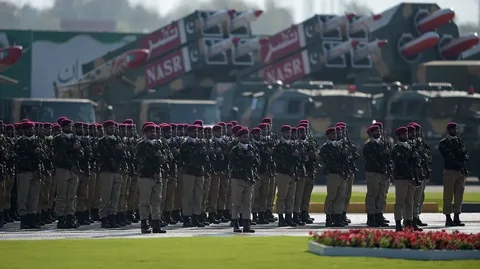
Yes, the Special Services Group is widely regarded as the elite special operations unit of the Pakistan Army, and it is often referred to informally as the Maroon Berets because of the color of their headgear. The SSG is responsible for doctrinal missions including foreign internal defence, reconnaissance, direct action, counter-terrorism operations, and unconventional warfare, alongside additional responsibilities such as hostage rescue and search-and-rescue operations. Only personnel already serving in the Pakistan Army, Navy, or Air Force are eligible to volunteer for SSG training, and the selection process is extremely demanding, with a large majority of applicants failing to complete the course.
What is the salary of an ASF employee in Pakistan?
Salaries for Airport Security Force personnel follow the federal government’s basic pay scale system, ranging roughly from BPS-05 for entry-level clerical posts up to BPS-15 and above for supervisory roles such as Assistant Sub-Inspector and Inspector. In addition to basic pay, ASF employees receive allowances for duty location, uniform maintenance, and risk-related duties at airports. Exact figures vary each year depending on government pay scale revisions, so candidates should confirm current numbers through the official ASF recruitment portal at the time of applying.
How can someone join SSG in the Pakistan Army?
Joining the SSG is not a direct civilian application process, since candidates must first be serving soldiers or officers within the Pakistan Army, Navy, or Air Force. Once serving, personnel apply through their unit’s proper channel when an SSG training course is announced, or in some cases directly through the SSG training center located at Cherat in Khyber Pakhtunkhwa. The training itself typically lasts around nine months to a year and includes hand-to-hand combat, weapons expertise, airborne operations, and specialized counter-terrorism training, with a dropout rate reported to be extremely high due to the difficulty of the course.