
Washington has approved a fresh wave of State Department arms sales to Gulf and Middle Eastern allies. The latest package sends nearly $2 billion in precision munitions to Saudi Arabia and Kuwait, just months after a separate multi-billion-dollar deal armed Israel with similar defense systems.
Background
Military Affairs in the Middle East have shifted sharply since the outbreak of renewed hostilities involving Iran and its regional proxies. Gulf states have spent the past year requesting faster access to American-made air defense and precision-strike technology.
Saudi Arabia, Kuwait, and Israel have all turned to Washington in recent months, seeking equipment that can intercept drones, guide munitions with pinpoint accuracy, and reinforce depleted stockpiles. Each of these Major arms Sales has followed a familiar pattern: a formal request, review by the Defense Security Cooperation Agency, and eventual notification to Congress once the State Department signs off.
This latest round is not an isolated event. It builds on a broader pattern of accelerated defense cooperation that began earlier in the year, when Washington cleared billions of dollars in equipment for both Israel and Saudi Arabia in a single announcement.
Details
On Wednesday, the State Department confirmed it had approved a potential $1.96 billion arms package for Saudi Arabia alongside a $484 million sustainment deal for Kuwait. The Saudi request centers on up to 20,000 Advanced Precision Kill Weapon Systems (APKWS) and their associated warheads, a relatively low-cost guidance kit that converts unguided rockets into precision-strike weapons.
The Kuwaiti package, by contrast, focuses on sustaining the country’s fleet of C-17 military transport aircraft, which supports coalition airlift operations across the region. Neither deal is final; both must clear a congressional review period before contracts are signed and deliveries scheduled.
The principal contractor named for the Saudi sale is BAE Systems, based in Nashua, New Hampshire. This is notable because BAE Systems Israel dealings have followed an almost identical playbook. Earlier this year, the State Department cleared a separate sale of 10,000 APKWS rounds worth roughly $992 million for Israel, with BAE Systems again named as the principal contractor.
Taken together, these State Department arms sales point to one contractor and one weapons system, the APKWS guided rocket, showing up again and again in Washington’s regional deals. Its low unit cost makes it attractive for high-volume orders, particularly for countries facing repeated drone and rocket threats.
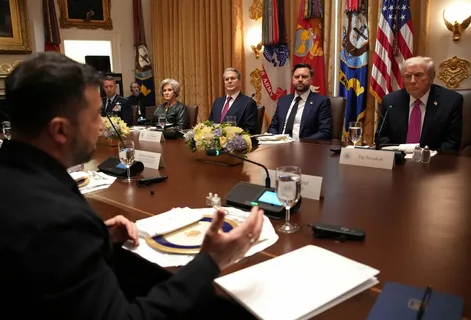
Earlier in the year, the State Department had already approved a much larger set of Major arms Sales: roughly $9 billion in Patriot missile systems for Saudi Arabia and $6.67 billion in equipment for Israel, including Apache attack helicopters, light tactical vehicles, and utility helicopters. Those packages followed high-level meetings between Saudi Defense Minister Khalid bin Salman and senior US officials, including the Secretary of State and Secretary of Defense.
Quotes
The State Department framed the latest Saudi sale in terms of regional stability, stating that the transfer “will support the foreign policy and national security objectives of the United States by improving the security of a Major non-NATO Ally that is a force for political stability and economic progress in the Gulf Region.”
Officials also stressed that the sale carries no risk to America’s own defense readiness. A department statement noted there would be “no adverse impact on US Defense readiness as a result of this proposed sale,” a standard assurance included in most Foreign Military Sales notifications.
On the Kuwait package, the department said the deal would improve “the security of a major non-NATO ally that has been an important force for political stability and economic progress in the Middle East.” Similar language accompanied the earlier Israel-focused approvals, with officials describing Washington’s continued commitment to Israel’s self-defense capability as a core national interest.
Impact
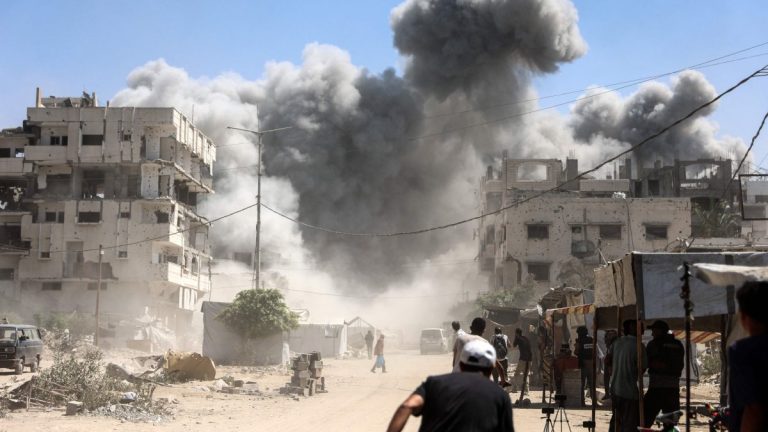
These Military Affairs decisions carry consequences well beyond the immediate contracts. For Saudi Arabia, the added air-defense capacity comes directly amid intensified conflict involving Houthi forces in Yemen, who launched missiles toward Abha airport in southern Saudi Arabia just days before the announcement.
For BAE Systems, the string of approvals across Israel, Saudi Arabia, and now Kuwait makes it one of the busiest contractors on the current list of State Department arms sales. Its APKWS production lines are supplying multiple allied nations at once, and analysts say that workload could strain delivery timelines even as demand keeps growing.
Regionally, the pattern of near-simultaneous approvals for rival and allied states alike, Saudi Arabia, Kuwait, and Israel, signals that Washington is attempting to balance competing regional relationships while responding to a shared set of threats: drone incursions, missile attacks, and instability tied to the broader Iran conflict.
Congress still holds the power to object to any of these Major arms Sales during the mandatory review window, though such objections rarely succeed once a sale has been formally notified. Analysts expect both the Saudi and Kuwaiti packages to proceed largely unchanged.
Conclusion
With Congress now reviewing the newly announced packages, attention will shift to whether additional requests emerge from other Gulf states facing similar threats. Given the pace of State Department arms sales so far this year, from the $9 billion Patriot deal in January to this week’s APKWS package, further announcements involving BAE Systems Israel contracts or other regional allies appear likely in the coming months.
For now, the deals show a pattern in Military Affairs: Washington is leaning on a small set of trusted contractors and proven weapons systems to keep pace with a region where demand for precision defense technology isn’t slowing down.
Frequently Asked Questions
Did Saudi Arabia give the U.S. 1 trillion dollars?
No verified government or State Department record confirms a payment of that scale. Saudi Arabia has pledged large, multi-year investment and defense-spending commitments in past agreements with Washington, and these figures are sometimes rounded up or misreported in headlines. The confirmed, itemized arms packages reported by the State Department, such as the $1.96 billion APKWS sale and the earlier $9 billion Patriot missile deal, are far smaller than a trillion dollars, and it’s important to distinguish between actual signed contracts and broader, non-binding investment pledges that get discussed in diplomatic meetings.
What is the Saudi Arabia defense deal?
The most recent Saudi defense deal is a State Department-approved package worth an estimated $1.96 billion, covering up to 20,000 Advanced Precision Kill Weapon Systems along with launchers, warheads, spare parts, and training support. This follows an earlier and much larger approval from January worth roughly $9 billion, which centered on 730 Patriot missile systems intended to strengthen Saudi Arabia’s integrated air and missile defense network against regional threats, including Houthi attacks originating from Yemen.
Does Saudi Arabia have a strong military?
Saudi Arabia maintains one of the largest defense budgets in the Middle East and has invested heavily in modern air defense, fighter jets, and missile systems over the past decade. Its military strength is bolstered significantly by continuous arms purchases from the United States and other Western suppliers, including Patriot missile batteries, precision-guided munitions, and advanced aircraft. However, the kingdom still relies heavily on American logistics, training, and technology support, meaning its military capability is closely tied to ongoing defense cooperation with Washington rather than being fully independent.