
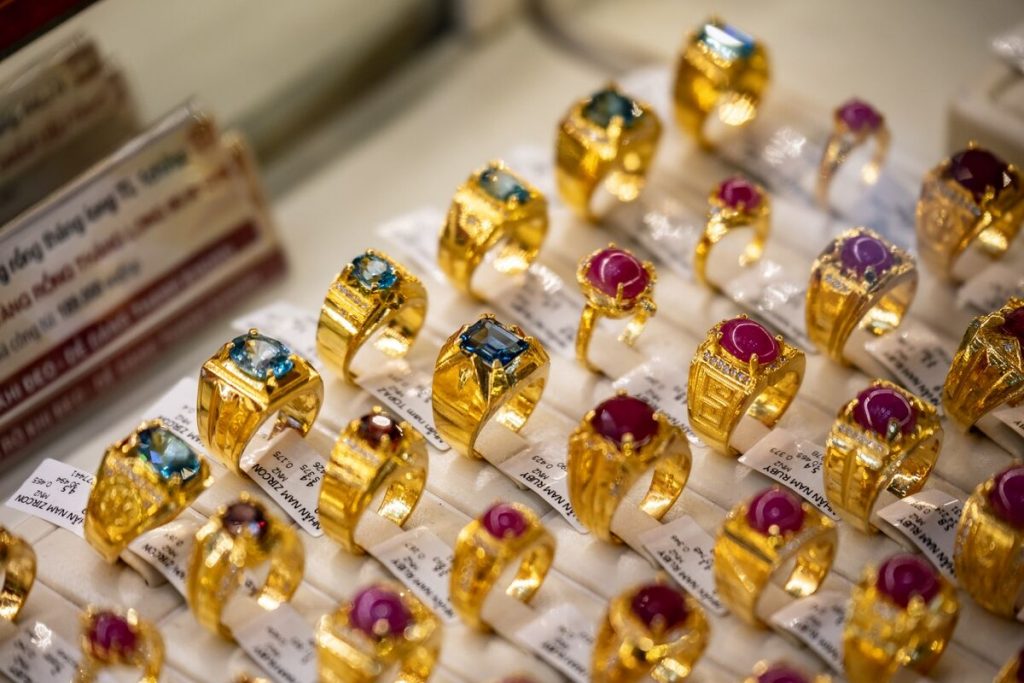
Vietnamese authorities have launched a large-scale criminal investigation into a diamond smuggling operation allegedly linked to one of the country’s most prominent jewellery businesses. The case has sent shockwaves through Vietnam’s luxury goods sector and raised serious concerns about organised crime networks operating across the country.
The probe marks one of the most significant financial crime developments in recent Vietnam crime news today, drawing national attention and international scrutiny over smuggling routes, tax evasion, and the movement of high-value gemstones across borders.
Background: How the Investigation Began
Vietnamese law enforcement agencies first identified suspicious patterns in diamond imports and sales transactions linked to a well-known jewellery enterprise. Initial tips reportedly came from customs officers and financial monitoring units that flagged unusually large movements of unregistered gemstones entering the country without proper documentation.
Investigators from Vietnam’s Ministry of Public Security began tracking the operation over several months, building a case that reportedly involves multiple individuals, shell companies, and international contacts. The scale of the alleged scheme suggests this was not an isolated incident but part of a structured criminal network operating with considerable sophistication.
This investigation has become one of the most closely watched Vietnam crime news live developments of the year, with daily updates emerging from official briefings and government press releases.
Details of the Alleged Smuggling Operation
According to preliminary findings released by Vietnamese authorities, the smuggling ring allegedly involved the illegal import of diamonds and high-value gemstones into Vietnam, bypassing official customs channels and avoiding significant import duties and taxes.
The ring is believed to have used a combination of false documentation, undervalued declarations, and third-party couriers to move goods across borders without detection. Law enforcement sources indicate that the operation may have been active for several years before coming under formal investigation.
Searches were conducted at multiple locations connected to the jewellery business, including retail outlets, warehouses, and private residences associated with individuals named in the probe. A significant quantity of unregistered diamonds and financial records were reportedly seized during these operations.
The Vietnam drug bust units, which are frequently deployed in cross-border smuggling investigations, were also involved in some aspects of the operation due to overlapping criminal networks flagged during the inquiry. This highlights how different forms of organised crime in Vietnam can intersect within the same criminal structures.
Ho Chi Minh City at the Centre of the Probe
Much of the investigation centres on Ho Chi Minh City, Vietnam’s commercial capital and the hub of its luxury retail sector. Ho Chi Minh crime news has increasingly reflected a rise in white-collar and organised criminal activity in recent years, with authorities dedicating greater resources to financial crime units and economic fraud divisions.
Sources within law enforcement indicate that several suspects connected to the Ho Chi Minh City branch of the jewellery operation have been summoned for questioning, with some placed under travel restrictions pending further investigation. The city’s Customs Department and Tax Authority are cooperating fully with the Ministry of Public Security to trace financial flows and verify import records.
The local business community in Ho Chi Minh City has expressed concern over the reputational impact of such cases on the region’s growing luxury goods market, which has expanded significantly over the past decade.
Quotes From Officials and Experts
A spokesperson for Vietnam’s Ministry of Public Security stated in an official release: “This investigation reflects our commitment to combating economic crimes that undermine fair trade, deprive the state of tax revenue, and damage public trust in the commercial sector. No enterprise, regardless of its size or reputation, is above the law.”
A legal analyst familiar with Vietnam’s criminal justice system commented on the broader implications: “Cases like this reveal the gaps that exist in high-value commodity import regulations. The fact that this operation allegedly ran for an extended period without detection suggests that systemic reform in customs monitoring may be necessary alongside the criminal proceedings.”
An economic policy researcher added that the case underscores how Vietnam’s rapid economic growth has created both opportunity for legitimate business and, in parallel, new avenues for financial crime that regulators are still working to close.
Vietnam Crime Rate and the Rise of Economic Offences
Vietnam’s overall Vietnam crime rate has remained comparatively low in relation to its population size and level of economic development. However, economic crimes, financial fraud, and smuggling offences have seen a notable increase as the country has integrated more deeply into global trade networks.
Government data indicates that prosecutions for customs violations and smuggling-related offences have increased year on year, reflecting both a rise in such activity and a strengthening of enforcement capacity. Vietnam’s anti-corruption campaign, which has been a defining feature of governance under the current political leadership, has expanded to include not only public sector wrongdoing but also major private sector financial crimes.
The diamond smuggling case fits within a broader pattern seen in Vietnam news today live English coverage, where economic crime investigations have become increasingly prominent alongside more traditional law enforcement activity. International transparency organisations have noted Vietnam’s growing willingness to pursue high-profile cases publicly, which they view as a positive indicator for institutional accountability.
Impact on Vietnam’s Economy and Reputation
The exposure of a smuggling network connected to a prominent jewellery brand carries significant economic and reputational consequences. For the luxury retail sector, which has grown rapidly in Vietnam in response to a rising affluent middle class, such cases raise questions about supply chain integrity and product authenticity.
From a fiscal perspective, large-scale smuggling operations deprive the government of considerable import duty and tax revenue. Analysts estimate that the luxury goods sector alone represents a substantial source of potential customs income, and that systematic evasion through undeclared imports undermines the country’s revenue base at a time when public investment in infrastructure and public services remains a national priority.
Internationally, the case contributes to ongoing discussions about gemstone trade regulation across Southeast Asia. Vietnam is not alone in facing challenges related to the unregulated movement of diamonds and precious stones, and regional cooperation frameworks for customs intelligence sharing have been discussed as one potential mechanism for addressing such issues more effectively.
For the jewellery industry as a whole, the investigation serves as a warning that compliance standards and transparent sourcing documentation are not optional but essential for long-term commercial credibility.
Vietnam Education News: Training the Next Generation of Investigators
In a development connected to the broader fight against organised crime, Vietnam Education news has highlighted increasing government investment in specialised law enforcement training programmes. The Ministry of Education and Training, in partnership with the Ministry of Public Security, has expanded curricula at law enforcement academies to include dedicated modules on financial crime investigation, digital forensics, and customs fraud detection.
These programmes are designed to produce investigators with the technical knowledge needed to handle complex cases like the current diamond smuggling probe, where understanding of financial systems, international trade law, and forensic accounting is essential. Senior officials have indicated that this investment in education and professional training is a long-term strategy to build institutional capacity for tackling sophisticated criminal networks.
The inclusion of financial crime specialisation in Vietnam’s public security training reflects a recognition that modern criminal investigations increasingly require expertise that goes beyond traditional policing methods.
Regional and Global Context
The diamond trade is a global industry governed by international frameworks, including the Kimberley Process Certification Scheme, which was established to prevent the trade of conflict diamonds. Vietnam is a participant in international trade oversight mechanisms, and cases involving unregistered gemstone imports put pressure on the country to demonstrate compliance with global standards.
Southeast Asia has long been identified as a region where smuggling networks for high-value goods, including gemstones, precious metals, and pharmaceuticals, operate across porous borders and through complex logistics chains. Cooperation between Vietnam’s law enforcement agencies and their counterparts in neighbouring countries, as well as with international bodies such as Interpol, is increasingly viewed as necessary for disrupting networks that do not respect national boundaries.
Vietnam news today live English coverage of the case has attracted attention from international business media, reflecting the significance of the investigation not only domestically but for foreign investors and business partners who monitor governance and rule-of-law indicators when assessing Vietnam as a commercial destination.
What Happens Next: Conclusion and Outlook
The investigation into the diamond smuggling ring is ongoing, and Vietnamese authorities have indicated that additional suspects may be identified as financial records and seized documents are analysed in the coming weeks. Legal proceedings, if charges are formally filed, would be handled by Vietnam’s People’s Court system, which has processed a growing number of high-profile economic crime cases in recent years.
Observers expect the case to prompt a review of import monitoring procedures for luxury goods, with possible regulatory changes to tighten documentation requirements and increase penalties for customs violations. Industry associations in the jewellery sector are likely to face pressure to introduce voluntary compliance standards and traceability measures.
For the broader public, the case reinforces the message at the heart of Vietnam’s anti-corruption and anti-crime agenda: that economic wrongdoing carries serious legal consequences regardless of the status or influence of those involved. The outcome of this investigation will be closely watched as a measure of Vietnam’s commitment to that principle.
Frequently Asked Questions (FAQs)
Is it safe to visit Vietnam right now?
Vietnam remains one of the safer travel destinations in Southeast Asia for international tourists. The country maintains a relatively low rate of violent crime, and the Vietnamese government places significant emphasis on tourist safety as part of its broader economic strategy, given how important the tourism sector is to national revenue. Most travel advisories from major governments, including the United States, United Kingdom, and Australia, classify Vietnam as a destination where normal security precautions are sufficient.
What is the current issue in Vietnam?
Vietnam is currently managing several significant national issues simultaneously. The most prominent in Vietnam news today live English coverage is the ongoing crackdown on economic crime, corruption, and financial fraud, which has seen high-profile investigations targeting both public officials and private sector figures. The diamond smuggling investigation is one of the most recent and prominent examples of this broader campaign. Beyond crime and governance, Vietnam is navigating complex economic challenges including managing inflation, sustaining export growth in a global trade environment affected by geopolitical tensions, and balancing foreign investment inflows with domestic economic development priorities.
What are the most common crimes in Vietnam?
Vietnam’s crime landscape is shaped by both its level of economic development and its position within Southeast Asia’s broader criminal geography. Petty theft, including pickpocketing and motorbike bag snatching, is the most commonly reported crime affecting both residents and tourists, particularly in urban centres such as Ho Chi Minh City and Hanoi, which dominate Ho Chi Minh crime news and national reporting. Fraud and online scams have grown significantly in recent years as internet penetration has expanded, with cybercrime units reporting increasing caseloads related to financial fraud, identity theft, and online deception schemes. Smuggling remains a persistent challenge across Vietnam’s extensive land and sea borders, encompassing not only luxury goods like the diamonds in the current investigation but also electronics, pharmaceuticals, and wildlife products.